NFT Games: What They Are, How They Work, and What You Should Know
When you play an NFT game, a type of blockchain-based game where in-game items like characters, weapons, or land are represented as unique non-fungible tokens. Also known as crypto gaming, it turns your time and skill into something you can actually own and trade outside the game. Unlike traditional games where everything disappears when you stop playing, NFT games let you hold onto your digital stuff—even sell it later.
These games rely on play-to-earn, a model where players earn tokens or NFTs by playing, completing tasks, or winning matches. But not all play-to-earn games are created equal. Some reward you with real value; others are just hype wrapped in flashy graphics. The real ones tie rewards to actual usage, community growth, or in-game utility. That’s why you’ll see posts here about NFT airdrop, free token or NFT distributions tied to participation, not just signing up—because real projects give you something for doing something, not just for clicking a button.
What makes NFT games tricky is the noise. Many projects promise big returns but have no real economy behind them. You might get a free NFT from a blockchain gaming, a gaming ecosystem built on decentralized networks like Ethereum, Solana, or Polygon airdrop, but if the game crashes or the token drops to zero, your NFT becomes a digital poster. That’s why the posts here focus on what’s real: how to spot the difference between a game that’s building something lasting and one that’s just collecting wallets.
You’ll find deep dives into scams pretending to be NFT games, guides on how to safely claim rewards, and breakdowns of platforms that actually let you earn. Some posts talk about how NFTs in games like TopGoal or HashLand work—what they’re for, who controls them, and whether they’re worth holding. Others warn you about fake airdrops, dead tokens, and projects with no team behind them. There’s no sugarcoating here: if a game sounds too good to be true, it probably is.
What’s clear from the collection below is that NFT games aren’t just about buying and selling. They’re about ownership, participation, and sometimes, survival. In places like Venezuela, crypto isn’t a side hustle—it’s a lifeline. The same logic applies here: if you’re spending time in an NFT game, you should know what you’re owning, who’s behind it, and whether it’s built to last—or just to vanish.
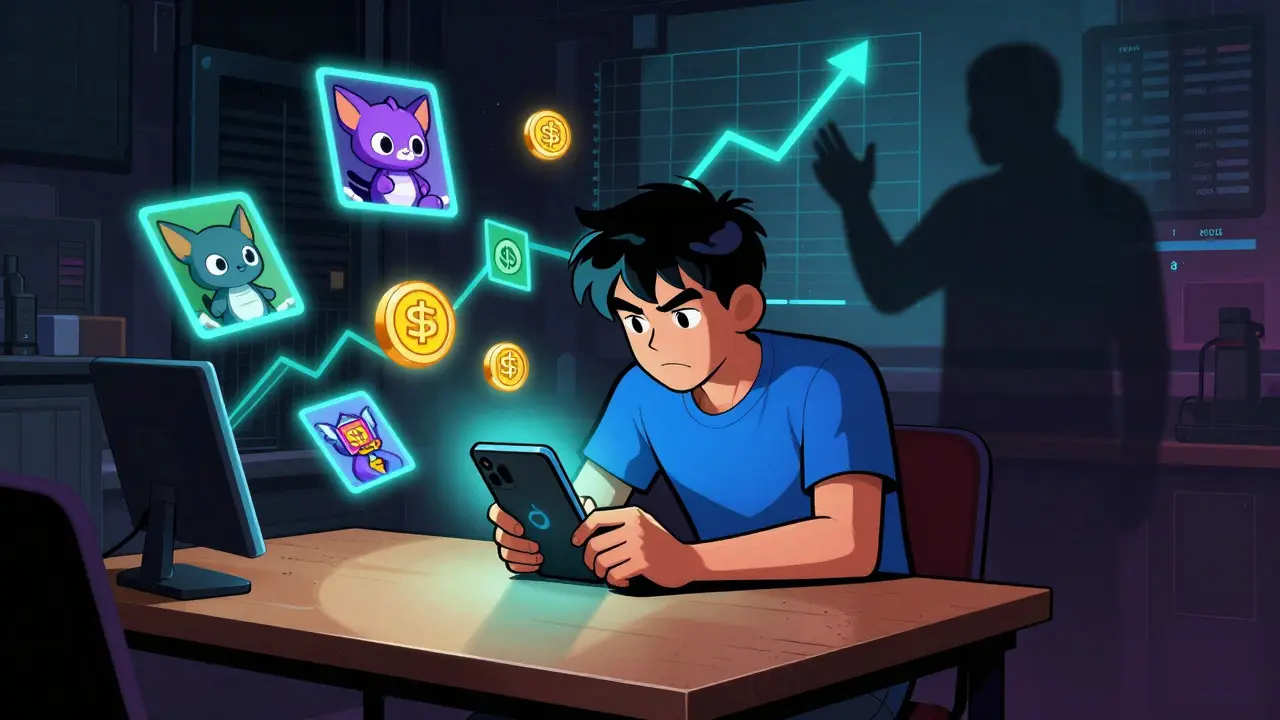
Play-to-earn gaming lets players earn real money through blockchain-based games using NFTs and crypto tokens. Learn how it works, who profits, the risks involved, and how to get started in 2025.
Continue Reading