Venezuela Crypto Mining: How People Are Using Bitcoin to Survive
When your currency loses value faster than you can spend it, you don’t wait for help—you find another system. Venezuela crypto mining, the practice of using computer hardware to validate Bitcoin transactions and earn rewards in a country where the national currency has collapsed. Also known as Bitcoin mining in hyperinflation, it’s become one of the few reliable ways for ordinary people to earn dollars, feed their families, and keep the lights on. This isn’t speculative investing. It’s survival.
What makes Venezuela different isn’t just the economic collapse—it’s how people adapted. With inflation hitting over 1,000,000% at its peak, salaries paid in bolivars were worthless by the time they hit bank accounts. So locals turned to hardware—old gaming PCs, discarded mining rigs, even repurposed refrigerators with cooling fans—to run Bitcoin nodes. They didn’t need a bank. They didn’t need permission. They just needed electricity, internet, and a little patience. And because Bitcoin transactions bypass national borders, miners could sell their rewards directly to buyers in Colombia, the U.S., or Mexico for real cash. Some turned their homes into mini-farms, running rigs 24/7. Others pooled resources in neighborhoods, sharing power and cooling to cut costs. The mining rewards they earned weren’t just digital—they were groceries, medicine, and school fees.
This movement didn’t happen because the government supported it. In fact, Venezuela’s leaders banned foreign crypto exchanges and cracked down on unlicensed mining. But the people kept going. Why? Because the alternative was worse. The cryptocurrency adoption Venezuela, the grassroots shift toward digital assets as a substitute for failing financial systems. Also known as crypto as a survival tool, it’s now embedded in daily life—from street vendors accepting Bitcoin to families paying rent in USDT. Even with rolling blackouts and internet outages, people find ways. Solar panels. Power banks. Shared mining hubs. The crypto mining in crisis, the use of blockchain technology to create economic resilience in regions with no functional banking or currency stability. Also known as decentralized survival economy, it’s not about getting rich. It’s about staying alive. The tools are simple, but the impact is massive. What you’ll find in these posts isn’t theory. It’s real stories, real setups, and real results from people who turned hardware into hope. You’ll see how they manage power costs, avoid scams, and turn mining into a steady income—even when the system is designed to fail them.

Explore the complex reality of Venezuela's state-controlled crypto mining. Learn about SUNACRIP regulations, the mandatory mining pool, and how energy subsidies clash with grid instability.
Continue Reading
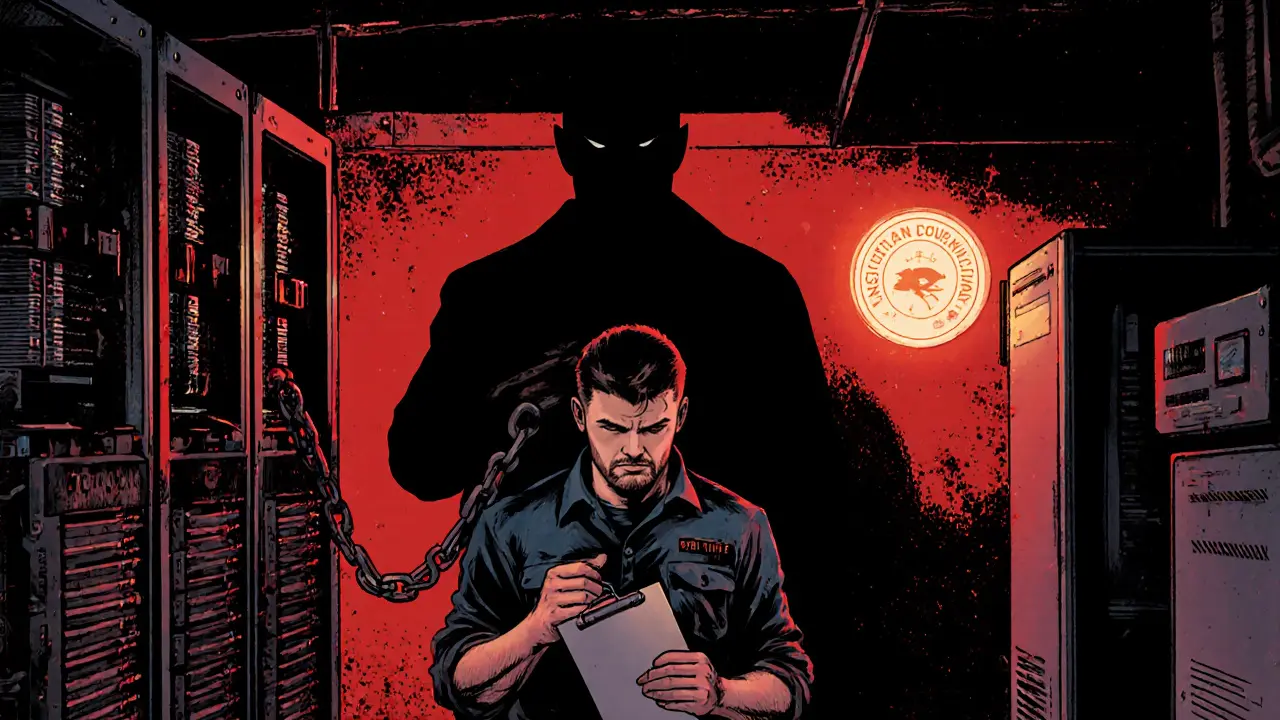
Venezuela requires all crypto miners to join a government-controlled mining pool, obtain a license from SUNACRIP, and pay heavy taxes. Learn the strict 2025 requirements, risks, and why this system contradicts crypto's core principles.
Continue Reading