WLFI Crypto: What It Is, Why It Matters, and What to Watch Out For
When you hear WLFI crypto, a low-liquidity meme token circulating on decentralized exchanges with no clear team or roadmap. Also known as WLFI token, it’s one of hundreds of tokens that spike briefly on social media hype—then vanish. Unlike Bitcoin or Ethereum, WLFI doesn’t solve a problem, power a platform, or offer real utility. It exists because someone made a joke, posted it on Twitter, and a few hundred people bought in hoping to get rich quick.
These kinds of tokens are part of a bigger pattern you’ll see across crypto: meme coins, cryptocurrencies built on viral trends, not technology or economics. Also known as memecoins, they rely entirely on community energy and FOMO to move price. WLFI fits right in. It’s not listed on major exchanges. It has no whitepaper. Its contract isn’t audited. And like many tokens before it—Clap Cat, WOR, DEEPSEEK—it’s likely just a pump-and-dump waiting to happen.
What makes WLFI different isn’t the token itself—it’s how it’s being pushed. You’ll see posts claiming it’s "coming soon" to CoinMarketCap, or that there’s a "secret airdrop" if you join their Telegram group. That’s a red flag. Real projects don’t need you to chase free tokens to prove they’re legit. They have websites, teams, and working products. Scams use urgency and secrecy to trick you into sending crypto before you even know what you’re buying.
And it’s not just WLFI. Look at the posts here: CAKEBANK, CKN, CANU, HC, XCV—all have the same story. No official launch. No team. No audits. Just hype. Even when a project like SUKU or Radiant Capital actually has real tech, rumors still spread about fake airdrops. That’s because scammers know people are hungry for free crypto. They don’t care if you lose money—they just need you to click, connect your wallet, and send a little gas fee.
If you’re wondering whether WLFI is worth buying, the answer is simple: no. Not because it’s necessarily a criminal scheme—but because it has zero chance of lasting. There’s no infrastructure behind it. No developers. No users. No reason for its price to go up after the initial buyers cash out. And when that happens, you’re left holding a token that’s worth less than a coffee.
But here’s the real lesson: crypto isn’t about chasing the next trending token. It’s about learning what separates real projects from noise. The best way to protect yourself isn’t to avoid all new coins—it’s to ask the right questions before you invest. Who’s behind this? What problem does it solve? Where’s the code? Is anyone actually using it? If you can’t answer those, walk away.
Below, you’ll find real breakdowns of similar tokens—some that exploded, others that collapsed, and a few that actually delivered value. You’ll learn how to spot scams before you lose money, how to tell if an airdrop is real, and what to do when a token looks too good to be true. This isn’t about getting rich overnight. It’s about not getting ripped off.
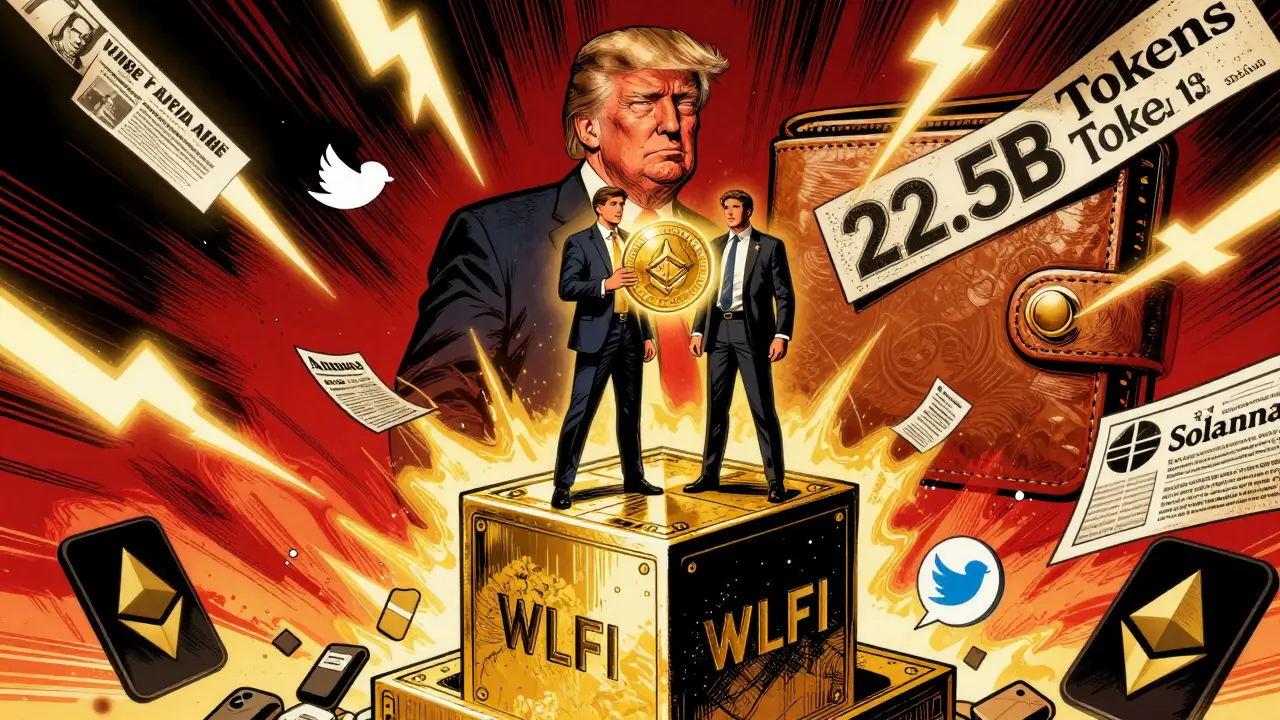
World Liberty Financial (WLFI) is a crypto project tied to the Trump family, featuring a governance token and USD1 stablecoin backed by U.S. Treasuries. Its value is driven by politics, not technology.
Continue Reading