The Future of Decentralized Governance Tokens: AI, Voting Models, and DAO Evolution in 2026
Imagine owning a piece of a company where you don't just get dividends; you actually get to vote on the CEO's salary, the next product feature, or how much tax the organization pays. That is the promise of decentralized governance tokens, which are digital assets that grant holders voting rights within blockchain protocols rather than just serving as speculative investments. For years, these tokens were treated mostly as free giveaways (airdrops) to generate hype. But by mid-2026, the landscape has shifted dramatically. The novelty has worn off, replaced by a serious reckoning with how communities actually make decisions at scale.
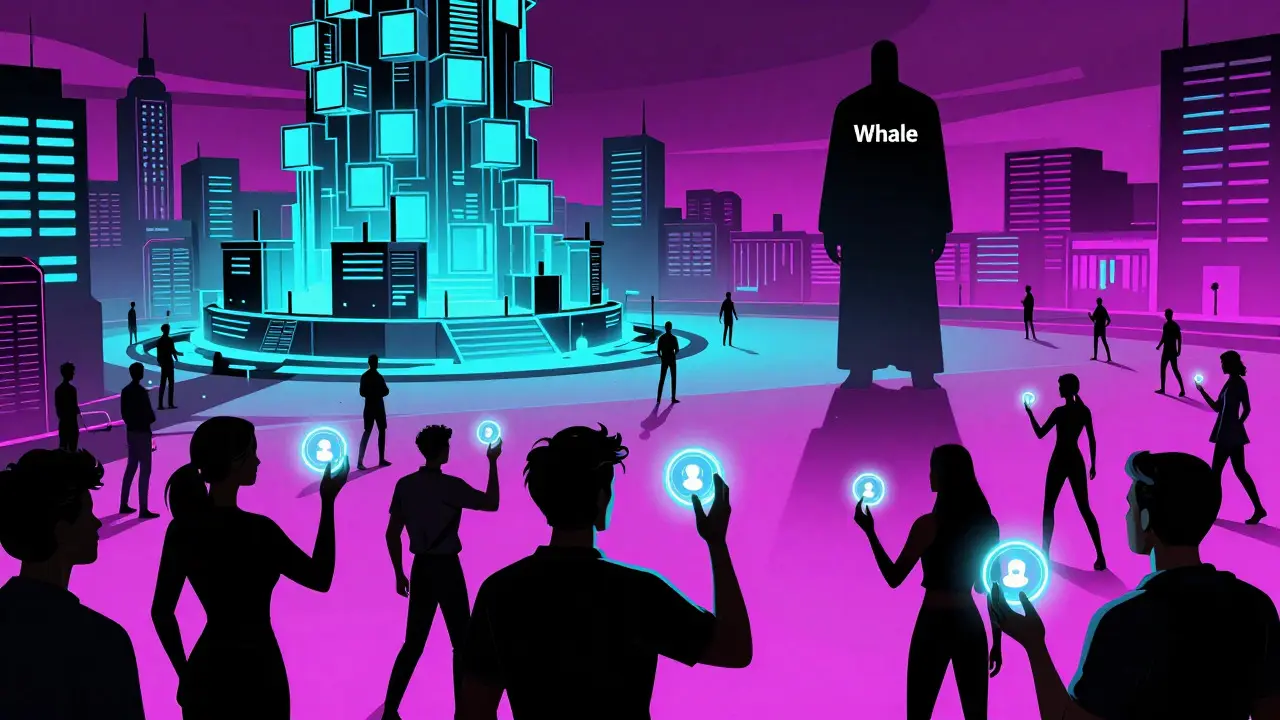
We are no longer asking if governance tokens matter. We are asking how they can function without collapsing under their own weight. The core problem remains simple: most token holders want rewards but lack the time or expertise to read complex technical proposals. This leads to low participation, where a small group of wealthy "whales" dictates the direction of multi-billion dollar ecosystems. The future of this space depends on solving this democratic deficit through better technology, smarter incentives, and new voting models.
The Shift from Speculation to Actual Utility
In the early days of Decentralized Finance (DeFi), projects distributed tokens like candy. If you used the protocol, you got a bag of UNI or AAVE tokens. The hope was that financial stake would align interests. In practice, it often led to "vote buying," where large holders swapped votes for bribes offered by other whales.
By 2025 and into 2026, the focus has moved toward utility over speculation. Protocols like MakerDAO have long used its MKR token to adjust stability fees and manage collateral types for the DAI stablecoin. This isn't abstract governance; it's monetary policy. When MKR holders vote, they directly influence interest rates in the crypto economy. Similarly, Uniswap uses its UNI token to decide on fee structures and treasury spending. These examples show that governance tokens are becoming operational tools, not just status symbols.
The key change? Tokens are increasingly tied to reputation and activity, not just wallet balance. Projects are realizing that holding 1 million dollars worth of tokens doesn't mean you understand the codebase. The future belongs to systems that reward contribution, whether that's writing code, moderating forums, or auditing smart contracts.
New Voting Mechanisms to Stop Whale Dominance
The biggest criticism of traditional token voting is plutocracy: one token, one vote. If you hold 10% of the supply, you control 10% of the outcome. This discourages small holders from participating because their voice feels irrelevant. To fix this, several alternative voting models have gained traction in 2026:
- Quadratic Voting: This model makes each additional vote more expensive. If one vote costs 1 token, two votes might cost 4 tokens, three votes cost 9, and so on. This caps the influence of whales while allowing passionate small holders to amplify their voice cheaply. It’s designed to measure intensity of preference, not just wealth.
- Conviction Voting: Instead of discrete yes/no ballots, users allocate support to proposals over time. As support builds up, it gains "conviction." Once a threshold is reached, the proposal executes automatically. This allows for continuous feedback and reduces the pressure of single-point-in-time elections.
- Holographic Consensus: Popularized by DAOstack, this model assumes that not everyone needs to agree on everything. It focuses on finding a solution that no one strongly opposes, rather than one that everyone loves. It’s faster and less prone to gridlock.
- Reputation-Based Voting: Influence is earned through past contributions. You might hold zero tokens but have high reputation points for previous successful audits or community management. This separates financial power from decision-making power.
These mechanisms aren't mutually exclusive. Many mature DAOs now use hybrid models. For example, a protocol might use quadratic voting for budget allocation but conviction voting for parameter tweaks. The goal is to match the voting method to the risk level of the decision.
| Voting Model | Best For | Main Advantage | Key Limitation |
|---|---|---|---|
| Token-Based (1 Token = 1 Vote) | Simple binary choices | Easy to implement | Whale dominance |
| Quadratic Voting | Budget allocation | Fairer representation | Complex math for users |
| Conviction Voting | Ongoing resource requests | Continuous feedback | Slow execution speed |
| Delegated Voting | Large communities | High participation rates | Reliance on delegate integrity |
AI as the New Governance Assistant
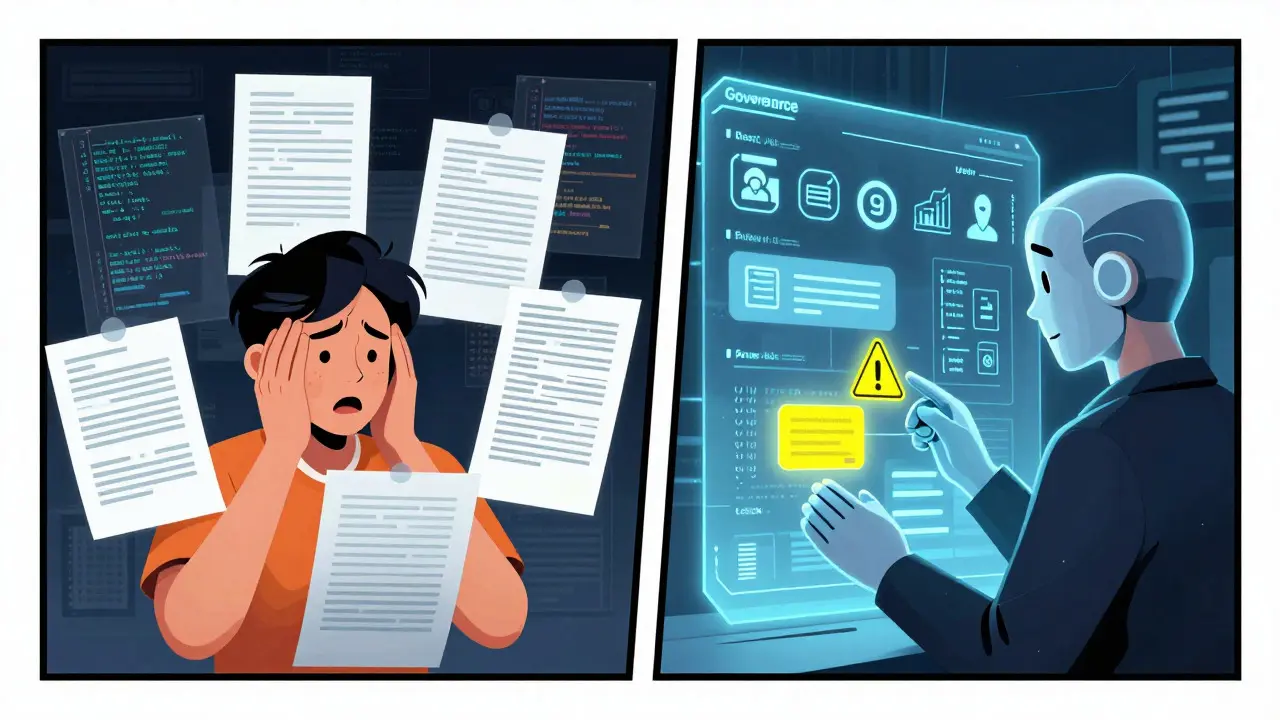
If you think reading one governance proposal is tedious, imagine reviewing ten per week. Information overload is the silent killer of DAO engagement. Enter Artificial Intelligence. In 2026, AI is not replacing human voters; it is acting as their personal analyst.
Venture capital firm a16z crypto identified AI integration as a top trend for 2025, and by 2026, it’s standard practice. Here’s how it works in reality:
First, AI agents summarize complex technical proposals into plain language. They highlight risks, estimate costs, and compare similar past votes. Second, AI helps with delegation. Tools scan your past behavior and preferences, then recommend delegates who align with your values. Instead of blindly delegating to the largest holder, you can say, "Find me a delegate who prioritizes security audits and has voted against risky leverage proposals."
More radically, some experiments involve "AI Delegates." These are autonomous agents that learn their principal’s voting history and cast votes on their behalf. While controversial, this could solve the apathy problem. If an AI agent handles your routine votes, you only step in for major strategic shifts. However, this raises questions about accountability. If an AI votes poorly, who is responsible? The developer? The user? The code?
AI also plays a defensive role. It detects Sybil attacks-where one person creates hundreds of fake wallets to sway votes-by analyzing behavioral patterns across the network. This keeps governance honest without requiring manual moderation.
The Rise of Delegated Democracy
Despite the tech advancements, most people still don’t want to govern. They want to use the product. This has made delegated voting the dominant model for large DAOs. Think of it like representative democracy, but fluid. You can delegate your voting power to anyone, and you can revoke it instantly.
Platforms like Tally and Agora have streamlined this process. Delegates are no longer anonymous whales; they are often known community members, developers, or researchers who publish regular reports on their voting rationale. Some DAOs even pay delegates in tokens or fiat for their service, treating governance as a job.
This shift acknowledges a hard truth: effective governance requires expertise. Not every token holder wants to be a politician. By allowing specialization, DAOs can maintain decentralization while achieving professional-grade decision-making. The challenge lies in ensuring delegates remain accountable. Transparency dashboards now track delegate performance, showing win rates, alignment with constituents, and response times to community questions.
Challenges That Remain: Law, Security, and Scale
Governance tokens operate in a legal gray area. In many jurisdictions, it’s unclear whether a governance token is a security, a utility, or something else entirely. This uncertainty scares away institutional investors. Regulators are watching closely. If a DAO makes a decision that harms users, can the token holders be sued? Can the developers? The lack of clear liability frameworks remains a significant barrier to mainstream adoption.
Security is another persistent threat. Smart contract bugs can drain treasuries before anyone realizes what happened. Governance attacks, where hackers bribe enough votes to pass malicious proposals, are also real. In 2023, the Beanstalk Farms hack showed how easily governance can be compromised if economic incentives are misaligned. Today, protocols use timelocks (delays between voting and execution) and multi-sig wallets to mitigate these risks, but trust remains fragile.
Finally, there’s the issue of scale. Small DAOs thrive on community spirit. Large ones struggle with bureaucracy. As DAOs grow, they risk becoming slow and inefficient, mirroring the very corporations they sought to replace. Finding the right balance between speed and deliberation is an ongoing experiment.
Where Do We Go From Here?
The future of decentralized governance tokens is not about eliminating humans from the loop. It’s about augmenting them. We are moving from a wild west of airdrops to a structured ecosystem of informed participation. Key developments to watch include:
- Cross-chain governance: Tokens will soon allow voting across multiple blockchains, enabling unified decision-making for multi-chain protocols.
- Regulatory clarity: Expect clearer guidelines from major economies on the legal status of governance tokens, reducing investor fear.
- Enhanced identity layers: Solutions like World ID may integrate with governance to ensure one-person-one-vote fairness without sacrificing privacy.
- Professionalization of roles: Governance will become a recognized career path, with specialized firms offering consulting and audit services for DAOs.
For participants, the advice is simple: don’t just hold tokens. Engage. Delegate wisely. Use AI tools to stay informed. The health of decentralized systems depends on active, thoughtful stewardship, not passive speculation.
What is the main difference between a governance token and a regular cryptocurrency?
A regular cryptocurrency like Bitcoin or Ethereum primarily functions as a medium of exchange or store of value. A governance token, such as UNI or MKR, grants holders the right to vote on protocol decisions, including upgrades, fee changes, and treasury spending. Its value is tied to the power to influence the project's direction, not just market demand.
How does quadratic voting prevent whale dominance?
Quadratic voting increases the cost of each additional vote exponentially. If one vote costs 1 token, two votes cost 4, and three cost 9. This makes it prohibitively expensive for whales to buy massive influence, while allowing smaller holders to express strong preferences at a lower relative cost. It measures the intensity of opinion rather than just wealth.
Is AI replacing human voters in DAOs?
Not yet. AI currently acts as an assistant, summarizing proposals, detecting fraud, and recommending delegates. Experimental "AI delegates" can vote on behalf of users based on learned preferences, but humans retain final oversight. AI enhances efficiency and accessibility but does not remove human agency from critical decisions.
What is delegated voting, and why is it popular?
Delegated voting allows token holders to assign their voting power to trusted representatives (delegates). It is popular because most users lack the time or expertise to evaluate every proposal. Delegates specialize in governance, providing informed votes while remaining accountable to their constituents. Users can revoke delegation at any time.
Are governance tokens legally considered securities?
It depends on the jurisdiction and the specific token. In many places, the legal status is unclear. If a token promises profits derived from the efforts of others, regulators may classify it as a security. This ambiguity creates compliance risks for both issuers and holders, driving the need for clearer regulatory frameworks.

19 Comments
Don Fizy
August 1 2026Great overview of the current landscape. The shift from pure speculation to actual utility is exactly what we needed to see for this space to mature. It's encouraging to see protocols finally treating governance as a serious operational tool rather than just a marketing gimmick.
Dominic Greco
August 1 2026Don't believe the hype. AI delegates are just another way for the central powers to control your vote without you even knowing it happened. They feed you summarized lies and you click yes because you're too lazy to read the code. Wake up people! 👁️👄👁️
Michael Mostyn
August 1 2026The philosophical underpinning of quadratic voting is fascinating, yet I wonder if it truly solves the problem of apathy or merely masks it with mathematical complexity. If the average citizen cannot comprehend the cost function of their own voice, have we not simply replaced plutocracy with technocracy? We must consider whether these mechanisms empower the individual or merely give them the illusion of agency within a system they do not understand. The tension between efficiency and true democratic participation remains unresolved.
Candice Cornett
August 3 2026typical elitist take. nobody cares about the math. they care about who gets rich. whales always win.
Rita Dutta
August 5 2026Oh please, let us not pretend that 'whales' are some mythical evil entity when in reality they are often just early adopters who had the foresight to participate. The real issue is the collective laziness of the masses who expect free money without doing any work. Governance is not a right, it is a responsibility earned through engagement and understanding of the intricate web of smart contracts that hold our digital assets. To blame the wealthy for participating is a classic case of sour grapes by those who failed to engage meaningly.
Dave Kjendal
August 6 2026It's all just noise. DAOs are failing because humans are bad at organizing themselves online. You can add all the AI you want but you can't fix human nature. Most people just want to hodl and forget about it. Stop trying to force democracy on a market.
Nick Darring
August 7 2026You guys are missing the point entirely. It's not about democracy, it's about power dynamics. The article talks about AI assistants but really it's about creating a new class of digital serfs who delegate their power to algorithms controlled by venture capitalists. I've been saying this for years and no one listens. We need to burn the whole system down and start over with something that doesn't rely on trustless systems which are inherently untrustworthy. It's a paradox wrapped in an enigma sold to you as freedom.
Sean Rowland
August 7 2026Let us examine the epistemological crisis at hand. The delegation of voting rights to AI agents constitutes a fundamental breach of the social contract inherent in decentralized autonomous organizations. When an algorithmic entity casts a vote based on probabilistic models rather than conscious intent, does the vote retain its moral weight? Furthermore, the reliance on reputation-based voting introduces subjective metrics that are susceptible to manipulation by coordinated Sybil attacks disguised as organic community growth. We are building castles on sand while pretending the tide will never come in.
Namrata Mapgaonkar
August 8 2026i think it's cool how ai helps summarize stuff :) makes it easier for normal ppl like me to understand what's going on without reading 50 pages of tech jargon. hope it stays safe though!
Eden Tadesse
August 9 2026I agree with the part about legal gray areas. It scares me that my tokens could be considered securities overnight. We need clarity before institutions really dive in. Right now it feels like walking on eggshells every time a new regulation drops.
Lance Jantz
August 10 2026Ah, the exquisite tragedy of modern governance! We strive for decentralization only to recreate the very hierarchies we sought to dismantle, albeit with more efficient algorithms and flashier interfaces. The concept of 'reputation' is particularly amusing, as it inevitably becomes quantified and gamified, leading to a new form of meritocratic tyranny where the loudest voices drown out the quiet wisdom of the many. One must wonder if the soul of the organization survives such mechanistic optimization.
Phil Babb
August 10 2026EXCELLENT POINTS!!! The professionalization of governance roles is absolutely critical!! Without dedicated experts, these systems will collapse under their own weight!! We need to treat this like a serious career path!!
Alex Di Mango
August 11 2026I think there's a lot of potential here if we approach it with an open mind. The hybrid models mentioned are interesting because they acknowledge that different decisions require different levels of scrutiny. It's not about finding one perfect system but rather adapting tools to fit the specific needs of each proposal. This flexibility seems key to long-term sustainability.
Kat Bennett
August 12 2026Reading through this made me realize how much I actually ignore governance proposals despite holding tokens. The idea of using AI to filter and prioritize votes that align with my values is incredibly appealing. It might be the only way for someone like me, who works full-time, to stay engaged without burning out. I hope these tools become more accessible and user-friendly soon so that participation doesn't feel like a second job.
Sus Sawyer
August 14 2026Hey folks, just wanted to chime in on the security aspect. Timelocks are great but they aren't foolproof. We saw hacks happen even with delays. The key is multi-sig combined with active monitoring. Don't just set it and forget it. Stay vigilant and keep your keys safe!
Aryan MISHRA
August 15 2026QUADRATIC VOTING IS FLAWED. THE MATH DOES NOT SCALE. WHALES WILL STILL FIND WAYS TO MANIPULATE OUTCOMES THROUGH COORDINATED ATTACKS. TRADITIONAL DELEGATION REMAINS SUPERIOR FOR LARGE ECOSYSTEMS. STOP REINVENTING THE WHEEL.
Ryan Robinson
August 16 2026man i wish it was simpler. half the time i dont even know what im voting for. good thing i have delegates tho. hopefully they know what theyre doing lol
Amor Jordan
August 16 2026This entire discussion feels so detached from the human element. Yes, technology can optimize processes, but governance is ultimately about people trusting each other. If we rely too heavily on AI and complex voting mechanisms, we risk losing the community spirit that makes DAOs special in the first place. We need to ensure that these innovations serve to bring people together, not drive them apart behind screens and algorithms.
Eric Zehr
August 17 2026The integration of AI as a defensive tool against Sybil attacks is perhaps the most underrated benefit discussed here. Security is paramount, and if AI can help maintain the integrity of the voting process by identifying fake wallets, then it is a net positive for the ecosystem. We should welcome these advancements as necessary safeguards for the future of decentralized finance.