What Are NFT Token Standards? A Simple Guide to ERC-721, ERC-1155, and More
What Are NFT Token Standards?
NFT Token Standards are predefined rules that govern how non-fungible tokens work on blockchains. Without them, every NFT would behave differently, making it impossible for wallets, marketplaces, and apps to interact with them reliably.
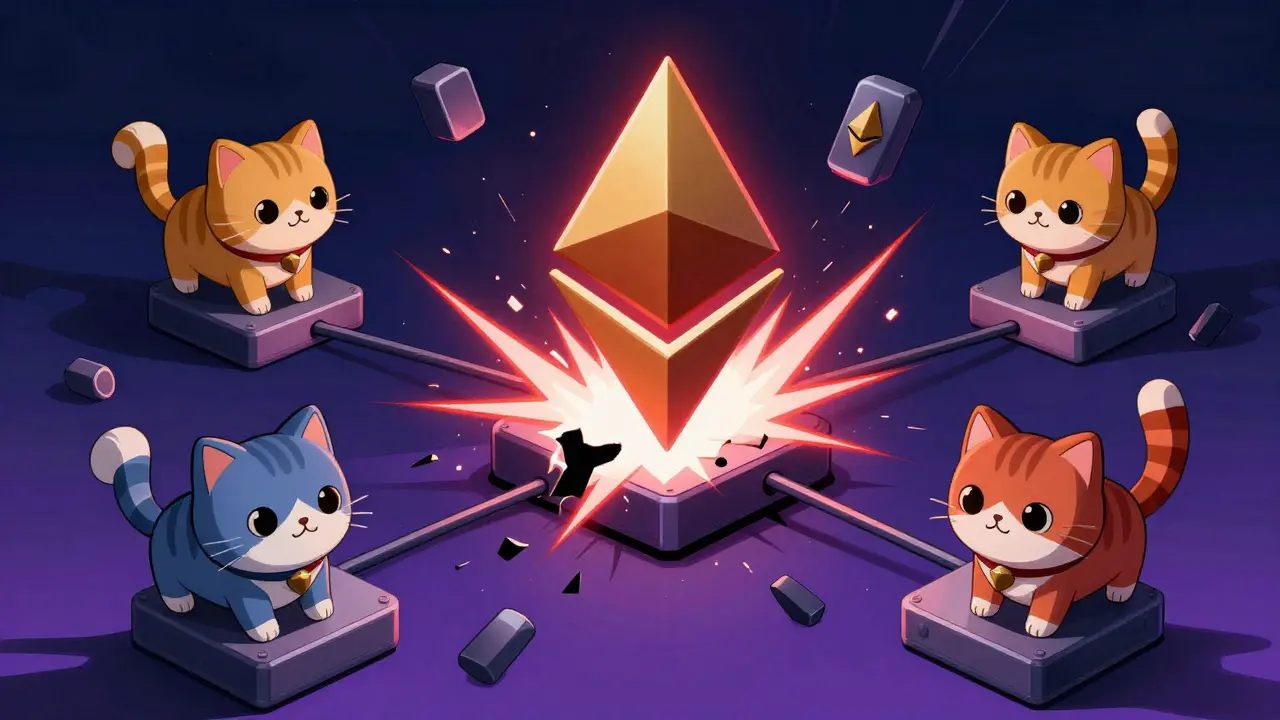
In late 2017, a game called CryptoKitties crashed Ethereum. Why? Because it used a token standard not built for unique items. That moment changed everything. Developers realized they needed specific rules for unique digital assets. This led to the creation of standards like ERC-721, which became the foundation for NFTs as we know them today.
The Birth of ERC-721 and CryptoKitties
Before ERC-721, blockchains used fungible token standards like ERC-20 for things like cryptocurrencies, where each token is identical. But digital art, collectibles, and game items are unique. You can't swap one piece of art for another-they're not interchangeable.
The ERC-721 standard was proposed in January 2017 by Dieter Shirley, CTO of Axiom Zen. It was designed to handle unique tokens. Each token has a unique ID, and the contract tracks who owns it. This allowed projects like CryptoKitties to launch. But there was a problem: every transaction required separate gas fees. Minting 10 CryptoKitties meant 10 transactions, costing hundreds of dollars in gas fees during peak times.
ERC-721: How It Works and Its Limitations
ERC-721 defines core functions like ownerOf, balanceOf, and safeTransferFrom. Each token ID is unique within the contract. This works well for one-of-a-kind items like digital art. However, it has major drawbacks.
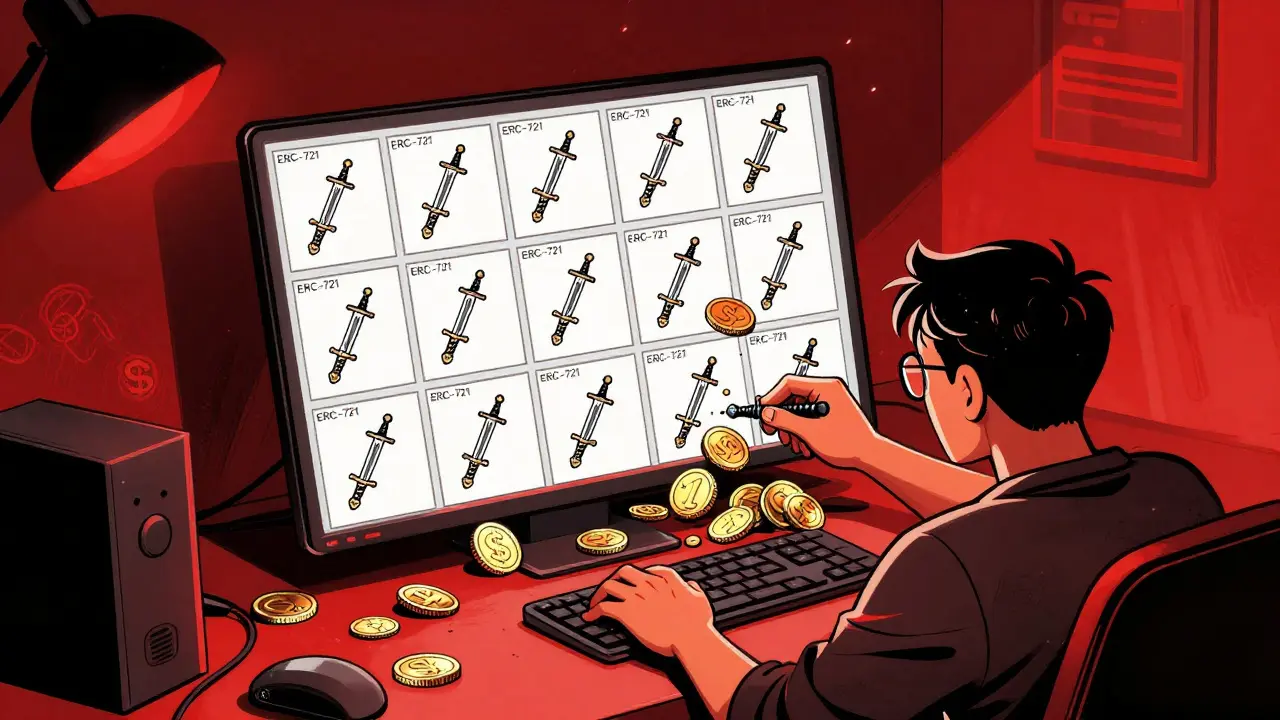
Imagine you're a game developer. You have 100 unique weapons in your game. With ERC-721, you'd need 100 separate contracts, each tracking one weapon. Transferring all 100 would require 100 transactions. Gas fees would be astronomical. That's why ERC-721 isn't ideal for games with many similar items.
ERC-1155: The Multi-Token Solution
Enter ERC-1155. Proposed by Witek Radomski of Enjin in 2018, this standard lets a single contract handle multiple token types. Each token type has a unique ID, but you can mint batches of identical items under one ID.
For example, a game could have one contract for swords. Each sword type (like "Steel Sword" or "Dragon Sword") has its own ID. You can transfer 10 swords in one transaction. Gas costs drop by up to 89.7% compared to ERC-721. This made ERC-1155 popular for gaming and apps with multiple similar assets.
But ERC-1155 isn't perfect. Managing metadata for hundreds of token types can get complex. Some marketplaces still prioritize ERC-721 for simplicity.
Other Blockchains' NFT Standards
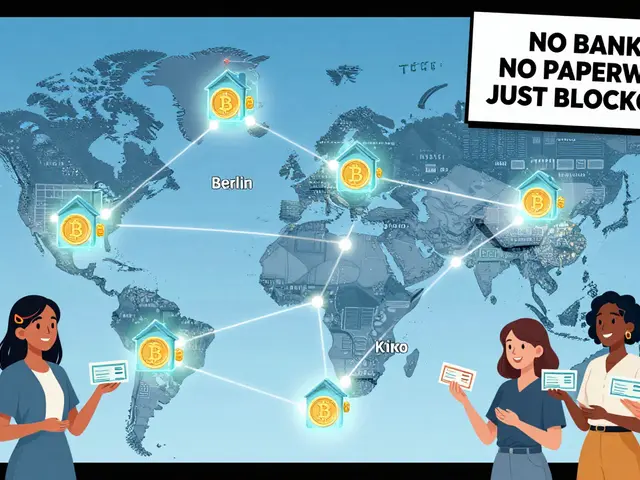
Ethereum isn't the only blockchain with NFT standards. Solana, Flow, Tezos, and Polygon each have their own approaches.
Solana uses a different model. Its NFT standard is built into the blockchain itself, not as a contract extension. This allows near-instant transactions for $0.00025 per transfer. However, wallet compatibility issues mean only 68% of Solana wallets fully support NFTs.
Flow was built by Dapper Labs for user-friendly NFTs. Its Cadence language uses resource-oriented programming. Transactions cost $0.001, and it handles 10,000 per second. But only 12 major marketplaces support Flow NFTs.
Tezos uses the FA2 standard, which is energy-efficient due to proof-of-stake. It's popular among eco-conscious artists but only represents 1.2% of NFT trading volume.
| Standard | Blockchain | Key Features | Transaction Costs (Avg) | Marketplace Support |
|---|---|---|---|---|
| ERC-721 | Ethereum | Single token per contract, unique IDs | $82.37 (2023 peak) | 97% of Ethereum marketplaces |
| ERC-1155 | Ethereum | Multi-token, batch transfers | 89.7% lower gas costs | 85% of Ethereum marketplaces |
| Solana Standard | Solana | Account-based, fast transactions | $0.00025 per tx | 68% of wallets support |
| Flow Standard | Flow | Resource-oriented, user-friendly | $0.001 per tx | 12 major platforms |
Challenges Across NFT Standards
Despite progress, NFT standards face big hurdles.
Gas fees on Ethereum can spike to $82 per transaction. On Polygon, it's $1.27 for the same task. But moving assets between blockchains is hard. A Solana NFT can't be used on Ethereum without complex bridges.
Regulators are also stepping in. The EU's MiCA law, effective December 2024, requires specific metadata for NFTs classified as asset-referencing tokens. This could favor standards like ERC-1155 that have structured metadata.
Enterprise users report 82% cite cross-chain interoperability as their biggest barrier. For example, a company trying to issue NFTs for loyalty programs struggles when their chosen blockchain doesn't play well with others.
How Creators Choose a Standard
Choosing the right standard depends on your project:
- Artists selling one-of-a-kind pieces: ERC-721 on Ethereum or Polygon. High visibility but costs more.
- Game developers: ERC-1155 for batch transfers or Solana for speed and low fees.
- Environmental concerns: Tezos or Flow. They use less energy than Ethereum's old proof-of-work system.
- Enterprise use: Consortium blockchains with custom standards. Many Fortune 500 companies avoid public chains due to regulatory uncertainty.
A 2023 survey of 1,200 digital artists showed 68% preferred Ethereum for its ecosystem, 22% chose Solana for speed, and 10% picked Tezos for sustainability.
Future Trends in NFT Standards
The NFT space is evolving fast. Ethereum's ERC-6551 introduces token-bound accounts, turning NFTs into self-custodial wallets. Early tests show 40% fewer transactions for complex asset management.
Cross-chain efforts are accelerating. The Blockchain Interoperability Alliance is working on a universal metadata schema. If successful, it could let NFTs move seamlessly between blockchains.
Market trends show 63% of new projects launch across multiple chains. This trend will likely grow as users demand lower costs and better performance.
Regulatory fragmentation remains the biggest risk. Different countries might enforce incompatible standards, creating compliance headaches for global platforms.
Frequently Asked Questions
What is the difference between ERC-721 and ERC-1155?
ERC-721 handles one unique token per contract, ideal for one-of-a-kind items like digital art. ERC-1155 allows multiple token types in a single contract, which is great for games with many similar items (like weapons or skins). It also reduces gas costs by letting you transfer multiple tokens in one transaction.
Why do gas fees vary so much between blockchains?
Gas fees depend on the blockchain's design. Ethereum uses a proof-of-work system that's energy-intensive, leading to high fees during congestion. Solana and Flow use more efficient consensus mechanisms-Solana's is optimized for speed, and Flow's account model avoids gas fees for end users. Polygon, a layer-2 solution, batches transactions to keep fees low.
Can I move an NFT from Ethereum to Solana?
Not directly. NFTs are tied to the blockchain they were created on. To move them, you need a bridge-a special service that locks the original NFT and mints a wrapped version on the new chain. However, bridges carry risks like hacks or loss of ownership. Most experts recommend keeping NFTs on their original chain unless you're certain about the bridge's security.
Which standard is best for environmental sustainability?
Tezos and Flow are the most eco-friendly. Tezos uses proof-of-stake, consuming 99.9% less energy than Ethereum's old proof-of-work system. Flow also uses proof-of-stake. Ethereum transitioned to proof-of-stake in 2022, reducing its energy use significantly, but Tezos and Flow still have lower footprints. For artists focused on sustainability, these are the top choices.
What's the biggest risk for NFT standards?
Regulatory fragmentation. Different countries may impose conflicting rules on NFTs. For example, the EU's MiCA law requires specific metadata for asset-referencing tokens, while the U.S. hasn't settled on a clear framework. This inconsistency makes it hard for global platforms to comply, potentially splitting the NFT market into regional silos.
17 Comments
Jacque Istok
February 7 2026ERC-721's unique token IDs work great for art, but for games with hundreds of items? Disaster. Each sword needs its own contract and transaction. Gas fees would be insane. ERC-1155 fixes this with batch transfers. Simple solution, but why did it take so long?
David Bain
February 8 2026The ERC-721 standard's inherent limitation regarding per-token transactional overhead necessitates the adoption of multi-token standards such as ERC-1155. This standard encapsulates fungible, non-fungible, and semi-fungible token types within a single contract architecture, thereby optimizing gas efficiency and reducing transactional complexity.
Shruti Sharma
February 10 2026crypto kitties crashed eth in 2017 cus they used a standard not for unique items. that's why erc-721 was made. now 1155 is way better for games. gas fees are insane for 721
Ajay Singh
February 12 2026ERC-1155 is the clear choice for gaming NFTs. Period.
Freddie Palmer
February 12 2026Wait, so ERC-1155 allows multiple token types in one contract, which means you can mint a batch of identical items under one ID? That's a game-changer for games, right? Like, transferring 10 swords in one tx instead of 10 separate ones? That sounds amazing-gas fees would be so much lower. But does it handle metadata properly for each item type? I'm curious about the trade-offs.
Robin Ødis
February 12 2026Your understanding of NFT standards is rudimentary. The ERC-721 standard was developed specifically for unique assets, and while ERC-1155 offers batch transfers, it introduces metadata management complexities that are often overlooked. For serious projects, ERC-721's simplicity is preferable.
Alex Garnett
February 14 2026Americans don't understand blockchain standards. ERC-721 is the only real standard. ERC-1155 is a half-baked solution for lazy developers. Ethereum is the only blockchain that matters. Stop trying to make Solana or Flow relevant.
Michael Sullivan
February 15 2026Metadata management in ERC-1155 is actually straightforward. Each token type has a unique ID, and metadata is stored in a centralized registry. The gas savings are massive-up to 89.7% lower than ERC-721. It's the only logical choice for scalable applications.
Kyle Pearce-O'Brien
February 15 2026Ah, yes! The ERC-1155 standard is a masterpiece of blockchain engineering. Imagine a single contract handling all your token types-fungible, non-fungible, semi-fungible! It's like having a Swiss Army knife for NFTs. 🤖 But let's not forget the trade-offs: metadata complexity and marketplace adoption. Still, for any serious project, it's the way to go. 💡
Oliver James Scarth
February 17 2026The ERC-721 standard's design philosophy aligns with the fundamental principles of uniqueness in digital assets. However, the advent of ERC-1155 represents a significant evolution in token standardisation, particularly for applications requiring high throughput and cost efficiency. It is imperative to consider the specific use case before selecting a standard.
Ryan Chandler
February 18 2026NFT standards are like different languages-each has its own strengths. ERC-721 is the classic novel for art collectors, while ERC-1155 is the fast-paced thriller for gamers. Solana's standard is the lightweight ebook, and Tezos is the eco-friendly paperback. Choose wisely, my friends!
Kieren Hagan
February 20 2026ERC-721 is ideal for one-of-a-kind items like digital art, but for games with multiple similar assets, ERC-1155's batch transfer capability significantly reduces gas costs. It's a practical solution that addresses real-world scalability issues.
Nathaniel Okubule
February 22 2026For artists selling unique pieces, ERC-721 is perfect. For game developers, ERC-1155 saves time and money. Simple as that.
Paul Jardetzky
February 22 2026ERC-1155 is a game-changer for gaming NFTs! Batch transfers mean way lower gas fees. 🚀 Also, cross-chain solutions are coming-soon you'll be able to move NFTs between blockchains easily. Exciting times ahead! 😄
Reda Adaou
February 23 2026The choice of token standard really depends on the project. ERC-721 for art, ERC-1155 for games, Solana for speed, Tezos for sustainability. It's all about matching the standard to your needs. No one-size-fits-all solution.
perry jody
February 24 2026Yes! Cross-chain interoperability is the future. Imagine having your NFTs work across all blockchains. ERC-1155 is already helping, but we need more bridges. Let's make it happen! 🔥
aryan danial
February 25 2026ERC-721 is great for one-of-a-kind items. Each token has a unique ID. But for games with many similar items it's a disaster. Imagine a game with 100 swords. Each sword needs its own contract. Transferring 100 swords means 100 transactions. Gas fees would be insane. ERC-1155 fixes this. One contract for all sword types. Batch transfers. One transaction for multiple items. Gas costs drop by 89.7%. That's huge. But managing metadata for hundreds of token types can be complex. Some marketplaces still prefer ERC-721 for simplicity. Solana has its own standard. Fast transactions. $0.00025 per transfer. But wallet compatibility is only 68%. Flow uses Cadence. Resource-oriented programming. Transactions cost $0.001. But only 12 marketplaces support it. Tezos is eco-friendly. FA2 standard. Proof-of-stake. Only 1.2% of NFT volume. Ethereum's gas fees spike to $82. Polygon is $1.27. Cross-chain interoperability is a big problem. Regulators are stepping in. EU's MiCA law requires specific metadata. This could favor ERC-1155. Enterprises say 82% cite cross-chain as the biggest barrier. Artists prefer Ethereum for ecosystem. 68% chose it. Solana for speed. Tezos for sustainability. ERC-6551 introduces token-bound accounts. 40% fewer transactions. Blockchain Interoperability Alliance is working on universal metadata. 63% of new projects launch across multiple chains. Regulatory fragmentation is the biggest risk. Different countries have different rules. This could split the NFT market.