What is LooksRare (LOOKS) Crypto Coin: Tokenomics, Staking & Risks
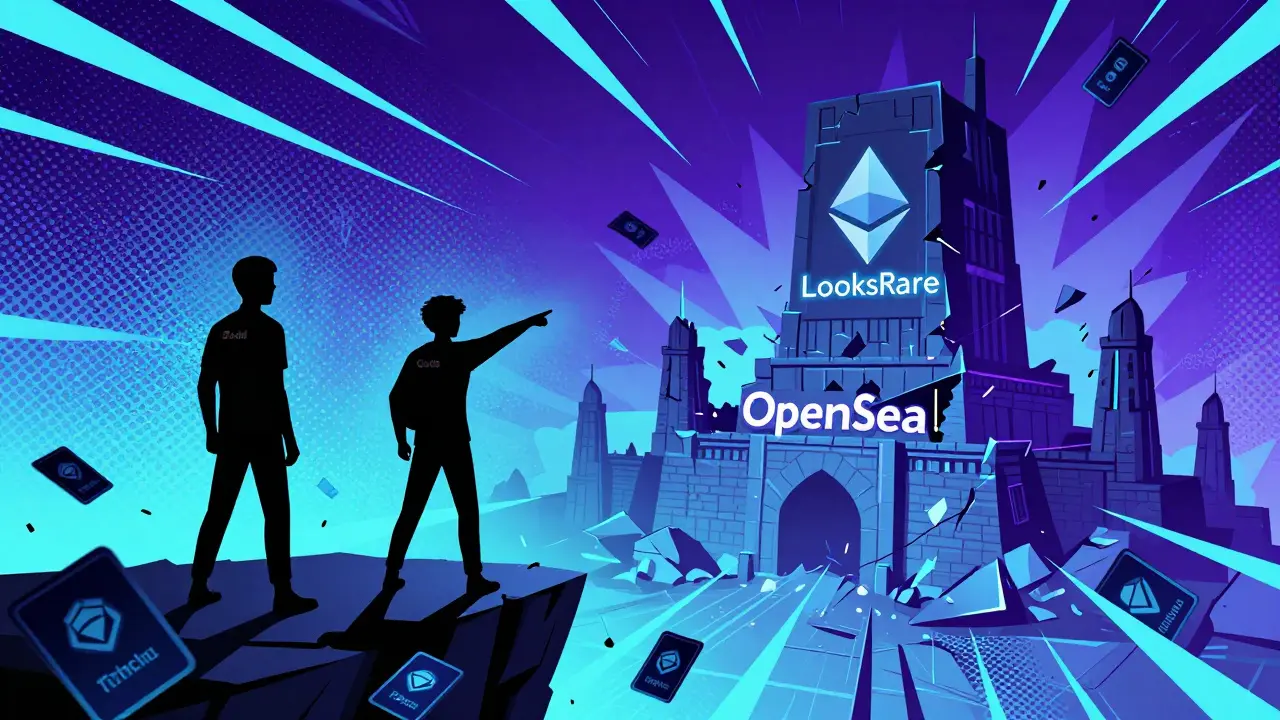
You might have heard the name LooksRare (LOOKS) thrown around in crypto circles since early 2022. It started as a bold challenge to the giant of non-fungible tokens, OpenSea. The promise was simple but aggressive: lower fees and massive rewards for users who traded on the platform. But what is the LOOKS cryptocurrency token actually doing today? Is it still worth your attention, or has the hype faded?
At its core, LooksRare is a decentralized NFT marketplace built entirely on the Ethereum blockchain. The LOOKS token acts as the fuel for this ecosystem. It isn't just a speculative asset; it’s designed to govern the platform and reward participants. If you are holding LOOKS or considering buying some, you need to understand how the mechanics work, where the value comes from, and why the price has moved so drastically since launch.
The Core Philosophy: Community Over Corporate
To understand the token, you first have to look at the platform itself. LooksRare was launched on January 10, 2022, by two anonymous founders known only as "Zodd" and "Guts." They didn’t come with big venture capital backing or famous names. Instead, they brought a mission: to take market share from OpenSea by giving that value back to the community.
This approach mirrors what happened in the decentralized finance (DeFi) space when SushiSwap challenged Uniswap. SushiSwap offered higher yields to liquidity providers, stealing volume from Uniswap overnight. LooksRare tried the same playbook for NFTs.
The platform operates on three main pillars:
- Rewarding Traders: Users get rebates for buying and selling NFTs.
- Redistributing Fees: 100% of platform fees go to token stakers.
- Creative Royalties: Instant payments to artists upon sale.
Unlike traditional exchanges that keep their profits, LooksRare promises to pass every cent of its platform fee directly to the people holding and staking the LOOKS token. This creates a direct link between platform usage and token value.
How the LOOKS Token Works
The LOOKS token is an ERC-20 utility token. This means it lives on the Ethereum network and follows standard compatibility rules, allowing it to be stored in wallets like MetaMask.
There are two primary ways you interact with the token:
- Governance: Holders can vote on proposals that affect the future of the marketplace. With 75% of the total supply allocated to the community, the idea is that the users run the show, not the developers.
- Staking for Rewards: This is the most common use case. By locking up your LOOKS tokens, you earn a share of the platform’s revenue.
When you stake LOOKS, you aren't just parking money. You are essentially betting on the platform's growth. The more trades happen on LooksRare, the more fees are generated, and the more rewards are distributed to stakers. However, this mechanism also introduces inflationary pressure, which we will discuss later.
Fee Structure and Trading Mechanics
Let’s talk numbers, because that’s what drives adoption. LooksRare charges a flat 2% sales fee on all public NFT transactions. Compare this to OpenSea’s standard 2.5% fee. That 0.5% difference might seem small, but in the high-volume world of blue-chip NFTs, it adds up quickly.
| Feature | LooksRare | OpenSea |
|---|---|---|
| Platform Fee | 2% | 2.5% |
| Trader Rebate | 0.5% in ETH | None (historically) |
| Fee Distribution | 100% to Stakers | Retained by Platform |
| Private Sales | Fee-free | Variable |
But here is the kicker: LooksRare doesn’t just charge less. It pays you to trade. Every time you buy or sell an NFT, you receive a 0.5% rebate in ETH (Ether). This rebate is automatic and goes straight to your wallet. For active traders, this effectively lowers their net cost even further, making the platform highly attractive compared to competitors who offer no such kickback.
All transactions settle on-chain using ETH or wrapped Ether (WETH). There are no proprietary coins for trading, which keeps things simple and compatible with the broader Ethereum ecosystem.
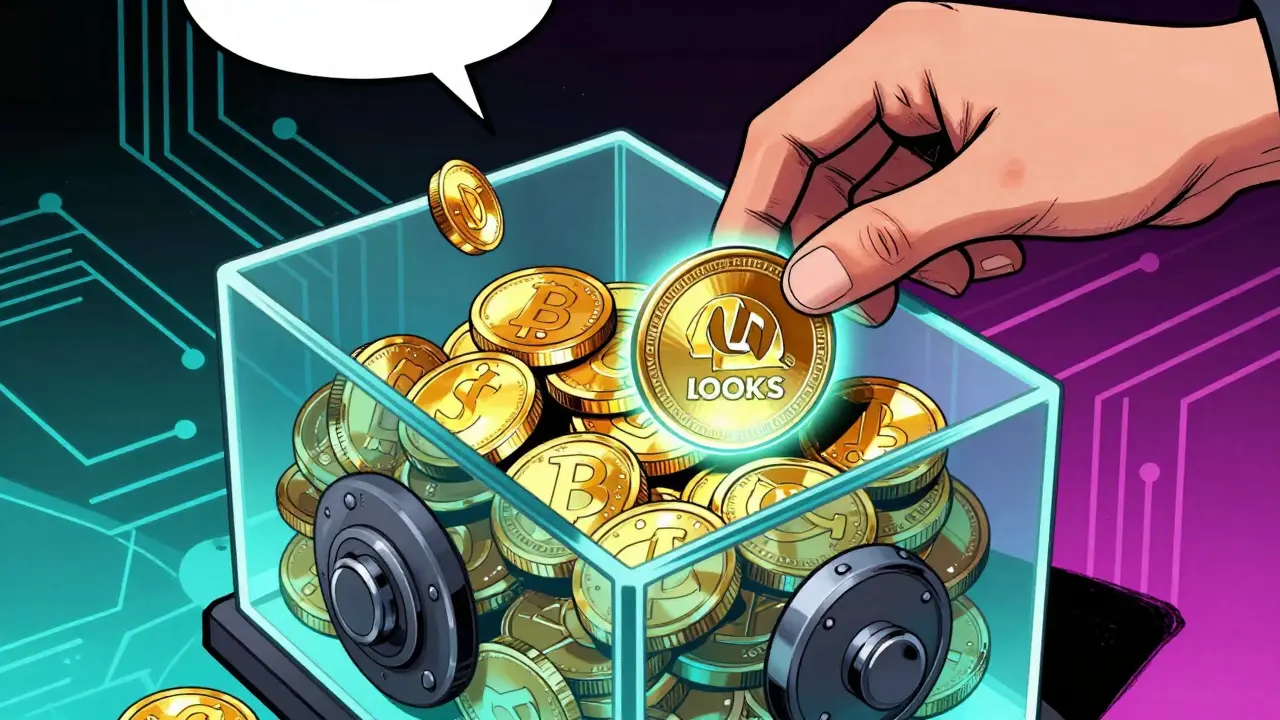
Staking: Passive vs. Active
If you hold LOOKS, you likely want to put it to work. The platform offers two staking modes, and understanding the difference is crucial for managing your risk and returns.
Passive Staking works like a traditional savings account. You lock your tokens for a set period. In return, you earn rewards. However, your tokens are illiquid during this time. If the market crashes, you cannot sell them until the lock-up ends.
Active Staking is more flexible. Your tokens remain unlocked and tradable. You can sell them at any time. The rewards are automatically compounded into your balance. Most users prefer this method because it allows them to exit quickly if sentiment turns negative. When you unstake, you get your initial amount plus all accumulated rewards.
In the early days, Annual Percentage Rates (APR) for staking exceeded 700%. These were astronomical returns driven by the initial rush of users and high trading volumes. Today, those rates have normalized significantly. As more people stake and trading volume fluctuates, the APR adjusts downward. This is a natural part of token economics; unsustainable yields eventually stabilize.
The Elephant in the Room: Wash Trading
We cannot talk about LooksRare without addressing its biggest controversy. To attract users, the platform offered massive incentives. Unfortunately, this created a loophole. Some users engaged in "wash trading," where they bought and sold NFTs to themselves or coordinated partners to generate fake volume.
Why do this? Because the 0.5% trading rebate and LOOKS rewards are based on transaction volume. If I sell an NFT for $1,000 and immediately buy it back, I’ve technically generated $2,000 in volume. I collect the ETH rebate and LOOKS rewards, often costing me less than I earned in fees.
This practice artificially inflated the platform’s reported trading numbers. While it boosted short-term metrics, it damaged the platform’s reputation among serious collectors and analysts. It also drained the treasury faster than organic growth would allow. The team has implemented measures to detect and penalize these activities, but the stigma remains a factor in the token’s valuation.
Tokenomics and Supply
Understanding the supply dynamics helps explain price movements. The total supply of LOOKS is fixed, but the distribution is heavily skewed toward the community.
- Total Supply: Approximately 1 billion tokens.
- Circulating Supply: Nearly 999.9 million tokens are already in circulation.
- Airdrop: At launch, 12% of the supply (120 million tokens) was airdropped to eligible OpenSea users who had traded over $3,000 worth of NFTs between June and December 2021.
- Community Allocation: 75% of the total supply is reserved for community rewards, governance, and development.
Because almost the entire supply is circulating, there is very little new issuance coming from vesting schedules or team unlocks. This reduces one source of sell pressure. However, the continuous minting of rewards for stakers and traders does create ongoing inflationary pressure within the ecosystem.
Current Market Status (2026)
As of May 2026, the LOOKS token trades at a fraction of its peak value. Prices hover around $0.00036 to $0.0005 USD. The market capitalization sits near $542,000, ranking it outside the top 2,000 cryptocurrencies by size.
This decline reflects several factors:
- Hype Cycle Completion: The initial FOMO (Fear Of Missing Out) has passed.
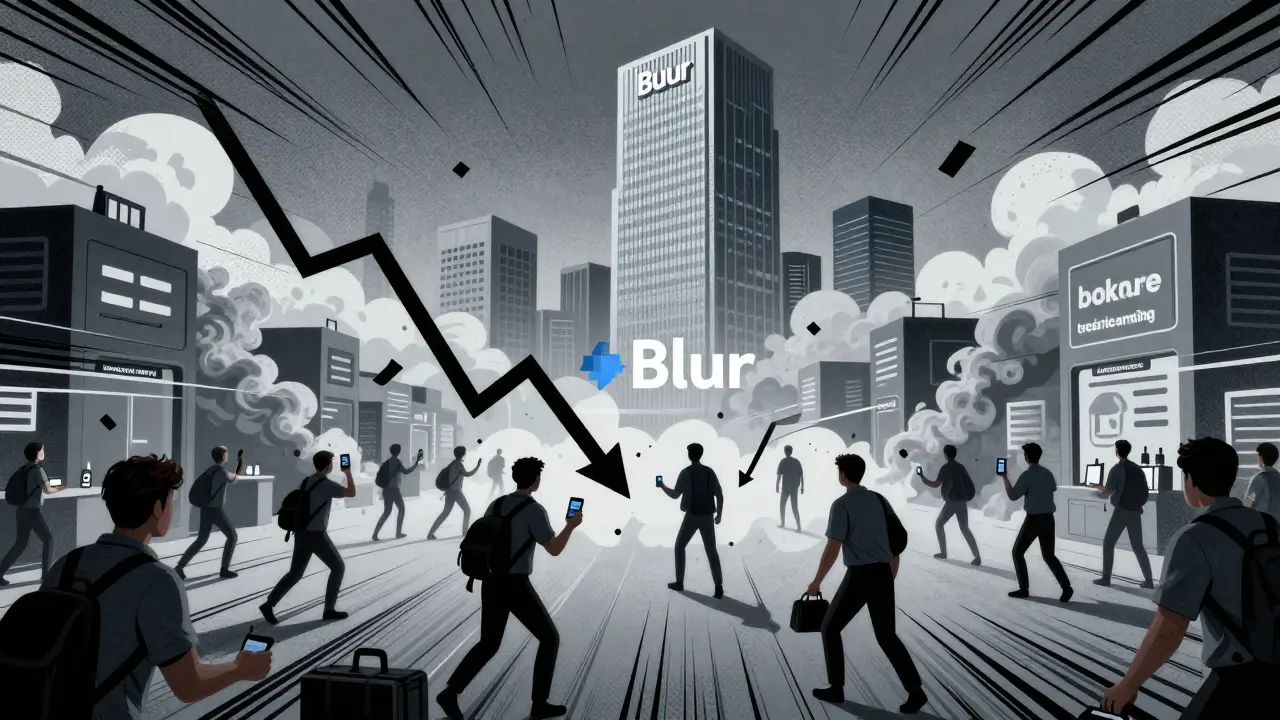
- Competition: Other marketplaces like Blur entered the space with even more aggressive pro-trader tools, siphoning off the whale users that LooksRare initially attracted.
- Bear Market Dynamics: The broader NFT market cooled down after the 2021-2022 boom, reducing overall trading volume across all platforms.
Despite the low price, the platform continues to operate. It maintains its modular smart contract architecture, allowing for iterative updates. Features like trait-based bidding (e.g., bidding specifically for Bored Apes with specific traits) and multi-collection bidding are part of the roadmap, aiming to improve efficiency for professional traders.
Is LooksRare Still Viable?
The question isn't whether LooksRare failed-it’s whether it found its niche. It successfully proved that a community-owned model could challenge incumbents. It forced OpenSea to reconsider its fee structures and user incentives.
For the average user, LOOKS remains a speculative play. It is not a store of value like Bitcoin or a smart contract platform like Ethereum. Its value is tied strictly to the activity on the LooksRare marketplace. If trading volume picks up again, staking rewards become more attractive, potentially driving demand for the token.
However, investors should be cautious. The history of wash trading and the intense competition from Blur mean that recovery will require genuine organic growth, not just incentive-driven volume. The platform’s transparency and commitment to redistributing 100% of fees remain its strongest arguments for long-term sustainability.
Can I buy LOOKS tokens on Coinbase or Binance?
Availability varies by region and exchange listings. Due to its lower market cap, LOOKS may not be listed on major centralized exchanges like Coinbase. You typically need to use decentralized exchanges (DEXs) like Uniswap on the Ethereum network to swap ETH for LOOKS. Always check current listing status before attempting to purchase.
Does LooksRare support other blockchains like Solana?
No. LooksRare is built exclusively on the Ethereum blockchain. It supports ERC-721 and ERC-1155 NFT standards. It does not currently operate on Layer 2 solutions or alternative chains like Solana or Polygon, meaning users pay Ethereum gas fees for transactions.
What happens to my staked LOOKS if I sell them?
If you are using Active Staking, you can sell your LOOKS tokens at any time. Your position in the staking pool is adjusted proportionally. You will lose out on future rewards from that point forward, but you retain the rewards accrued up to the moment of sale. Passive staking locks your tokens until the period expires.
How does LooksRare prevent wash trading?
The team employs algorithmic detection systems to identify suspicious patterns, such as rapid back-and-forth trades between known wallets. Accounts flagged for wash trading can be banned from receiving rewards. However, detecting sophisticated collusion remains challenging in a decentralized environment.
Who founded LooksRare?
LooksRare was founded by two anonymous individuals using the pseudonyms "Zodd" and "Guts." They led an initial team of 11 members. The anonymity aligns with the project’s ethos of focusing on the code and community rather than celebrity founders.