What is MarbleVerse (RLM) Crypto Coin? A 2026 Guide to the Play-to-Earn Token
You’ve probably seen the term "play-to-earn" thrown around a lot in crypto circles. It sounds promising: play games, earn money. But when you look at specific projects like MarbleVerse, which uses the RLM token (also known as Rollium) as its native currency on the Cronos network, things get complicated. Is it just another hype project, or does it have real mechanics behind it?
As of mid-2026, MarbleVerse sits in a niche corner of the crypto market. It’s not one of the top 10 coins you see on every billboard. In fact, if you check major trackers, it ranks somewhere around #6500. That low ranking isn’t necessarily bad-it means it’s a small-cap asset with high volatility and specific utility within its own ecosystem. To understand what RLM actually is, we need to strip away the marketing jargon and look at how the game works, where the token fits in, and what the numbers tell us about its current health.
The Core Concept: NFT Marbles and Racing
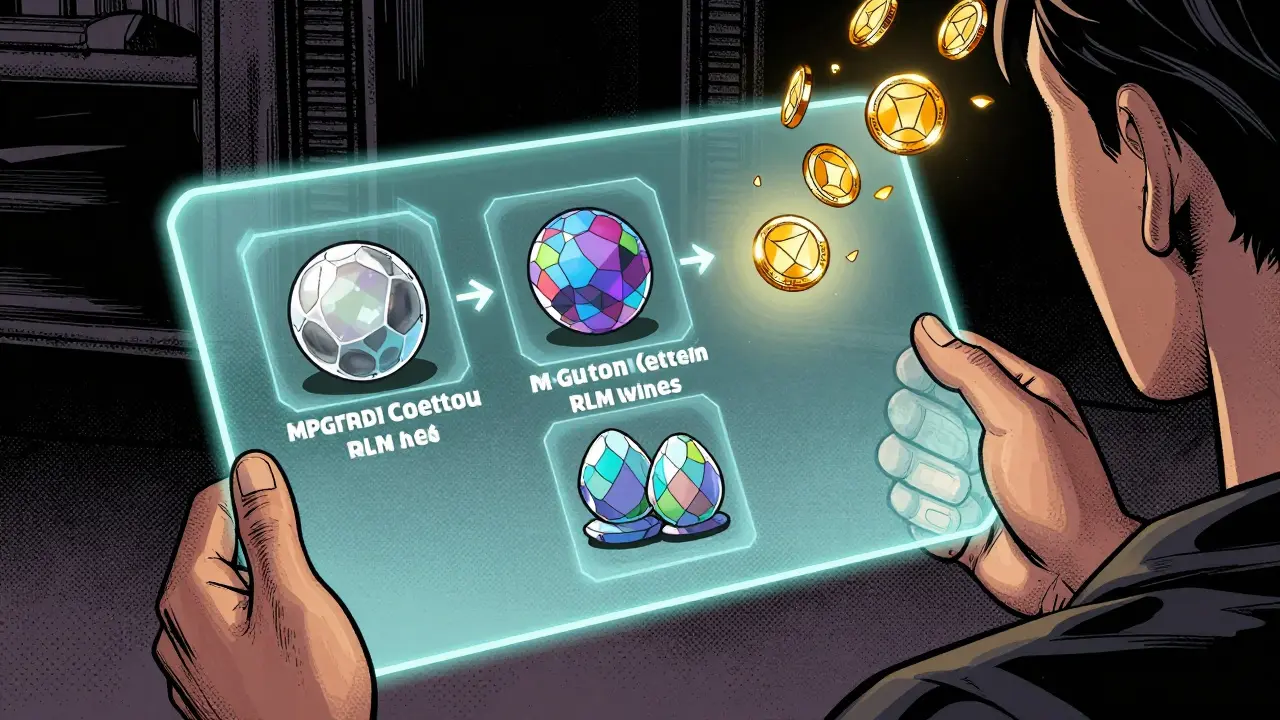
At its heart, MarbleVerse is a blockchain-based game. You don’t just buy the token and hold it; the value of the RLM token is tied directly to the activity inside the game. The primary mechanic involves Non-Fungible Tokens (NFTs) that represent digital marbles.
Here is how the loop works:
- Minting: Players acquire or mint these Marble NFTs. Each marble has unique traits.
- Racing: These marbles compete in automated races against other players' marbles.
- Earning: If your marble finishes in a top position, you are rewarded with Rollium (RLM) tokens.
This creates a direct link between gameplay performance and financial reward. Unlike traditional gaming where your progress stays locked in the developer's server, here your assets (the marbles) are owned by you on the blockchain. However, this also means that if the game loses popularity, the demand for the RLM token used to upgrade those marbles could drop significantly.
What Does the RLM Token Actually Do?
A common mistake new investors make is treating the RLM token like Bitcoin-something you just buy and store. RLM is an ERC-20 token operating on the Cronos blockchain. Its purpose is functional, not just speculative. Within the MarbleVerse ecosystem, you need RLM to do almost everything interesting.
If you want to improve your chances of winning races, you can use RLM to upgrade your NFT marbles. Better stats mean better race positions, which mean more rewards. You can also use the token to customize the appearance of your marbles, which might appeal to collectors even if they aren't competitive racers.
Furthermore, the token enables breeding mechanics. By using RLM, players can mint second-generation marbles that inherit traits from their parents. This adds a layer of strategy similar to Pokémon breeding, but with economic incentives attached. Finally, holding RLM gives you a voice in the project’s future through governance votes, allowing the community to decide on development directions.
Technical Specs and Supply Dynamics
When analyzing any crypto coin, you need to look at the supply structure. For MarbleVerse, the numbers are straightforward but important for understanding potential inflation or scarcity.
| Attribute | Value / Detail |
|---|---|
| Token Name | Rollium (RLM) |
| Blockchain | Cronos (ERC-20 standard) |
| Max Total Supply | 100,000,000 RLM |
| Current Circulating Supply | Data varies/limited liquidity |
| Fully Diluted Valuation (FDV) | ~$17,838 USD (based on recent lows) |
The cap of 100 million tokens is relatively small compared to giants like Ethereum or Solana, but typical for gaming tokens. The key metric here is the Fully Diluted Valuation (FDV). With an FDV hovering around $17,000-$18,000 USD during periods of low price, the total market value of the entire project is quite modest. This indicates that while the percentage gains can be massive if the game goes viral, the absolute capital required to move the price is very low. This makes it highly susceptible to manipulation or sudden crashes if large holders sell off.
Market Performance and Liquidity Reality Check
Let’s talk about the hard numbers because this is where many people get burned. As of July 2026, the trading data for RLM paints a picture of a project with very low liquidity.
Price tracking across major aggregators shows RLM trading in the fraction-of-a-cent range. For instance, CoinGecko and Bybit have reported prices fluctuating between $0.000097 and $0.000126 USD. While these numbers seem tiny, the more concerning metric is the volume. Some sources report 24-hour trading volumes as low as $1.31 to $2.96 USD. Yes, you read that right-single-digit dollar volumes.
Why does this matter? Low volume means low liquidity. If you try to buy a significant amount of RLM, you might push the price up drastically (slippage). Conversely, if you try to sell, you might crash the price because there aren't enough buyers waiting in the order book. The primary trading venues include Crodex, Ebisu's Bay, and Bybit, but even on larger platforms like Binance, volume has been reported as zero in some snapshots.
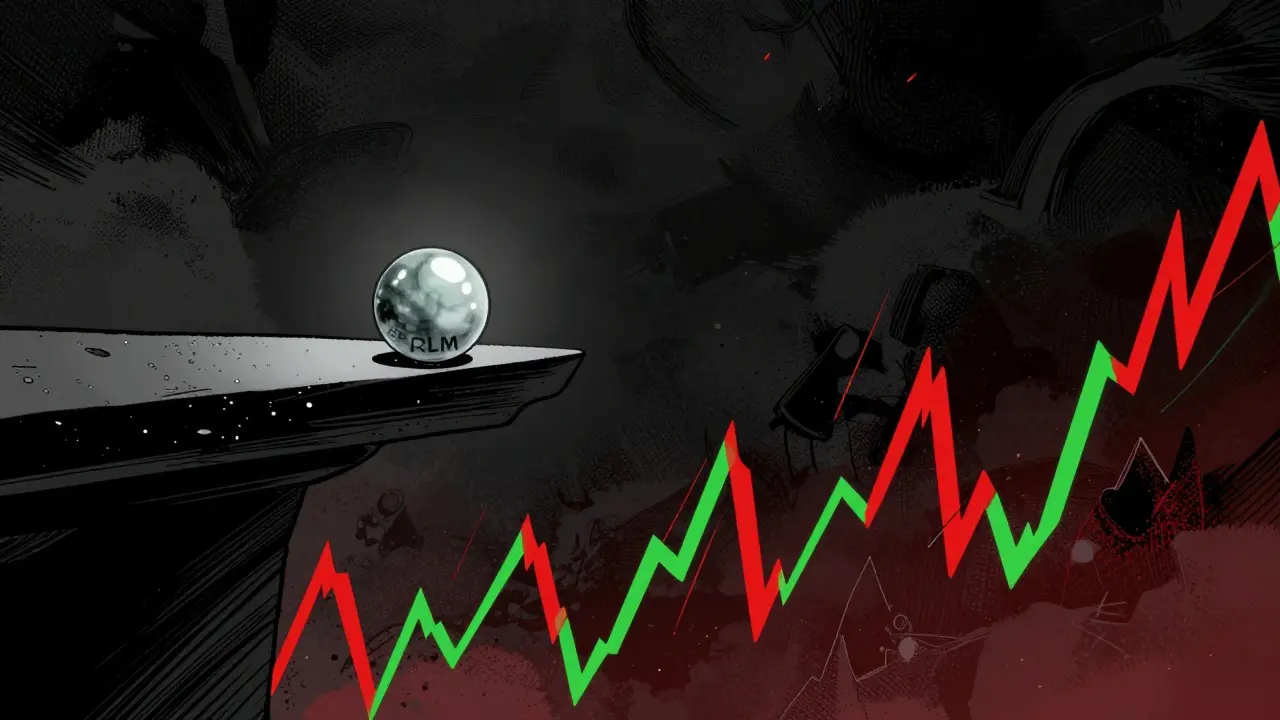
Historically, RLM has seen extreme volatility. It has traded at highs relative to Bitcoin and lows that were 99% below those peaks. In short-term windows, it has shown resilience, outperforming the broader crypto market by gaining 5.4% over a week when the general market only moved 0.3%. However, this outperformance often happens in isolation due to the thin trading pool rather than broad institutional interest.
Why Cronos? The Infrastructure Choice
MarbleVerse operates on the Cronos blockchain. This is a strategic choice. Cronos is known for fast block times and significantly lower transaction fees compared to Ethereum Mainnet. For a play-to-earn game where players might be making frequent micro-transactions (minting, upgrading, entering races), high gas fees would kill the user experience.
By choosing Cronos, MarbleVerse lowers the barrier to entry. Players don’t need to spend $20 on network fees to enter a race that might earn them $0.50. This accessibility is crucial for retaining users in the competitive gaming sector. However, it also ties the fate of RLM to the health of the Cronos ecosystem. If Cronos loses relevance, MarbleVerse faces migration challenges.
Is MarbleVerse Worth Your Attention in 2026?
Deciding whether to engage with MarbleVerse depends entirely on your goals. Are you looking for a passive investment that will likely double in value next year? Probably not. The low market cap and minimal volume suggest it lacks the institutional backing or widespread adoption needed for steady, organic growth.
However, if you are a gamer interested in the mechanics of NFT ownership and decentralized governance, MarbleVerse offers a concrete example of how these technologies interact. You can mint a marble, participate in the economy, and vote on changes. It serves as a microcosm of the play-to-earn model.
For investors, the risk/reward ratio is skewed heavily toward risk. The potential for high percentage returns exists because the base is so small, but the likelihood of losing your entire investment due to illiquidity or project abandonment is equally high. Always verify the latest contract addresses and security audits before interacting with any dApp.
Where can I buy RLM tokens?
RLM tokens are primarily traded on decentralized exchanges like Crodex and Ebisu's Bay, as well as some centralized platforms like Bybit. Due to low liquidity, always check the current order book depth before placing trades to avoid excessive slippage.
What is the difference between RLM and Rollium?
There is no difference. RLM is the ticker symbol for the token, while Rollium is the full name of the cryptocurrency used within the MarbleVerse ecosystem. They refer to the exact same ERC-20 token on the Cronos network.
How do I start playing MarbleVerse?
To play, you need a Web3 wallet compatible with the Cronos network (such as MetaMask configured for Cronos). You then visit the MarbleVerse platform via web browser, mobile app, or desktop client, connect your wallet, and either mint or purchase an NFT Marble to begin racing.
Is MarbleVerse safe to invest in?
Like all low-cap cryptocurrencies, MarbleVerse carries significant risk. The low trading volume means prices can swing wildly, and there is a risk of illiquidity where you cannot sell your tokens easily. It is considered a high-risk, speculative asset rather than a stable investment.
What blockchain does MarbleVerse use?
MarbleVerse operates on the Cronos blockchain. This allows for faster transactions and lower fees compared to Ethereum, which is essential for the frequent micro-interactions required in play-to-earn gaming.