What is QuarkChain (QKC) Crypto Coin? A Simple Breakdown of Its Tech, Use Cases, and Real-World Potential
Most people hear about Bitcoin or Ethereum and assume that’s all there is to blockchain. But what if you could process 100,000 transactions per second-not 15, like Ethereum, or 7, like Bitcoin? That’s the promise of QuarkChain (QKC), a blockchain built from the ground up to fix the speed problem that’s held crypto back for years.
What Exactly Is QuarkChain?
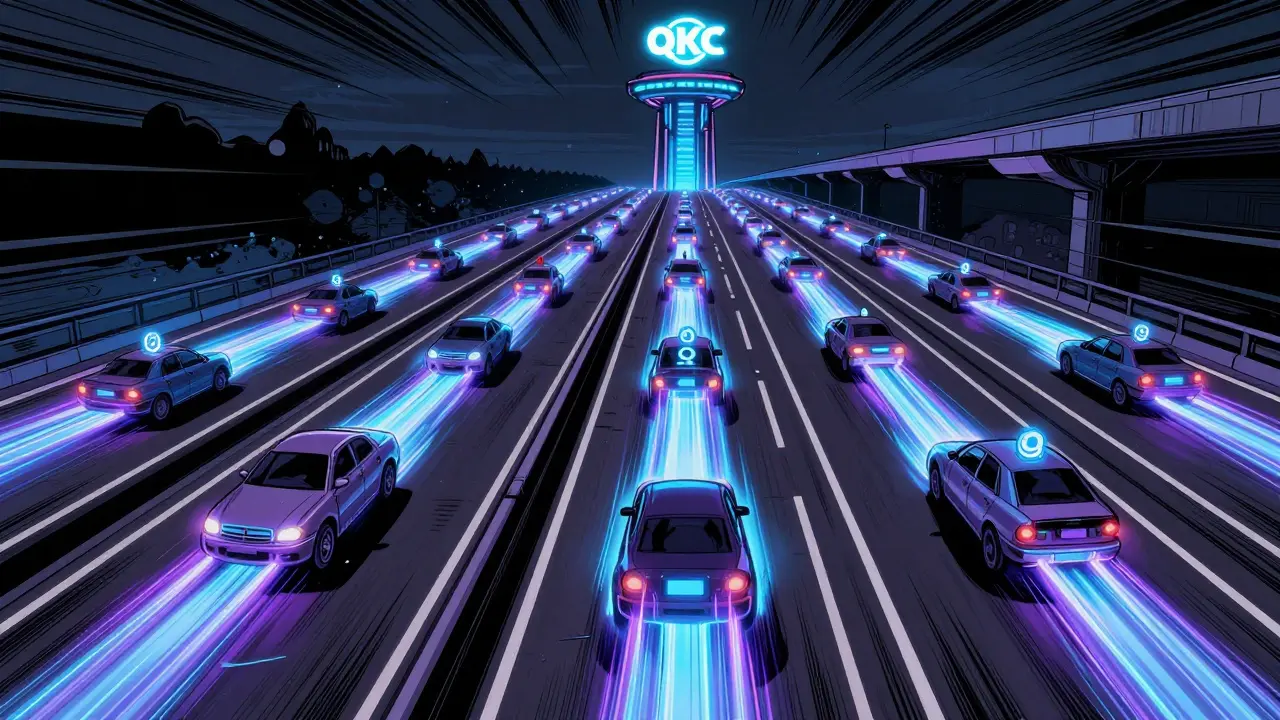
QuarkChain is a blockchain network designed to handle massive amounts of transactions without slowing down. It was launched in June 2019 by Dr. Qi Zhou, a former Google engineer with a Ph.D. in electrical engineering. His team noticed that most blockchains were stuck in a trade-off: you could have security and decentralization, or speed-but not all three at once. This is what experts call the "blockchain trilemma." QuarkChain’s answer? A two-layer system. The first layer is made up of dozens, even hundreds, of smaller blockchains called "shards." Each shard processes its own transactions independently. The second layer is the root chain, which doesn’t handle transactions itself-it just checks and confirms blocks from all the shards. Think of it like a highway system: instead of one road where every car has to wait in line, you have 50 parallel lanes, each handling traffic on its own, with a central control tower making sure everything stays safe and connected.How Does QKC Work?
The QKC token is the fuel of the network. You need it to pay for transactions, stake for rewards, and vote on network upgrades. But what makes QuarkChain special isn’t just the token-it’s how the system handles cross-shard transactions. Most sharding systems only let you send coins within the same shard. If you’re on Shard 3 and want to send QKC to someone on Shard 17, you’re out of luck-or you have to wait for a slow, complicated process. QuarkChain solves this. It allows direct, fast cross-shard transfers. That means your payment can go from one shard to another in seconds, and the whole network scales as you add more shards. More shards = more speed. It’s linear scaling, not a bottleneck. It’s also EVM-compatible. That’s a big deal. If you’ve built a smart contract on Ethereum, you can move it to QuarkChain with minimal changes. Developers don’t have to learn a whole new language. That lowers the barrier for adoption and helps bring in talent from the Ethereum ecosystem.Why Does This Matter?
Imagine a decentralized game where 10,000 players are trading items every second. Or a payment app where users send microtransactions for coffee, bus rides, or tips. On Bitcoin or Ethereum, those transactions would pile up, fees would spike, and the network would crawl. On QuarkChain? It’s designed for that exact scenario. That’s why companies like Morpheus Labs, TokenInsight, and PlayTable have built on QuarkChain. They’re using it for enterprise tools, gaming platforms, and data analytics-not because it’s trendy, but because it actually works at scale.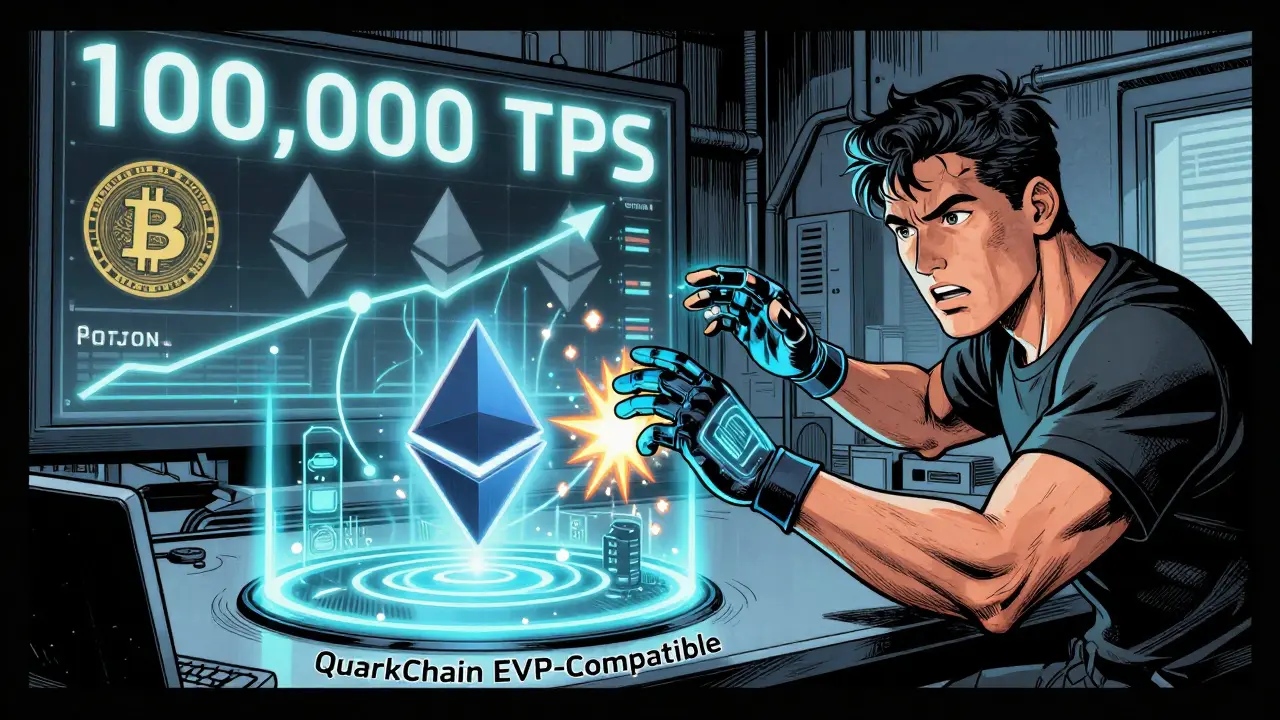
How Does It Compare to Other Blockchains?
| Blockchain | Transactions Per Second (TPS) | Sharding? | EVM-Compatible? | Cross-Shard Transactions? |
|---|---|---|---|---|
| QuarkChain (QKC) | 100,000+ | Yes | Yes | Yes |
| Ethereum | 15-45 | Yes (in progress) | Yes | No (not yet) |
| Solana | 50,000-65,000 | No | No | N/A |
| Bitcoin | 4-7 | No | No | N/A |
Is QKC a Good Investment?
Price-wise, QKC has been volatile. In late 2023, it swung from $0.0099 to $0.049 in just a few months. That’s not unusual for a smaller crypto project. But here’s the thing: its market cap is still tiny compared to Ethereum or Solana. That means it’s not yet a mainstream asset. If QuarkChain gains traction with developers and enterprises, the price could rise. But if adoption stalls, it might stay stuck in the shadows. Staking QKC gives you rewards, but yields vary. There’s no fixed APY-it depends on how many people are staking and how much network activity there is. Governance participation is low, too-only about 12.7% of tokens are used to vote on upgrades. That’s a red flag for some. A healthy blockchain needs active community input.What Are the Downsides?
QuarkChain isn’t perfect. For one, it’s not easy to use for beginners. Setting up a wallet requires manual steps. Most exchanges don’t support direct QKC deposits-you often have to swap from an ERC-20 version first. Reddit users have complained about poor documentation for non-tech people. The developer community is also small. You won’t find thousands of open-source projects on GitHub like you do with Ethereum. Partnerships with companies like Morpheus Labs are promising, but they’re still niche. Without more apps, users won’t come. And without users, developers won’t build. There’s also the question of security. With so many shards, is it possible for a bad actor to target a weak one? The design says no-the root chain validates everything. But real-world attacks haven’t been tested at scale yet.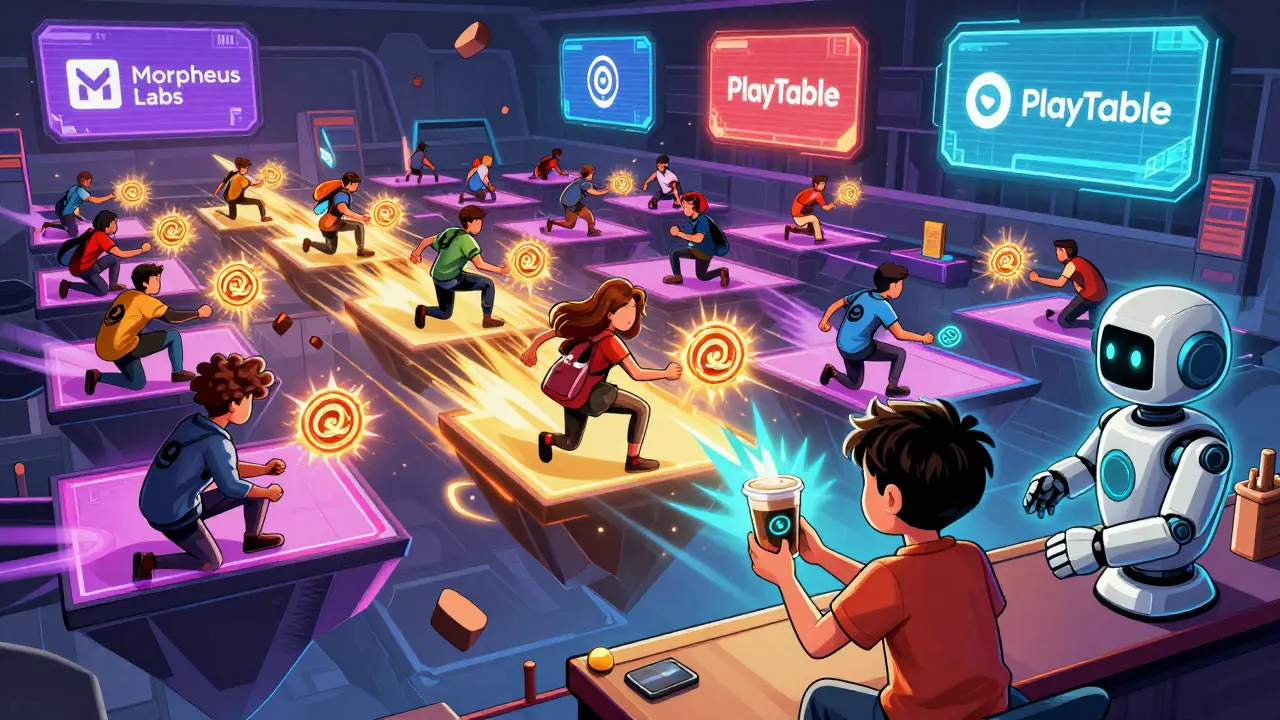
Who Is QuarkChain For?
If you’re a regular crypto user who just wants to buy and hold, QuarkChain might not be for you. There are easier coins to trade. But if you’re a developer looking to build high-speed dApps-especially games, IoT systems, or payment platforms-QuarkChain gives you a rare combo: speed, compatibility, and flexibility. It’s a tool for builders, not just speculators. It’s also worth watching if you believe the future of blockchain isn’t one giant chain, but a network of interconnected, specialized chains. QuarkChain is one of the few projects trying to make that vision real.Where Can You Get QKC?
You can buy QKC on exchanges like MEXC, Gate.io, and Binance (depending on your region). It’s available as both a native token on the QuarkChain network and as an ERC-20 token on Ethereum. Most wallets don’t support it natively, so you’ll need to use a compatible wallet like MetaMask (with custom network settings) or the official QuarkChain wallet. Staking is possible through select platforms, but always check the official site for updated methods. Don’t trust third-party staking services without verification.What’s Next for QuarkChain?
The roadmap focuses on improving cross-shard efficiency and expanding enterprise partnerships. There’s no major upgrade announced for early 2026, but the team continues to release minor optimizations. Analysts say its biggest challenge isn’t tech-it’s awareness. Most people still haven’t heard of it. If QuarkChain can attract even a fraction of the developer talent that went to Solana or Polygon, it could become a hidden gem. Right now, it’s a quiet contender. But in a world where speed matters, that might be enough.Is QuarkChain (QKC) a good investment in 2026?
It depends on your goals. If you’re looking for a stable, widely adopted crypto, QKC isn’t it. But if you believe in blockchain scalability and want to back a project with real technical innovation, it’s worth watching. The tech works, but adoption is still low. Watch for developer growth and enterprise partnerships before investing.
Can I stake QKC tokens?
Yes, you can stake QKC to earn rewards. The annual percentage yield (APY) changes based on network participation and demand. You’ll need to use a compatible wallet and follow official staking instructions from the QuarkChain website. Never stake through unverified third-party sites.
How do I buy QKC?
Buy QKC on exchanges like MEXC, Gate.io, or Binance. You can purchase it directly with other cryptocurrencies like ETH or USDT. Some exchanges offer QKC as an ERC-20 token, which you can store in MetaMask. Always check if the exchange supports native QKC deposits before sending.
Is QuarkChain faster than Ethereum?
Yes, by a huge margin. Ethereum handles 15-45 transactions per second. QuarkChain is designed for over 100,000 TPS. It achieves this using sharding and cross-shard communication, which Ethereum is still working to implement fully.
Can I use QuarkChain for DeFi or NFTs?
Yes, but it’s limited. A few DeFi and NFT projects are live on QuarkChain, mostly through partners like PlayTable and Morpheus Labs. It’s not as rich in apps as Ethereum or Solana, but the EVM compatibility means developers can easily port existing contracts. Growth here will depend on whether more builders choose QuarkChain for its speed.
Why isn’t QuarkChain more popular?
It’s a classic chicken-and-egg problem. Developers need users to build apps, and users need apps to join. QuarkChain has the tech, but it hasn’t yet attracted a critical mass of developers or marketing. It’s also overshadowed by bigger names like Solana and Avalanche. Without strong community growth or big partnerships, adoption stays slow.
13 Comments
Rob Duber
January 31 2026Okay but imagine if your crypto wallet could handle 100k transactions per second instead of making you wait 12 minutes for a coffee purchase to confirm? This isn’t just tech-it’s a goddamn revolution. QuarkChain isn’t trying to be Ethereum 2.0, it’s trying to make Ethereum look like a dial-up modem in 2026. I’m in. 🚀
Joshua Clark
January 31 2026I’ve been watching QuarkChain since late 2022, and honestly, the architecture is one of the most elegant solutions to the blockchain trilemma I’ve seen-not just because of sharding, but because of how elegantly they’ve decoupled transaction processing from consensus validation. The root chain acts as a cryptographic notary, not a bottleneck, which means you can scale horizontally without sacrificing security or decentralization. Most projects pretend they’re solving scalability, but they’re just optimizing for throughput at the cost of trust assumptions. QuarkChain doesn’t do that. It’s rare to see a team with this much engineering discipline.
Brandon Vaidyanathan
January 31 2026Let’s be real-this is the kind of tech that should’ve blown up three years ago. Solana’s got the hype, Ethereum’s got the brand, but QuarkChain? It’s the quiet genius with a PhD from Google who actually built something that works. And yet, here we are, still talking about NFT monkeys while real infrastructure gets ignored. If you’re not holding QKC, you’re not just late-you’re sleeping on the future. 😅
Dahlia Nurcahya
January 31 2026I really appreciate how this breakdown didn’t just hype it up-it showed the real gaps too. The UX is still clunky, the community’s small, and adoption is slow. But that’s what makes it exciting! This isn’t a coin you buy because it’s trending-it’s a tool you bet on because you believe in the builders. If you’re a dev, this is your playground. If you’re a hodler? Maybe wait until there’s a killer app on it. Either way, it’s worth keeping an eye on.
Dylan Morrison
February 1 2026It’s funny… we keep building bigger and faster chains, but what are we really trying to do? Just make transactions cheaper? Or are we trying to rebuild the internet? 🤔 QuarkChain feels like the first chain that’s not just trying to be better-it’s trying to be *different*. Like, what if money didn’t have to move like a parade on a single street? What if it could flow like water through a thousand pipes? That’s not tech. That’s poetry.
Akhil Mathew
February 3 2026From India, I’ve tried staking QKC on MEXC-super easy once you get past the initial wallet setup. The fees are literally 1/100th of what I pay on Ethereum for small transfers. And yes, cross-shard works like magic. I sent QKC from Shard 5 to Shard 23 in 3.2 seconds. No gas wars, no delays. This is what DeFi should feel like. Why isn’t everyone talking about this?!
Aaron Poole
February 3 2026One thing people miss: EVM compatibility is the silent killer feature here. You don’t need to relearn Solidity, rewrite your dApp, or hire a new team. Just deploy. That’s huge. Most chains promise scalability, but they force you to abandon your entire dev ecosystem. QuarkChain says, ‘Hey, you already know how to build. Let’s just make it faster.’ That’s not just smart-it’s respectful to developers. And that’s why adoption will grow slowly but surely.
Robert Mills
February 5 2026100k TPS? YES. EVM? YES. Cross-shard? YES. Staking? YES. Wallet? Ugh. But still… this is the one. 🙌
Jerry Ogah
February 7 2026Look, I get it-people love to pretend they’re ‘early’ on some obscure coin. But QKC? It’s a graveyard of abandoned wallets and ghosted GitHub repos. The team’s quiet, the community’s tiny, and the only people talking about it are the ones who bought at $0.002. Don’t be fooled by the TPS numbers. If no one’s using it, it’s just a fancy whitepaper with a blockchain logo.
Andrea Demontis
February 8 2026I’ve been thinking about this for weeks. The real question isn’t whether QuarkChain can scale-it’s whether society is ready for it. If we can process 100k transactions per second, what happens when every lightbulb, every fridge, every bus ticket becomes a blockchain node? We’re not just building a faster ledger-we’re building a new kind of social contract. And if we do it right, we won’t just fix crypto. We’ll fix trust itself. But… do we even want that? Or are we just chasing speed because we’re bored of waiting?
Joseph Pietrasik
February 9 2026qkc? sounds like a typo for qkck or something. anyway, 100k tps? sure buddy. if you say so. also why does everyone keep saying evm compatible like its magic? its just another chain. no cap.
Raju Bhagat
February 9 2026Bro this is the future man I’ve been staking since 2021 and no one gets it. You think solana is fast? Wait till you see a shard network with 500 lanes and zero congestion. I sent 1000 micro payments to my friends in 8 seconds. That’s not tech. That’s witchcraft. QKC to the moon 🌕💸
laurence watson
February 9 2026For anyone new to this-don’t get overwhelmed. Start small. Buy a little QKC, try sending it to another wallet, play with the staking page. You don’t need to understand every line of code. Just feel the difference. When your transaction finishes before your coffee cools? That’s when you’ll get it. And if you’re a dev? Try deploying a simple contract. It’s smoother than you think. You’re not late-you’re just finding your way in.