Base DEX Review: Is Coinbase's Layer 2 Worth Your Swaps?
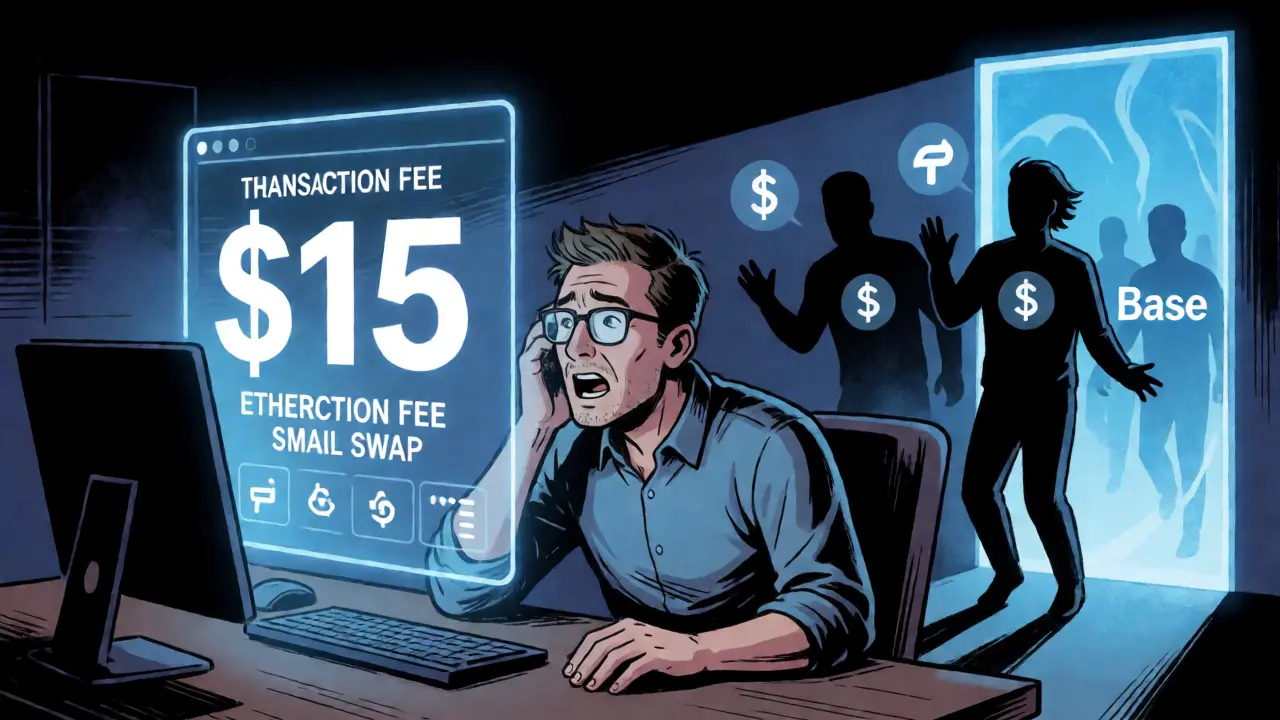
You’ve probably felt that sting. You click "swap" on Ethereum mainnet, and your wallet asks for $15 in gas just to move $50 worth of tokens. It feels like paying a cover charge at a club you barely entered. That pain is exactly why people are flocking to Base, the Layer 2 network built by Coinbase. But is it actually better than the alternatives? Or is it just another centralized chain wearing a decentralized mask?
If you’re here, you want to know if swapping on Base is safe, cheap, and fast enough for your daily trades. You also want to know which DEX is best to use there. Spoiler alert: it’s not as simple as picking the first app you see. Let’s break down what’s really happening on this network, where the traps are, and whether it deserves a spot in your portfolio.
The Quick Verdict: Should You Trade on Base?
Before we get into the weeds, here is the bottom line based on current performance data from late 2024 and early 2025:
- Best For: Retail traders doing swaps under $5,000 who hate high gas fees.
- Top Pick: Uniswap V3 on Base offers the best balance of liquidity and security.
- Biggest Risk: Centralization. Coinbase controls the sequencer, meaning they can technically pause transactions or change rules faster than you can blink.
- Cost Savings: Expect to pay $0.01-$0.05 per swap versus $2.00-$10.00 on Ethereum mainnet.
If you are moving large amounts (think six figures), stick to Ethereum mainnet or specialized institutional venues. If you are a regular user trying to farm yield or trade meme coins without going broke on fees, Base is currently one of the most practical options available.
What Exactly Is Base and Why Does It Matter?
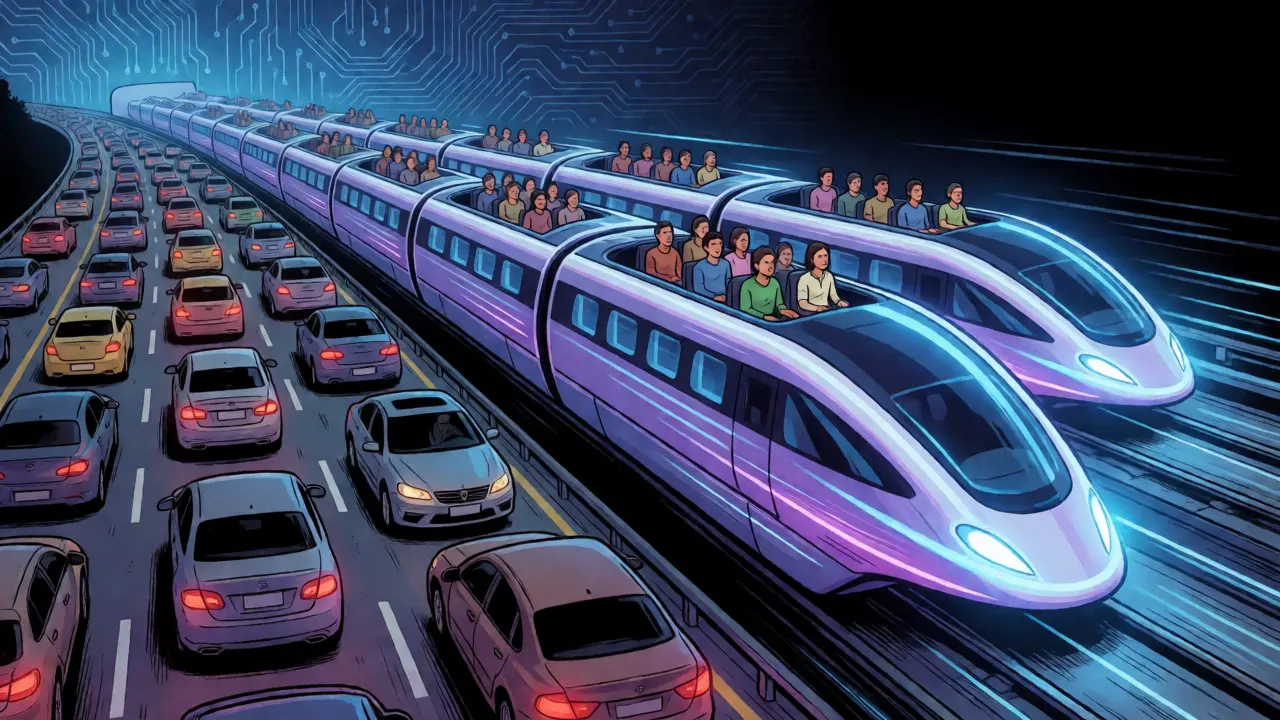
To understand the DEX experience, you have to understand the road it drives on. Base is an Ethereum Layer 2 solution using the OP Stack technology. Think of it as a dedicated express lane next to the congested Ethereum highway. It bundles thousands of transactions together and settles them back to Ethereum in one go. This keeps Ethereum’s security but slashes costs.
Why did Coinbase build this? They wanted a place where their users could trade without leaving the ecosystem entirely. The result is a network with incredibly fast block times-averaging 0.8 seconds-and near-instant finality. Unlike other L2s that might take minutes to confirm, Base feels snappy. But there is a catch. While Ethereum is secured by thousands of validators globally, Base relies heavily on Coinbase’s infrastructure. As of now, Coinbase runs the sequencer node that orders transactions. This makes it faster and cheaper, but less decentralized than chains like Arbitrum or Optimism.
The Heavyweight Champion: Uniswap V3 on Base
When people say "Base DEX," they usually mean Uniswap V3. It accounts for roughly 4.3% of all Uniswap volume across every chain, generating about $210 million in daily trades. Why is it dominant? Because it brought concentrated liquidity to the network.
In older versions of AMMs (Automated Market Makers), your money was spread evenly across all possible prices. Most of that capital sat idle. In V3, liquidity providers can choose specific price ranges. This means more depth for popular pairs like ETH/USDC and less slippage for you. On Base, this efficiency shines because the low fees allow smaller traders to participate in providing liquidity, adding depth that wasn’t there before.
However, don’t expect Ethereum-level depth for obscure tokens. A study by 1inch showed that trades over $50,000 on Base experience 28% higher slippage compared to Ethereum mainnet. So, if you are dumping a massive position into a small-cap token, check the price impact carefully. For standard pairs like ETH/USDC or cbBTC/USDC, the difference is negligible.
Alternatives: Are There Better Options Than Uniswap?
Uniswap isn’t the only game in town. Depending on what you are trading, other exchanges might serve you better. Here is how the major players stack up on Base.
| Feature | Uniswap V3 | Aerodrome | SushiSwap |
|---|---|---|---|
| Primary Use Case | Major pairs & deep liquidity | Base-native projects & incentives | Multi-chain arbitrage |
| Liquidity Depth | High (for majors) | Medium (growing fast) | Low-Medium |
| Trading Fees | 0.05% - 1.0% | 0.01% - 0.3% | 0.3% |
| Unique Feature | Concentrated Liquidity | Vote-escrowed emissions (veAERO) | Cross-chain routing |
| Best For | Swapping ETH, USDC, WBTC | Farming rewards on new tokens | Users already on Sushi |
Aerodrome has become a serious contender recently. It is essentially the "Curve + Uniswap" hybrid native to Base. If you are looking to earn yield rather than just swap, Aerodrome often pays out higher rewards because it incentivizes liquidity through its own token, AERO. Many new projects launch directly on Aerodrome to capture this hype. If you are chasing alpha on new launches, start here.
SushiSwap remains relevant for cross-chain users. Its router can sometimes find better pricing by hopping across different pools, though its presence on Base is smaller than Uniswap’s. If you already have assets stuck in Sushi’s ecosystem, it works fine, but it lacks the sheer volume of Uniswap or the incentive structure of Aerodrome.
The Hidden Costs: Slippage, Bridges, and Gas
It’s not just about the trading fee. You need to look at the total cost of ownership.
Bridging Delays: Getting money onto Base takes time. Using the official Coinbase bridge, deposits are nearly instant. However, using third-party bridges like Across or Hop can take 2-4 hours depending on congestion. Plan ahead. Don’t try to buy a token during a pump if your funds are still bridging.
Slippage Traps: Because liquidity is fragmented across multiple DEXs, a large sell order on a thin pool can crash the price temporarily. Always set a reasonable slippage tolerance (0.5%-1% for stablecoins, 2%-5% for volatile alts). If you set it too low, your transaction fails, and you still pay gas. If you set it too high, you might get front-run by bots.
Gas Spikes: While Base gas is cheap (fractions of a cent), it’s not free. During periods of high activity-like when a hot new token launches-gas can spike 10x. It’s still cheap compared to Ethereum, but annoying if you are trying to claim tiny rewards. Keep a small buffer of ETH in your wallet specifically for gas.
Security and Centralization Risks
This is the elephant in the room. Base is not fully decentralized yet. Coinbase controls the sequencer. What does that mean for you?
Technically, Coinbase could halt the network or censor specific transactions. Remember when Coinbase froze certain addresses linked to Tornado Cash? While they didn’t stop the whole chain, they showed they can influence outcomes. For most retail traders, this risk is theoretical. But for purists who believe code should be law, it’s a red flag.
On the smart contract side, Uniswap’s contracts on Base have been audited by top firms like OpenZeppelin and Trail of Bits. The code itself is battle-tested. The risk isn’t in the swap logic; it’s in the underlying chain infrastructure. Also, beware of fake DEX clones. Scammers love to launch sites that look like Uniswap but steal your approvals. Always verify the URL and contract address.
How to Start Trading on Base: A Step-by-Step Guide
Ready to jump in? Here is the simplest path to making your first swap.
- Get a Wallet: Download MetaMask, Coinbase Wallet, or Rabby. These work seamlessly with Base.
- Fund Your Wallet: Buy ETH or USDC on Coinbase (or any CEX). Withdraw it to your wallet address. Select "Base" as the network. Note: Do not send BTC or SOL directly unless you use a wrapped version.
- Add Base Network: If your wallet doesn’t auto-detect Base, add it manually. Chain ID: 8453. RPC URL: https://mainnet.base.org.
- Connect to DEX: Go to app.uniswap.org or aerodrome.finance. Connect your wallet. Ensure the network toggle is set to "Base."
- Execute Swap: Choose your input and output tokens. Check the price impact. Click swap. Confirm in your wallet.
Troubleshooting tip: If your transaction gets stuck, it’s likely due to low gas. Increase the max priority fee slightly. Since gas is so cheap, you can afford to overpay a little to ensure speed.
Who Should Avoid Base DEXs?
Base isn’t for everyone. Skip it if:
- You trade institutional-sized blocks: If you are moving millions, the lack of deep order books and potential MEV (Maximal Extractable Value) issues might cost you more in slippage than you save in gas.
- You demand absolute censorship resistance: If you are holding privacy-focused coins or operating in jurisdictions sensitive to Coinbase’s compliance stance, the centralization vector is a real concern.
- You only trade Bitcoin: While cbBTC is growing, native BTC liquidity is still king on Ethereum or Solana. Wrapping BTC adds complexity and risk.
The Future: Where Is Base Headed?
The roadmap looks promising. Coinbase plans to transition to a "Base Chain DAO" governance model, which would decentralize the sequencer control. If this happens, Base becomes much harder to shut down or manipulate. Additionally, integration with Coinbase’s retail app means millions of users will onboard automatically. Volume is expected to grow, bringing more liquidity and tighter spreads.
However, competition is fierce. Solana is eating into the low-fee market share, and other L2s like Arbitrum are improving UX. Base needs to keep innovating to stay ahead. For now, it’s the best middle ground between ease of use and cost efficiency.
Is Base DEX safer than Ethereum DEX?
The smart contracts (like Uniswap) are identical and equally safe. However, the underlying network (Base) is more centralized than Ethereum. Ethereum has thousands of independent validators securing it, while Base relies on Coinbase’s sequencer. For small-to-medium trades, the risk difference is minimal. For huge sums, Ethereum’s decentralization provides extra peace of mind.
Do I need ETH on Base to pay for gas?
Yes. Even though Base is an Ethereum L2, you must pay transaction fees in ETH. You cannot pay in USDC or other tokens directly on the protocol level. Keep a small amount of ETH (e.g., $5-$10 worth) in your Base wallet to cover dozens of transactions.
Which DEX has the lowest fees on Base?
While gas fees are similar across all DEXs on Base, trading fees vary. Uniswap V3 charges 0.05%, 0.3%, or 1% depending on the pair. Aerodrome often has lower effective fees for stablecoin pairs due to its Curve-style design. Always compare the final output amount in the interface before confirming.
Can I withdraw my profits back to Coinbase easily?
Yes, this is one of Base’s biggest strengths. Withdrawing ETH or USDC from Base to Coinbase is typically free or very cheap and takes only a few minutes. This seamless exit ramp makes Base ideal for active traders who frequently cash out.
What happens if Coinbase goes down?
If Coinbase stops running the sequencer, new transactions might pause temporarily. However, your funds are still secured on Ethereum. Once a new sequencer is elected or the community intervenes, the chain resumes. You won’t lose your money, but you might face downtime.


21 Comments
Christian Pasamonte
September 8 2026I have been staring at this review for the last forty-five minutes, trying to decide if I should feel relieved that gas fees are down to a few pennies or terrified that we are slowly handing over the keys to our financial sovereignty to a publicly traded company that has already proven it will freeze your funds when the SEC gets grumpy about privacy tools like Tornado Cash. The article makes a compelling case for Uniswap V3 being the 'heavyweight champion,' which is funny because calling a decentralized exchange a champion implies there's some kind of fair fight happening here, but in reality, it’s just Coinbase’s backyard where they set the rules and we’re all just happy to not pay $15 to swap $50. It’s convenient, sure, but convenience has always been the Trojan horse for centralization, and every time I bridge my ETH onto Base, I feel a little less like a crypto native and a little more like a user on a bank app that pretends to be blockchain.
Gabriela Gonzalez
September 10 2026Love this breakdown! 🚀 The part about Aerodrome being great for yield farming is spot on for me right now. 🌱
Abid Bhatti
September 11 2026They don't tell you the real reason L2s exist. It's not to help you. It's to scale Ethereum so whales can dump on you faster without clogging the main chain. You think Coinbase cares about your $50 swap? They care about volume metrics for their stock price. Base is just a honeypot for retail liquidity that eventually gets drained by insiders who know the sequencer schedule better than you do. Wake up. The decentralization narrative is a marketing lie sold to people who missed the Solana pump.
Jess Emmerson
September 12 2026Hey everyone, just wanted to add a small note from my experience as a developer working with these stacks. While the centralization concerns raised by others are valid, the DX (Developer Experience) on Base is genuinely one of the smoothest I've encountered outside of testnets. If you're building something new, the tooling support and documentation quality make it hard to ignore, even if you keep your long-term holdings on L1. Just remember to verify those contract addresses before signing anything, especially with the rise of fake UI clones.
Courtney Parker
September 13 2026Skip it if you trade institutional-sized blocks? lol good luck finding an institution that doesn't use OTC desks anyway. This whole post feels like it was written by someone who thinks moving $10k makes them a whale. 😂📉
Rachel Leet
September 14 2026The epistemological framework of 'Layer 2' is fundamentally flawed because it assumes a hierarchy of truth that doesn't exist in a trustless environment. We are merely observing state changes on different ledgers. To call Base 'centralized' is to misunderstand the nature of consensus mechanisms; it is simply a different vector of trust minimization. However, the practical utility for the average consumer cannot be overstated. We must accept the trade-off between ideological purity and economic efficiency. That is the human condition, after all.
Brittany Ross
September 14 2026This is exactly what I needed today! 💖 I was so stressed about bridging my funds and didn't realize how fast the Coinbase bridge actually is. Thanks for sharing! ✨
Ted Thoroughgood
September 15 2026Great guide man really helpful stuff here i was struggling with the slippage settings on uniswap v3 cause i kept getting failed txns and wasting gas even though its cheap its still annoying when u tryin to farm rewards quick. keep it up!
Sasha Wilde
September 15 2026It’s not just about gas. It’s about UX. And Base wins on UX. Period. 🛑📉🚀
Idowu Emmanuel
September 17 2026Fantastic read! For anyone coming from Nigeria or other regions with high banking friction, the ease of withdrawing back to Coinbase is a game changer. It saves us hours of waiting and unnecessary fees. Keep pushing for adoption! 🇳🇬💪
Christian Pasamonte
September 18 2026@Christian Pasamonte Wait, did you miss the part where I said institutions use OTC? No, you clearly skimmed it because you were too busy typing emojis instead of reading the actual data on MEV extraction risks on thin pools. Lazy criticism is the death of discourse, Courtney. Go read a book on market microstructure before you type another word.
Courtney Parker
September 19 2026@Christian Pasamonte Wow okay calm down professor. I read it fine. Your ego is bigger than your portfolio. 🙄
Kathy Siew
September 20 2026omg yes the slippage thing!! i always forget to adjust it and then wonder why i got rekt on a small trade... its so easy to overlook when u are just happy the fees are low. ty for the reminder!! 🤦♀️💸
Eliza Stein-Dodd
September 21 2026Actually, Aerodrome uses ve(3,3) tokenomics, not just "Curve + Uniswap." Important distinction for LPs. 🧠✨
Harish Ramaiah
September 21 2026Oh, please. Another day, another "expert" telling us how to manage our wallets while ignoring the fact that the entire OP Stack ecosystem is held together by duct tape and hope. 😩 The audits mentioned? Sure, OpenZeppelin checked the code. Did they check the social layer? No. Did they check if Coinbase engineers had a bad lunch and pushed a bug? Also no. You guys are so obsessed with "concentrated liquidity" that you forgot basic risk management. If the sequencer goes down, your "snappy" 0.8 second blocks become zero seconds. Forever. Until they fix it. Which could take days. Or weeks. Who knows? Only the gods of centralized infrastructure know. And they aren't talking. 😒
John Martin
September 21 2026Good point @Harish Ramaiah. Downtime is rare but catastrophic. Always keep a backup route via Optimism or Arbitrum if possible. Don't put all eggs in one basket. 👍🛡️
Saket Kulkarni
September 22 2026Respectfully, I believe the article provides a balanced view. For users in emerging markets, the cost savings are substantial. The centralization debate is philosophical, but the utility is immediate. Let us proceed with caution but optimism.
John Lewis
September 23 2026I'm curious about the specific RPC providers you recommend for stability. Public endpoints sometimes lag during congestion. Has anyone tested Alchemy vs Infura specifically for Base swaps?
Dominic Jones
September 25 2026To answer your question regarding RPCs: generally speaking, using a dedicated node provider like QuickNode or Chainstack often yields lower latency than public RPCs, which is crucial when dealing with arbitrage opportunities or time-sensitive swaps. However, for the average retail trader doing simple swaps under $1,000, the difference in milliseconds is negligible compared to the peace of mind of knowing your transaction landed. One must also consider the ethical implications of relying on third-party RPCs, as they can theoretically see your IP address and correlate it with your wallet activity, creating a metadata trail that undermines the pseudonymity we claim to value. It is a trade-off between performance and privacy, a dilemma that plagues modern digital interaction.
Kathryn Haber
September 26 2026idk man feels like everything is just vibes now. base works. eth works. solana works. who cares if coinbase runs it if my money moves. life is short. buy the dip. live the moment. 🌊✨
Eugene McGrath
September 26 2026Listen up, losers. You're all drinking the Kool-Aid. Base is a walled garden. A literal prison for your capital. You think you're free? Nah. You're just a serf on Coinbase's feudal estate. Paying tribute in gas fees for the privilege of swapping tokens. Meanwhile, real men hold their bags on L1 or go full degen on Solana memecoins. Stop whining about $0.01 fees and start thinking about sovereignty. America needs strong chains, not soft, centralized L2s run by bean counters in Delaware. Get off your phones and read a whitepaper. 🇺🇸💪