Buda Crypto Exchange Review: Best for Latin American Traders in 2026
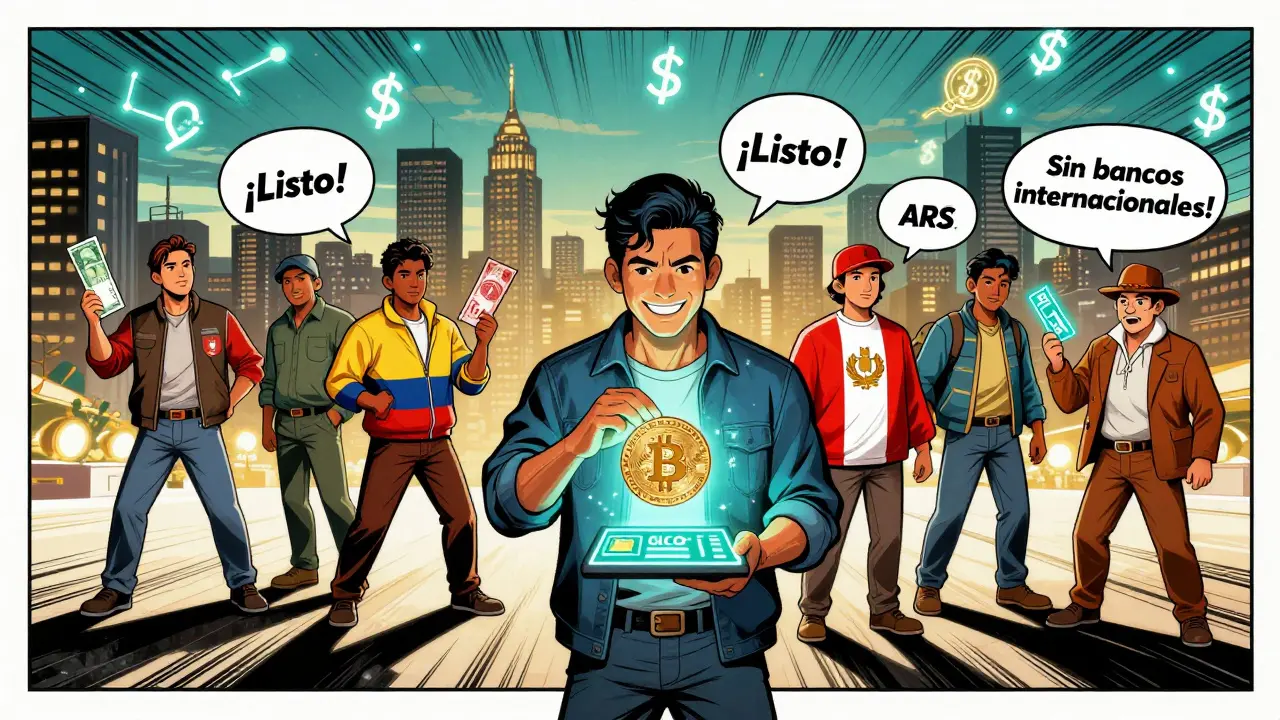
When you're in Chile, Colombia, Peru, or Argentina and want to buy Bitcoin without jumping through international banking hoops, Buda is often the first name that comes up. It's not just another crypto exchange. It was built from the ground up for people in Latin America who need to trade in pesos, soles, or pesos - not dollars or euros. If you're one of the millions in the region trying to get into crypto without a global bank account, Buda might be the only platform that makes sense for you.
What Buda Actually Offers
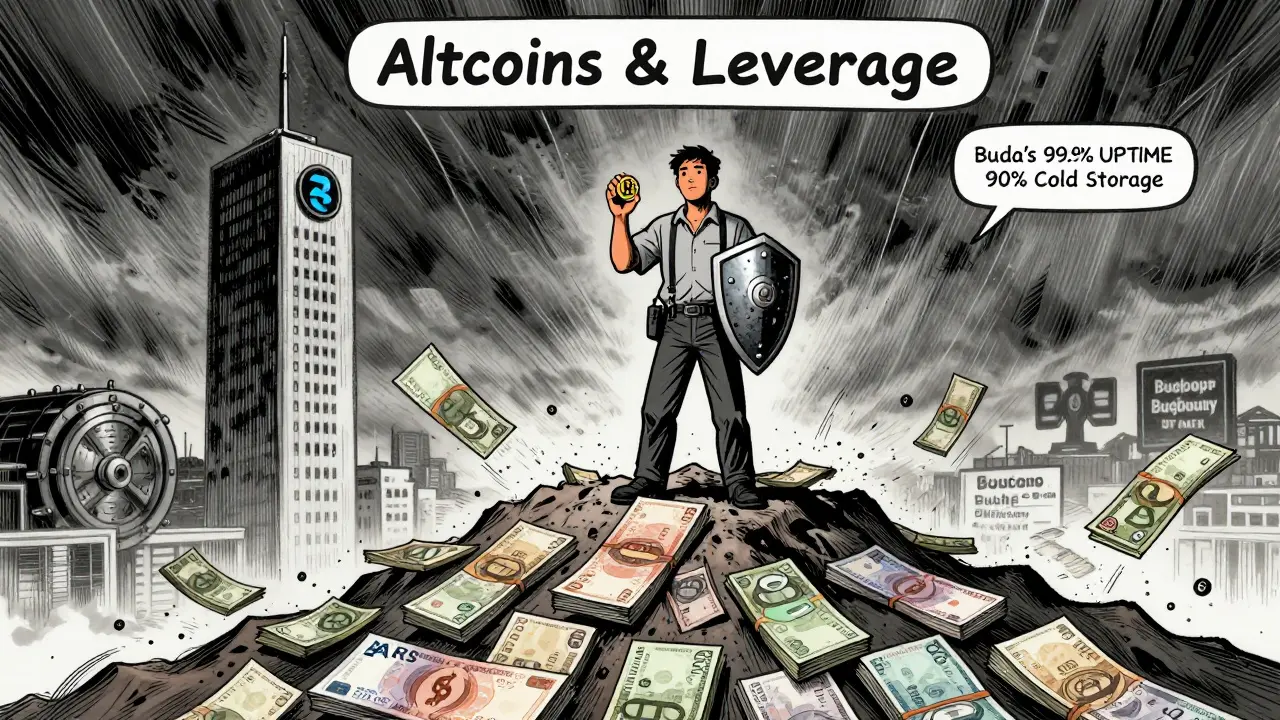
Buda supports just six cryptocurrencies: Bitcoin (BTC), Ethereum (ETH), Litecoin (LTC), Bitcoin Cash (BCH), USDC, and Tether (USDT). That’s it. No hundreds of altcoins. No obscure tokens. This isn't a mistake - it's intentional. The exchange focuses on the most widely used digital assets in Latin America, where people actually trade and hold. You won’t find Solana, Dogecoin, or Polkadot here, but you also won’t be overwhelmed.
The real strength? Trading pairs in local currencies. You can buy BTC with CLP (Chilean Peso), COP (Colombian Peso), PEN (Peruvian Sol), or ARS (Argentine Peso). That’s huge. Most global exchanges force you to deposit USD or EUR first, then convert - which means extra fees, delays, and banking headaches. With Buda, you link your local bank account and deposit directly. No wire transfers. No currency conversion fees from your bank. It’s seamless.
How Trading Works
The interface is built on TradingView, which means charts, indicators, and order types are familiar if you’ve used any serious trading platform. But unlike Binance or Kraken, Buda only offers spot trading. No margin. No futures. No leverage. No staking. That’s a trade-off. If you’re looking to hedge, short, or earn passive income through staking, you’ll need another platform. But if you just want to buy, hold, and sell Bitcoin or Ethereum using your local money, Buda does that well.
Trading fees start at 0.5% per trade, which is higher than global giants like Binance (0.1% for spot). But here’s the catch: if you trade over $10,000 per month, fees drop to 0.2%. And if you refer someone who trades, you earn 20% of their fees - a rare perk in the region. Some users report earning $15-$20 a month just from one or two friends signing up. That’s real money when you’re trading small amounts.
Security: Cold Storage and Compliance
Buda stores 90% of user funds in offline cold wallets. That’s on par with Coinbase and better than many regional players. It also uses Chainalysis to monitor transactions for suspicious activity, which helps it stay compliant with anti-money laundering rules. In Chile, Colombia, and Peru, regulators require strict KYC. Buda checks your government ID, proof of address, and even does a facial scan to verify you’re you. This isn’t optional - it’s mandatory.
Once verified, your monthly trading limit is $10,000. That’s enough for most retail traders, but too low if you’re moving large sums. Institutional users are rare on Buda - only about 5% of volume comes from them. Most people are buying $100-$500 at a time. The platform has maintained 99.9% uptime since 2015. That’s reliability. But in January 2025, during a spike in Bitcoin volatility, the API went down for 4 hours. It’s rare, but it happens.
One red flag: Buda shut down its bug bounty program in early 2023. Before that, it paid up to $5,000 to hackers who found vulnerabilities. Now, there’s no public way to report security issues. That’s a step backward for transparency.

Fees and Withdrawals
Depositing via bank transfer in CLP, COP, PEN, or ARS is free. No fees. That’s a major win. But if you use a credit card, expect 2-3% fees. Withdrawal fees are fixed and transparent:
- Bitcoin: 0.00011 BTC
- Ethereum: 0.00053418 ETH (normal) or 0.0006944 ETH (high priority)
- Litecoin: 0.00000001 LTC
- USDC: 1.38 USDC (normal) or 2 USDC (high)
These are standard. No hidden charges. You know exactly what you’ll pay before you send.
Mobile App and User Experience
The iOS and Android apps are clean, fast, and reliable. They mirror the web platform, so switching between devices is easy. But here’s the problem: there’s no tutorial. No video guide. No demo account. You’re thrown into the TradingView interface and expected to figure it out. New users report it takes 3-5 trades before they feel comfortable. Community-made YouTube tutorials in Spanish help - over 50,000 people have watched them. But Buda doesn’t offer them. That’s a missed opportunity.
Customer support is only in Spanish. If you don’t speak Spanish, you’re stuck. Email responses take 12-24 hours on weekdays. Phone support is available in Chile, but not elsewhere. During the 2025 peso crash, some Argentine users reported 48-hour delays in processing withdrawals. Volatility spikes strain the system.
Who Is Buda For? Who Should Avoid It?
Buda is perfect if:
- You live in Chile, Colombia, Peru, or Argentina
- You want to trade Bitcoin or Ethereum using your local bank account
- You’re a beginner or casual trader - not a day trader or investor looking for leverage
- You care more about security and simplicity than having 500 coins to choose from
You should avoid Buda if:
- You want to trade altcoins like Solana, XRP, or Avalanche
- You need margin trading, futures, or staking
- You’re outside Latin America - you can’t sign up
- You expect 24/7 English support or instant customer service
How Buda Compares to Global Exchanges
Let’s be clear: Buda isn’t trying to beat Binance or Coinbase. It’s not built for global users. It’s built for Latin America. Here’s how it stacks up:
| Feature | Buda | Binance | Coinbase |
|---|---|---|---|
| Cryptocurrencies | 6 | 500+ | 200+ |
| Local Currency Support | CLP, COP, PEN, ARS | USD, EUR, GBP (limited local) | USD, EUR, GBP |
| Trading Pairs | 20 (fiat-crypto only) | 1,000+ | 200+ |
| Margin/Futures | No | Yes | No |
| Staking | No | Yes | Yes |
| Cold Storage | 90% | 85% | 98% |
| Insurance | No | No | $255M |
| Regional Focus | Latin America only | Global | Global |
Binance launched peso-denominated trading in Colombia in early 2025. That’s a threat. But Buda has something Binance doesn’t: deeper banking integrations. In Chile, Buda connects directly with Transbank - the largest payment processor. Deposits clear in minutes. For Binance, it’s still a multi-step process.
The Bottom Line
Buda isn’t the biggest or most feature-rich exchange. But it’s the most practical for Latin American users. If you’re in Chile, Colombia, Peru, or Argentina and want to buy Bitcoin without dealing with international wires, hidden fees, or language barriers - Buda is the easiest, most reliable option. It’s not perfect. No support for altcoins, no staking, no demo account. But it does the one thing it set out to do: make crypto accessible to people who were left out of the global system.
The platform’s 99.9% uptime, 90% cold storage, and seamless local bank integration are its real advantages. For retail traders who buy $100-$500 at a time, it’s hard to beat. If you’re ready to move beyond spot trading or need more coins, you’ll outgrow Buda. But for now, in Latin America, it’s still the leader.
Is Buda a safe crypto exchange?
Yes, Buda is considered one of the safer exchanges in Latin America. It stores 90% of user funds in offline cold wallets, uses Chainalysis for transaction monitoring, and requires strict KYC verification including biometric checks. While it doesn’t offer insurance like Coinbase’s $255 million policy, its security practices match industry standards. However, the shutdown of its bug bounty program in 2023 reduces transparency around vulnerability reporting.
Can I use Buda outside Latin America?
No. Buda only allows users from Chile, Colombia, Peru, and Argentina to sign up. You need a local ID, bank account, and address in one of these countries. Even if you have a VPN or foreign bank account, you won’t be able to complete KYC or deposit funds. The platform is intentionally region-locked to focus on Latin American markets.
Does Buda support altcoins like Solana or Dogecoin?
No. Buda only supports six cryptocurrencies: Bitcoin, Ethereum, Litecoin, Bitcoin Cash, USDC, and Tether. It doesn’t offer Solana, Dogecoin, Cardano, or any other altcoin. This is a deliberate choice to reduce complexity and focus on the most traded assets in Latin America. If you need more coins, you’ll need to use a global exchange like Binance or Coinbase.
How long does KYC take on Buda?
KYC verification usually takes 24 to 72 hours. You need to submit a government-issued ID, proof of address, and complete a facial scan. Delays can happen during high-volume periods or if your documents aren’t clear. Once verified, you’ll have a $10,000 monthly trading limit. There’s no expedited option.
Are there any hidden fees on Buda?
No hidden fees. Deposit fees are zero for bank transfers in CLP, COP, PEN, or ARS. Withdrawal fees are clearly listed and fixed. Trading fees start at 0.5% but drop to 0.2% for users who trade over $10,000 per month. Credit card deposits have a 2-3% fee, which is standard. There are no inactivity fees, account maintenance fees, or currency conversion fees from Buda itself.
Can I stake or earn interest on my crypto on Buda?
No. Buda only offers spot trading. You can buy and sell cryptocurrencies, but you cannot stake, lend, or earn interest on your holdings. This is a major limitation compared to platforms like Coinbase or Binance. If earning passive income is important to you, you’ll need to move your assets to another exchange.
What happens if Buda gets hacked?
Buda doesn’t offer insurance for user funds, unlike Coinbase’s $255 million policy. However, since 90% of funds are stored in cold wallets - offline and disconnected from the internet - the risk of a large-scale hack is extremely low. The platform has never been breached since its launch in 2015. Still, without insurance, users bear full responsibility for losses in the unlikely event of a security failure.
Is Buda better than Ripio or Belo?
Buda leads in market share, with 65% in Chile, 45% in Colombia, and 30% in Peru. It has deeper banking integrations, better uptime, and more reliable customer support than competitors like Ripio or Belo. Ripio offers more coins and some staking, but its interface is clunkier. Belo is newer and cheaper, but lacks regulatory compliance in Peru. For most users in the region, Buda remains the most trusted and stable option.





15 Comments
Dionne van Diepenbeek
March 19 2026Buda is the only reason I got into crypto without a US bank account. No more wire transfers. Just deposit pesos and go. Period.
Ann Liu
March 20 2026I appreciate the transparency on fees, but the lack of altcoin support is a dealbreaker for anyone serious about portfolio diversification. Crypto isn't just BTC and ETH anymore. You're leaving money on the table by ignoring market trends.
Bruce Doucette
March 21 2026lol so Buda's 'security' is just 90% cold storage? That's cute. Coinbase has $255M insurance and you're telling me that's not a bigger deal than some local bank integration? 🤡
Tony Weaver
March 23 2026The fact that they shut down the bug bounty program speaks volumes. No transparency, no accountability. It's not 'secure' if you can't audit it. 90% cold storage is standard. What's impressive is zero breaches since 2015 - but that doesn't mean it's bulletproof. Just lucky so far.
Anastasia Danavath
March 24 2026I live in Colombia and Buda is literally my only option. No stress, no drama, no USD conversion fees. 🤘 I don't need Solana. I need to buy BTC without my bank freezing my account. Perfect for me.
anshika garg
March 24 2026There's something beautiful about a platform that doesn't try to be everything to everyone. In a world obsessed with FOMO and 500 coins, Buda says: 'Here. This is what you need. Use it. Live with it.' It's not flashy. But it's honest. And in crypto? That's rare.
Patty Atima
March 26 2026If you're just starting out and want to buy $200 of BTC without getting scammed? Buda's your friend. Simple, safe, local. No need to overcomplicate it. 🙌
S F
March 27 2026Binance launching peso trading? Big deal. They're still a global corporation with zero real roots in Latin America. Buda? Built by locals, for locals. That's why it works. You think a US-based exchange understands your banking chaos? Lol.
Diane Overwise
March 28 2026I love how Buda doesn't care about English speakers. You want to use it? Learn Spanish. It's not a bug - it's a feature. The platform respects its users enough to not dilute itself for outsiders. Respect.
Arlene Miles
March 30 2026To everyone saying 'I need staking' - you're not the target audience. Buda isn't trying to be a bank. It's trying to be a bridge. For people who've been locked out. For people who don't speak English. For people who just want to buy Bitcoin without 17 layers of bureaucracy. That’s revolutionary.
Graham Smith
April 1 2026The fee structure is a masterclass in behavioral economics. 0.5% for small traders, 0.2% for whales, and referral commissions? Genius. You incentivize network growth without relying on VC funding. It's a self-sustaining ecosystem built on real utility, not hype.
Angelica Stovall
April 1 202690% cold storage? Yeah right. What about the other 10%? And why no insurance? I bet they're just sitting on user funds like a Ponzi scheme. You think they're 'compliant'? They're just avoiding regulators until they get caught. Classic.
shreya gupta
April 2 2026The absence of a tutorial is not negligence - it is an act of cultural trust. The platform assumes its users are intelligent enough to learn by doing. This is not a failure of design. It is a philosophy of autonomy.
Jessica Beadle
April 3 2026Buda doesn't need to be Binance. It needs to be reliable. And it is. I've been using it since 2020. Never had a withdrawal delay until the 2025 peso crash - and even then, it was fixed in 48 hours. That's better than half the 'global' exchanges. Stop comparing it to platforms designed for hedge funds.
Jerry Panson
April 5 2026It is worth noting that Buda's integration with Transbank in Chile represents a level of institutional cooperation rarely seen in fintech. This is not merely a product - it is a public-private infrastructure initiative disguised as a crypto exchange. The implications for financial sovereignty in the region are profound.