Future of Blockchain Gaming and Metaverse: 2026 Trends, Ownership, and Real Money
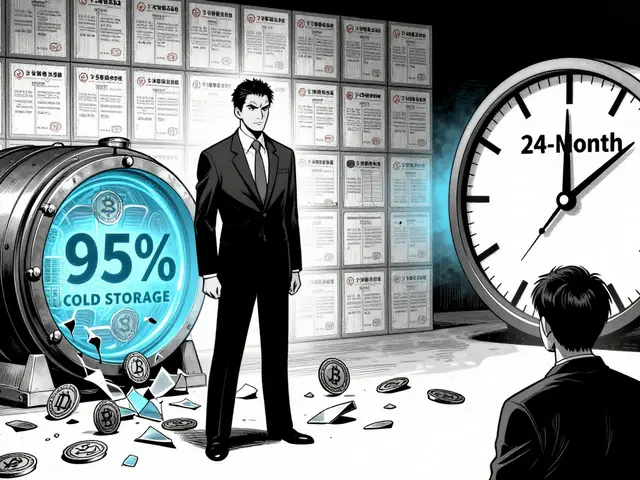
Remember the days when you bought a skin in a shooter game and it vanished into the ether if the servers went down? That era is ending. By mid-2026, the line between playing games and owning digital assets has blurred beyond recognition. We are no longer talking about speculative hype cycles; we are looking at a mature ecosystem where your sword, your land, and even your reputation have verifiable value outside the game code.
The future of blockchain gaming isn't just about making money while playing-it's about true ownership. The metaverse is shifting from a sci-fi concept to a functional economic layer where interoperability allows your assets to move across different virtual worlds. If you are trying to understand where this technology is heading, you need to look past the price charts and focus on the structural changes in how we interact with digital entertainment.
The Shift from Access to Ownership
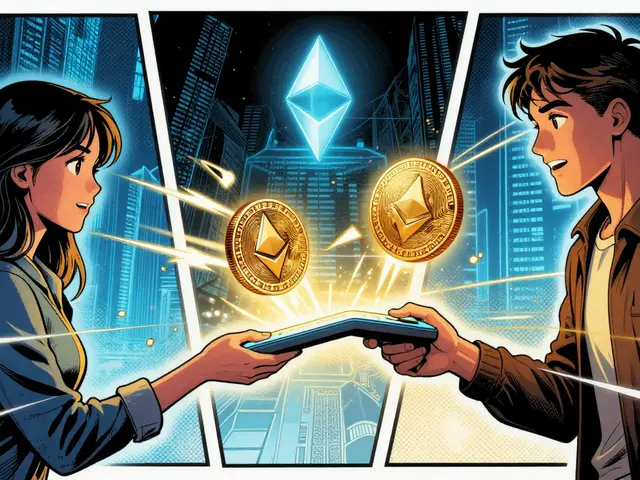
For decades, traditional gaming operated on a rental model. When you bought an item on Steam or Epic Games Store, you were licensing access to that asset. Valve’s ban on blockchain items in 2022 highlighted this tension, but the market moved forward anyway. In 2026, the core value proposition of blockchain gaming is clear: Non-Fungible Tokens (NFTs) represent property rights. You hold the private key; therefore, you own the asset.
This shift has created a new class of player who views games as economic environments rather than just pastimes. According to data from early 2025, blockchain gaming became the primary entry point for 78% of new cryptocurrency users. Why? Because buying a character feels less risky than buying a volatile token directly. The familiarity of gaming mechanics lowers the barrier to entry for complex financial technologies.
However, ownership comes with responsibility. Unlike a centralized account where you can click 'forgot password,' losing your seed phrase means losing everything. This reality has forced developers to create more user-friendly wallet interfaces, though the learning curve remains steeper than traditional gaming. A study of 5,000 new users in early 2025 showed that initial setup still takes 45-60 minutes, with 38% of users failing their first transaction due to complexity issues like gas fees or network selection.
Economic Models: Beyond Play-to-Earn Hype
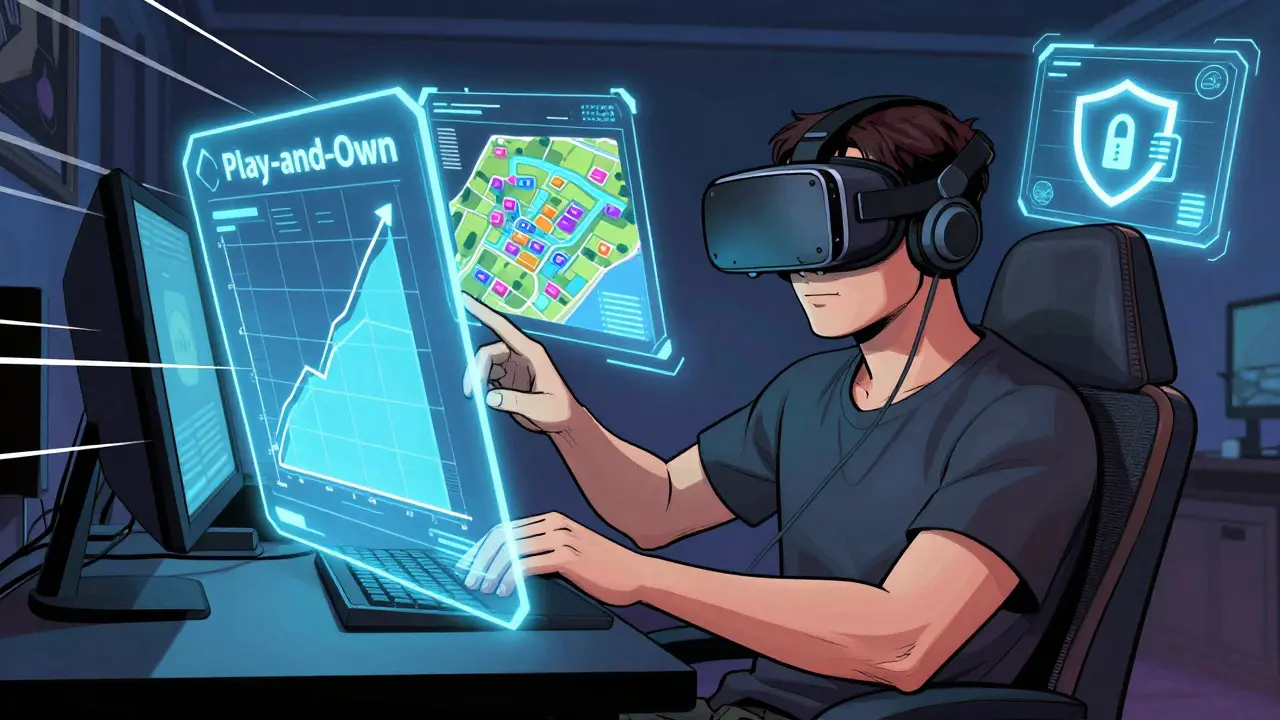
The term 'play-to-earn' (P2E) has evolved significantly since the Axie Infinity boom of 2021. Early P2E models were often unsustainable pyramids, relying on new player investment to pay existing users. Today, the industry is moving toward 'play-and-own' or sustainable yield models. Jason Rosenstein of Konvoy Ventures noted in January 2025 that retention metrics improved by 210% year-over-year as projects focused on fun first, economics second.
Real-world income opportunities remain a major draw. In the Philippines, players reported earning $350 monthly through games like Splinterlands, exceeding local minimum wages. However, these gains are not guaranteed. The collapse of Star Atlas in 2023, where its token dropped 98%, serves as a stark warning. Volatility is inherent to crypto economies. Players must distinguish between skill-based earnings and speculative asset appreciation.
Smart contracts now automate these economic interactions without intermediaries. This transparency prevents developers from rigging loot boxes or inflating item rarity artificially. Every drop, every trade, and every reward is recorded on the ledger. For the average gamer, this means trustless verification-you don't have to believe the developer says your item is rare; the blockchain proves it.
Interoperability and the Connected Metaverse
One of the most promised yet elusive features of the metaverse is interoperability-the ability to take your avatar or weapon from one game and use it in another. In 2026, this is slowly becoming reality, but it is far from seamless. Protocols like Polygon's zkEVM achieved cross-chain compatibility for 12 major gaming platforms by late 2024, allowing limited asset movement.
However, full interoperability faces technical and design hurdles. A sword designed for a fantasy RPG might not make sense in a racing simulator. Developers are solving this by creating abstracted asset layers-where the underlying NFT represents a trait or value that adapts to different contexts. Epic Games launched a blockchain-agnostic platform in early 2025 to facilitate this, supporting multiple NFT standards to ensure broader compatibility.
The metaverse itself is expanding beyond gaming. Gartner reported in Q1 2025 that 62% of metaverse platforms now incorporate professional collaboration features. Virtual real estate, once a speculative bubble, has stabilized with Decentraland parcels averaging $2,850 in March 2025. These spaces host concerts, conferences, and social gatherings, creating a hybrid economy where gaming assets have utility in social and professional contexts.
| Feature | Traditional Gaming | Blockchain Gaming (2026) |
|---|---|---|
| Asset Ownership | Licensed access (developer-controlled) | True ownership via NFTs (player-controlled) |
| Economic Model | Pay-to-play / Microtransactions | Play-and-own / Token rewards |
| Interoperability | Closed ecosystems | Cross-platform via protocols (limited) |
| Transparency | Opaque algorithms | Verifiable smart contracts |
| User Barrier | Low (email/password) | High (wallet setup, gas fees) |
Technical Maturity and Performance
Early blockchain games suffered from lag, high costs, and slow transactions. Ethereum’s mainnet could only handle 15-30 transactions per second (TPS), making real-time gaming impossible. Today, Layer 2 solutions and alternative chains have changed the landscape. Transactions process faster, and gas fees are negligible on networks like Polygon or Solana.
Hardware accessibility has also improved. Meta’s Quest 3 headset, retailing for $499.99 in 2025, is 35% cheaper than previous generations. This price drop, combined with better graphics rendering, makes VR gaming more mainstream. IDC projects a 300% growth in VR headset ownership by 2026, driven largely by immersive gaming experiences.
Despite these improvements, scalability remains a challenge. Traditional gaming servers handle thousands of concurrent actions instantly. Blockchain networks, even with Layer 2 upgrades, still lag behind in raw throughput. Developers are using hybrid models-keeping gameplay on centralized servers for speed while recording asset ownership and trades on-chain. This approach balances performance with decentralization, ensuring smooth gameplay without sacrificing ownership benefits.
Regulatory Landscape and Security
As the industry matures, regulation has caught up. The EU’s MiCA regulations, effective June 2024, provide a clear framework for crypto assets, including gaming tokens. In contrast, the US maintains a fragmented approach with 17 active state-level gaming regulations as of early 2025. This disparity creates compliance challenges for global studios.
Security remains a critical concern. Phishing attacks accounted for 17% of compromised accounts in Q4 2024, according to Immunefi. Users must be vigilant about protecting their private keys and verifying contract addresses. Smart contract audits are now standard practice, but vulnerabilities still exist. Projects that fail to prioritize security risk catastrophic losses, as seen in several high-profile hacks over the past two years.
DAO (Decentralized Autonomous Organization) governance is emerging as a solution to centralization risks. By Q1 2025, 38% of major blockchain games incorporated player governance, allowing communities to vote on treasury spending, feature updates, and economic parameters. This democratizes decision-making but introduces new complexities in coordination and participation.
Market Projections and Future Outlook
The numbers tell a story of rapid growth. The global gaming market is projected to reach $665.77 billion by 2027, with blockchain gaming growing at a 42.7% CAGR from 2024-2029. Statista forecasts the sector will hit $128 billion by 2029. Currently, blockchain gaming holds about 3.2% of the total market, but its influence extends far beyond its size.
JPMorgan projects the metaverse economy could reach $1 trillion by 2030, with gaming as the primary driver. Goldman Sachs offers a more cautious view, noting that only 22% of current projects demonstrate sustainable economic models beyond 2026. This divergence highlights the importance of selecting projects with strong fundamentals, engaged communities, and viable tokenomics.
Mobile gaming continues to dominate adoption, accounting for 67% of blockchain gaming activity in Q1 2025. Lower hardware barriers and familiar interfaces make smartphones the ideal gateway for mass adoption. As 5G networks expand and mobile GPUs improve, we can expect even higher-quality blockchain experiences on handheld devices.
Is blockchain gaming safe for beginners?
It can be, but requires caution. Beginners should start with established platforms, use hardware wallets for significant holdings, and never share seed phrases. Understanding basic concepts like gas fees and network types is essential before investing time or money.
Can I really earn money playing blockchain games?
Yes, but treat it as supplemental income, not a primary salary. Earnings depend on market conditions, skill level, and time invested. Volatile token prices mean rewards can fluctuate significantly. Focus on games with sustainable economies rather than speculative hype.
What is the difference between NFTs and regular in-game items?
Regular items are locked within a specific game’s server. NFTs are stored on a blockchain, giving you verifiable ownership. You can sell, trade, or potentially use NFTs in other compatible games, whereas regular items disappear if the game shuts down or you lose your account.
Do I need expensive hardware to play blockchain games?
Not necessarily. While VR headsets enhance immersion, many blockchain games run smoothly on standard PCs or even mobile phones. Mobile gaming accounts for two-thirds of all blockchain gaming activity, indicating that high-end gear is optional for most experiences.
How does regulation affect blockchain gaming?
Regulations like the EU’s MiCA provide clarity for developers and players, reducing legal uncertainty. In regions with unclear laws, projects may face restrictions or bans. Always check local regulations regarding crypto assets and online gambling before participating in play-to-earn models.