Japan Crypto Licensing Framework for Exchanges: What You Need to Know in 2025
Japan doesn’t just allow crypto exchanges-it demands they earn their place. Since 2017, the country has built one of the strictest, most detailed licensing systems in the world. If you’re thinking about launching a crypto exchange in Japan-or even just using one-this isn’t a suggestion. It’s a requirement. And as of September 2025, the rules changed again. The Japan crypto licensing framework is now under the Financial Instruments and Exchange Act (FIEA), not the old Payment Services Act. That shift isn’t just paperwork. It means crypto assets are being treated like financial instruments, not just digital money. The stakes are higher. The scrutiny is deeper. And the consequences for getting it wrong are severe.
Who Can Even Apply for a License?
- You must be a kabushiki-kaisha-a Japanese joint-stock company. No offshore shell companies. No foreign branches operating without a local presence.
- You need a physical office in Japan, staffed by a resident manager who personally answers for compliance. That’s not a formality. That’s legal accountability.
- You must have at least 10 million yen (about $68,000 USD) in capital, plus positive net assets. That’s not startup money. That’s serious funding.
The Security Rules Are Brutal
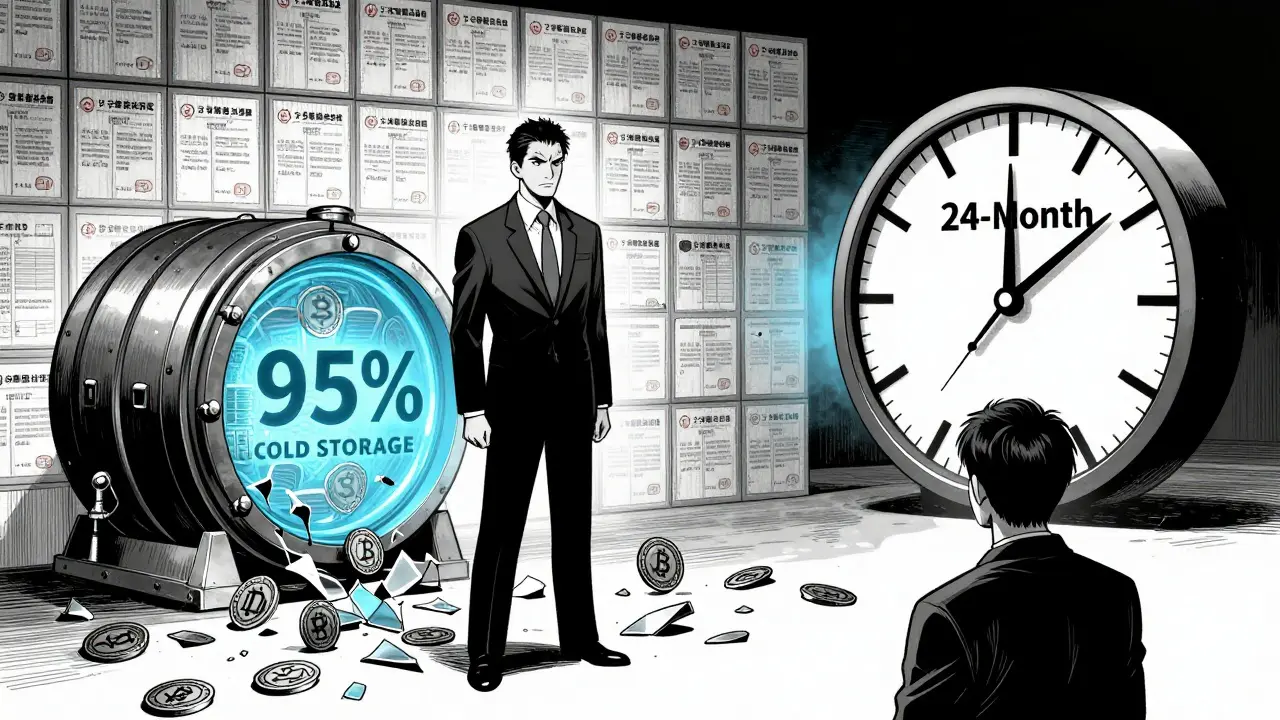
After the 2018 Coincheck hack-where $534 million in NEM tokens vanished-Japan rewrote the rules. The new standard? At least 95% of user funds must be stored offline. Cold wallets. No exceptions. No “we’ll keep 10% online for liquidity.” That’s not negotiable. Exchanges also need:- DDoS protection capable of handling attacks over 1 terabit per second
- Multi-signature wallet systems requiring 3+ approvals for any transfer
- 24/7 security monitoring with response teams ready within 15 minutes of any alert
- Third-party audits every six months, done by FSA-approved firms like NCC Group
Token Listings Are a Minefield
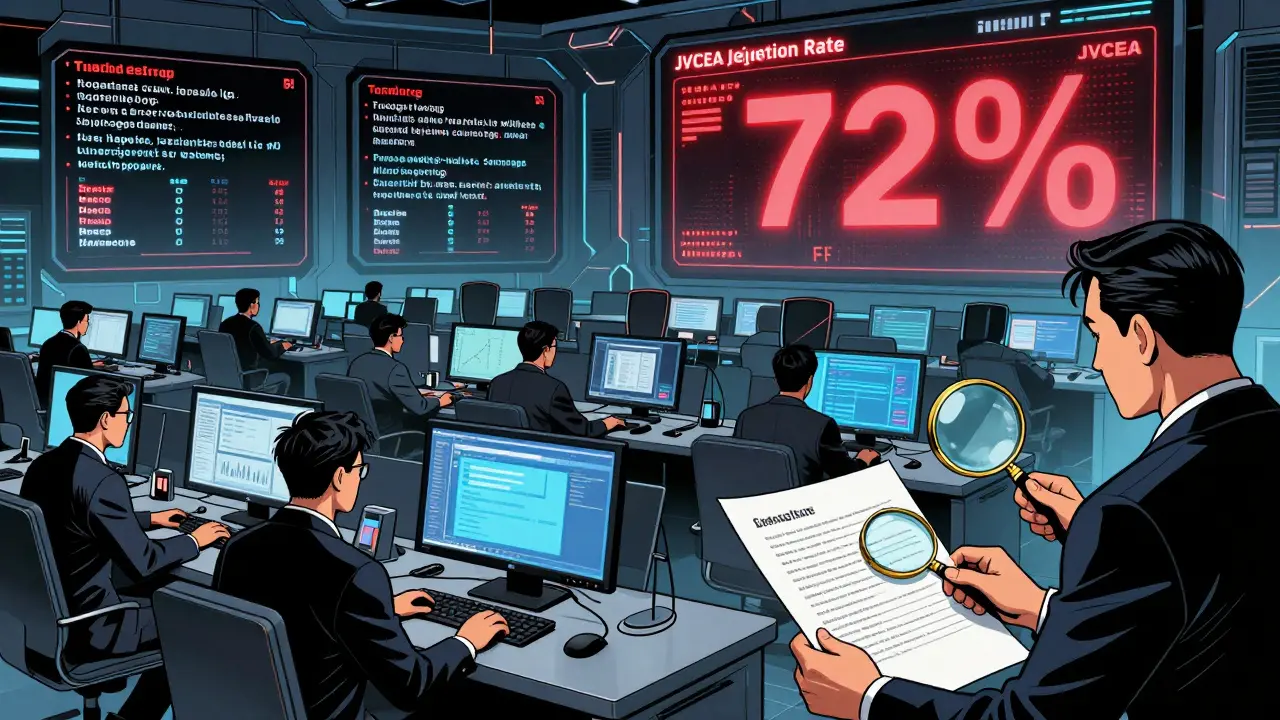
You can’t just list any coin. Even if Bitcoin is trending in the U.S., you can’t add it to your Japanese platform without approval. The Japan Virtual Currency Exchange Association (JVCEA) runs the gate. Of the 147 token listing applications submitted in Q2 2025, 72% were rejected. Why? Too many meme coins. Too little transparency. Weak smart contracts. No clear use case. To get approved, you need:- A full whitepaper in Japanese
- A smart contract audit from a JVCEA-certified firm
- A plan to prevent market manipulation
- Proof that the token isn’t a security under FIEA rules
Leverage Trading Is Limited
In Dubai, you can trade Bitcoin with 100x leverage. In Japan? You’re capped at 2x. The FSA cut leverage from 4x to 2x in 2023 after a wave of retail investor losses. Day traders took notice. CryptoCompare estimates a 15% drop in active traders on Japanese platforms since then. But retail investors? They’re grateful. In the FSA’s 2025 Consumer Confidence Report, 87% of users said they felt “very” or “somewhat” secure using licensed exchanges. Compare that to 63% in unregulated markets. Japan’s trade-off is clear: fewer high-risk products, more safety.The Cost of Compliance Is Staggering
Getting licensed isn’t just hard. It’s expensive.- Legal and compliance fees: $500,000-$1 million
- Time to approval: 18-24 months
- Annual compliance spending: 18-25% of total revenue
- Salary for a compliance officer: ¥12 million/year ($78,000 USD)
What’s Changing in 2025-2026?
The biggest shift since 2017 happened on September 2, 2025. The FSA moved crypto oversight from the Payment Services Act to the Financial Instruments and Exchange Act. Why? Because crypto isn’t just for payments anymore. Now, 35% of new tokens are security tokens or tokenized real-world assets-like real estate or bonds. Those fall under securities law. That means:- Exchanges must now verify investor accreditation
- Some tokens require full SEC-style disclosures
- Marketing materials must avoid misleading claims about returns

Who Succeeds Under This System?
Not the fast movers. Not the hype-driven startups. The winners are the ones who treat compliance like infrastructure-not a cost center. Bitbank, DMM Bitcoin, and GMO Coin are the top three exchanges in Japan. Why? They spent years building internal teams with ex-FSA regulators. They hired Japanese-speaking compliance officers who understand the local legal landscape. They didn’t try to copy Binance’s model. They built something that fits Japan’s rules. The FSA’s regulatory sandbox has helped 27 projects get approved faster-including cross-border payment tools from SBI Ripple Asia. Those projects didn’t fight the system. They worked with it.What About the Critics?
Yes, there are complaints. Blockchain attorney Masako Tanaka argues that forcing 95% cold storage creates single points of failure. She says institutional custody solutions like Coinbase Custody are safer and more efficient. But the FSA doesn’t trust third-party custodians yet. They want direct control. The Bank of Japan warned in June 2025 that the split between PSA and FIEA creates “arbitrage opportunities.” That means some firms might try to exploit loopholes during the transition. The FSA is aware-and they’re closing them fast. The real problem? Speed. Japan’s system is safe. It’s clear. But it’s slow. If you want to launch a new token or add leverage, you’ll wait months. If you’re a trader looking for quick gains, you’ll look elsewhere.Final Reality Check
Japan’s crypto licensing framework isn’t designed to attract speculators. It’s built to protect ordinary people. The 12.1 million registered crypto accounts in Japan aren’t just users-they’re voters. They expect safety. They expect transparency. They expect their money to be there when they need it. If you’re a startup, this system will crush you unless you’re ready to invest like a bank. If you’re a trader, you’ll miss the high-leverage trades. But if you’re an investor who wants to sleep at night? Japan’s exchanges are the safest in the world. The FSA isn’t trying to stop innovation. They’re trying to make sure innovation doesn’t cost people their life savings. That’s why Japan leads the world in crypto consumer protection-even if it’s not the most exciting market to trade in.What happens if a crypto exchange in Japan loses its license?
If an exchange loses its FSA license, it must immediately stop all trading activities. User funds are frozen and transferred to a licensed partner exchange under FSA supervision. The FSA publishes a public list of canceled licenses, and any exchange operating without one is subject to criminal prosecution. Since 2017, 17 exchanges have been shut down for failing to meet compliance standards.
Can foreign exchanges operate in Japan without a license?
No. Any exchange that serves Japanese customers-even if based overseas-must be licensed by the FSA. The FSA blocks access to unlicensed platforms through internet filters and banking restrictions. Japanese banks are prohibited from processing transactions to unregistered exchanges. Users who try to access unlicensed platforms risk losing funds with no legal recourse.
Why does Japan require 95% cold storage?
The 95% cold storage rule was introduced after the 2018 Coincheck hack, where $534 million in NEM tokens were stolen because they were stored online. The FSA concluded that online wallets are too vulnerable to hacking. By keeping the vast majority of funds offline, exchanges drastically reduce the risk of mass theft. This rule is now the global gold standard for crypto security.
How long does it take to get a crypto license in Japan?
The average time is 18 to 24 months. The process includes submitting detailed documentation, undergoing a 6-month shadow operation period where all systems are tested under simulated conditions, passing multiple third-party audits, and receiving final approval from the FSA. Only 21 exchanges have succeeded since 2017.
Are meme coins allowed on Japanese exchanges?
Most are not. The JVCEA rejected 72% of token listing applications in Q2 2025, with meme coins being the top reason for denial. Exchanges must prove a token has a real use case, transparent development, and no signs of pump-and-dump manipulation. Meme coins rarely meet these criteria, and exchanges that try to list them risk license revocation.
Can Japanese banks hold cryptocurrency now?
Not yet. Current guidelines from the Bank of Japan prohibit banks from holding crypto assets. However, the FSA is reviewing this rule as part of its 2025-2026 transition. Proposed changes would allow megabanks like Mitsubishi UFJ to register as crypto exchange operators, but only if they hold 30% capital buffers against crypto holdings and pass stress tests for 80% price drops.



24 Comments
Janet Combs
December 22 2025I just read this and my brain hurt in the best way. Japan's crypto rules are like a strict mom who makes you eat your veggies before dessert. But honestly? I'd rather have my Bitcoin locked in a vault than lose it to some sketchy exchange. 🤷♀️
Dan Dellechiaie
December 23 202595% cold storage? That's not security-that's institutionalized inefficiency. You're trading liquidity for theater. Real institutional custody solutions like Coinbase Custody or BitGo are audited, insured, and scalable. Japan's approach is a relic wrapped in regulatory cosplay.
Radha Reddy
December 23 2025As someone from India, I find this fascinating. In our country, crypto is still a gray zone. Japan shows that regulation doesn't have to mean suppression-it can mean safety. I hope more countries follow this path, not because it's hard, but because it's right.
Grace Simmons
December 23 2025This is why America is falling behind. We let chaos rule. Japan builds walls so their citizens don't get crushed by wolves. We have memes. They have security. Guess which one wins in 2030?
Megan O'Brien
December 25 2025So... they make you wait two years and spend a million bucks just to list Bitcoin? Sounds like a regulatory tax on innovation. Why not just let the market decide?
Melissa Black
December 27 2025The FIEA shift isn't bureaucratic-it's evolutionary. Crypto isn't payment infrastructure anymore. It's capital. It's equity. It's fiduciary duty. Treating it like digital cash was the first mistake. Japan just corrected it. The rest of the world will follow. Mark it.
Sophia Wade
December 28 2025There's a quiet poetry in Japan's approach. They don't chase the hype. They don't seduce the gambler. They build a temple for money-not a carnival. And in a world drowning in noise, that silence is the loudest statement of all.
Brian Martitsch
December 29 20252x leverage? 😂 Bro, you're not trading. You're babysitting. If you need more than 2x, you shouldn't be in crypto. Go play Monopoly.
Rebecca F
December 31 2025Let me get this straight. You spend 24 months, a million bucks, and then you can't even list Dogecoin? This isn't regulation. This is a government-sponsored suicide pact for crypto startups. The FSA isn't protecting users-they're protecting their own irrelevance.
Vyas Koduvayur
January 2 2026I've seen this play out in India too. The moment you add any real compliance, the speculators leave. The real investors stay. The ones who care about long-term value, not moon charts. Japan’s system weeds out the noise. Most people hate it because they don’t understand it. But the ones who do? They’re the ones who sleep well at night. And that’s worth more than any 100x coin.
Jake Mepham
January 4 2026The 95% cold storage rule? Brilliant. After Coincheck, they didn’t just patch the hole-they rebuilt the whole damn house. And now it’s the global standard. That’s leadership. Most countries are still arguing whether crypto is real. Japan already fixed it.
Cathy Bounchareune
January 5 2026I love how Japan doesn’t just say 'no' to meme coins-they say 'show me your soul.' Whitepaper in Japanese? Smart contract audit? No pump-and-dump? That’s not censorship. That’s curation. It’s like a museum rejecting fake art. Beautiful.
Sheila Ayu
January 6 2026Wait-so if a bank wants to offer crypto, they need to hold 30% capital buffers against 80% price drops? That’s insane. That’s not innovation-that’s financial masochism. Why not just let the market fail and let the strong survive? Why force banks to carry the weight of crypto’s volatility?
Shubham Singh
January 7 2026The FSA’s approach is not merely cautious-it is a masterpiece of institutional restraint. One must appreciate the cultural fidelity embedded in this framework: discipline over disruption, order over opportunism. The West misunderstands this as rigidity. It is, in fact, wisdom.
Charles Freitas
January 8 2026Oh wow, so Japan’s system is 'the safest'? Congrats. You’ve built the world’s most expensive library where nobody can check out books. Meanwhile, the rest of the world is building libraries with Wi-Fi, e-books, and actual readers. You’re not protecting people-you’re infantilizing them.
Sarah Glaser
January 10 2026I’ve worked with compliance teams in both the US and Japan. The difference isn’t just paperwork-it’s mindset. Japan sees compliance as the foundation. We see it as the afterthought. That’s why their exchanges haven’t had a major breach in years. It’s not luck. It’s design.
Jayakanth Kesan
January 11 2026I live in India, and I’ve watched crypto explode here without any rules. People lost life savings. No one got punished. No one got compensated. Japan’s system is slow, yes-but it’s the only one that actually cares if people get hurt. That’s rare. And valuable.
Helen Pieracacos
January 12 2026So let me get this straight: you can’t list a meme coin, but you can list a tokenized bond? So crypto is only 'real' if it’s boring? That’s not innovation. That’s just finance with a blockchain sticker.
Dustin Bright
January 13 2026i just wanna say... i love how japan is doing this 🙏 like, yeah it's slow and expensive but my cousin lost 40k in a us exchange last year and now she's crying every day... i'd rather wait 2 years and know my crypto is safe 💙
Naman Modi
January 15 2026They're not protecting users. They're protecting banks. If Mitsubishi UFJ gets in, guess who owns the market? The FSA isn't regulating crypto-they're letting megabanks buy it.
Rishav Ranjan
January 16 2026Too slow. Too expensive. Too much bureaucracy.
Steve B
January 17 2026Japan’s system is not a model. It is a monument to institutional fear. Innovation thrives in chaos. Regulation is the tombstone of progress. One day, the world will look back and laugh at this era of digital puritanism.
Ashley Lewis
January 18 2026If you need a 1 million dollar budget and 2 years to list Bitcoin, you’re not a crypto exchange-you’re a government contractor. This isn’t innovation. It’s rent-seeking disguised as regulation.
vaibhav pushilkar
January 19 2026If you're serious about crypto, Japan’s way is the only way. The cost is high, but the cost of failure is higher. I’ve seen traders lose everything. Japan doesn’t let that happen. It’s not perfect-but it’s honest.