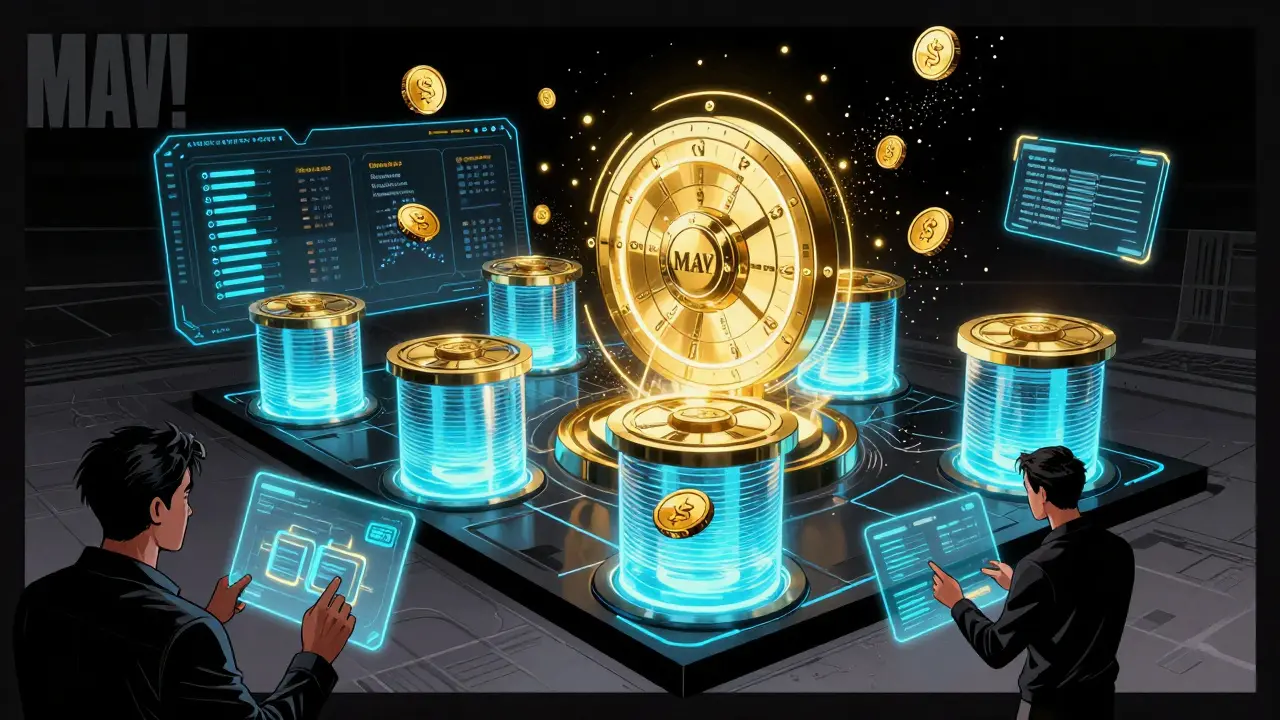
Maverick Protocol Crypto Exchange Review: What You Need to Know Before Investing in MAV
MAV Staking Calculator
Understand veMAV Staking
Stake MAV tokens to earn veMAV (voting power) with longer lock periods increasing your influence in governance decisions.
Important Risk Note: This calculator estimates potential rewards based on current protocol rules. Maverick Protocol has no public TVL data, audit reports, or user activity metrics. Always consider this a high-risk experiment. Only stake funds you can afford to lose.
Estimated Results
Enter your stake amount and lock duration to see estimated veMAV and rewards.
There’s no shortage of crypto exchanges these days, but most of them are centralized platforms where you trade coins like stocks. Maverick Protocol isn’t one of those. It’s a decentralized automated market maker (AMM) built for DeFi users who want to optimize liquidity, earn rewards, and have a say in how the protocol evolves. If you’ve heard of Uniswap or SushiSwap, Maverick is trying to do something similar-but smarter. And it’s backed by some of the biggest names in crypto: Founders Fund, Pantera Capital, BinanceLabs, Coinbase Ventures, CircleVentures, and Gemini. That’s not just marketing fluff. These firms don’t throw money at every project. So why is Maverick getting attention?
What Is Maverick Protocol?
Maverick Protocol is a DeFi platform that lets users provide liquidity to trading pairs on a decentralized exchange without the usual inefficiencies. Unlike older AMMs that use constant product formulas (like Uniswap’s x*y=k), Maverick uses a dynamic pricing model that adjusts based on market conditions. This means less slippage for traders and better capital efficiency for liquidity providers. The goal? To make sure every dollar of liquidity earns more, stays active longer, and gets directed to the right pools.
The native token, MAV, isn’t just another coin you can buy and hold. It’s the engine that powers governance, staking, and incentive distribution. Holders can lock their MAV tokens to earn veMAV-voting-enabled MAV-which gives them more influence over key decisions. Want to boost rewards for a specific liquidity pool? You vote on it. Thinking of changing how fees are distributed? You vote on that too. This isn’t a top-down system. It’s designed to become fully community-owned over time.
How MAV Token Works
MAV token has three core functions: governance, staking, and incentives. First, governance. Every MAV holder can propose changes or vote on them. But here’s the catch: the more veMAV you have, the more weight your vote carries. To get veMAV, you stake MAV for a minimum of 12 weeks. The longer you lock it, the more veMAV you earn. This discourages short-term speculation and rewards long-term commitment.
Second, staking. By locking MAV, you’re not just voting-you’re helping secure the protocol’s direction. The protocol uses veMAV to decide where to allocate incentives. For example, if a new trading pair is underfunded, the community can vote to direct more rewards there to attract liquidity. This keeps the ecosystem balanced and growing.
Third, incentives. Liquidity providers don’t just earn trading fees-they can also earn additional MAV tokens based on community-approved reward schedules. This creates a feedback loop: better liquidity → more trading volume → higher rewards → more users. It’s a self-reinforcing system, but only if the community makes smart decisions.

Market Data and Price Predictions
As of December 2025, MAV trades at around $0.0616, with a market cap of $92.79 million and a 24-hour trading volume of $6.58 million. That’s not huge compared to Uniswap’s UNI or Curve’s CRV, but it’s growing. The token has seen mixed performance: 15 out of the last 30 days were positive, and the 14-day RSI sits at 41.16-neutral, not overbought or oversold.
But here’s where things get messy. Price predictions for MAV in 2025 vary wildly. SwapSpace says the average price will be $0.0478-a drop of about 8%. WalletInvestor is much more bearish, predicting $0.0112 by year-end. TradingBeast, on the other hand, thinks MAV could hit $0.0721. CoinCodex expects a range between $0.0407 and $0.0582, with a projected 25% drop from current levels. One analysis even suggests shorting MAV now could net you nearly 30% profit by December if the price drops as predicted.
Long-term forecasts aren’t any clearer. 2026 looks flat, 2027 shows promise with a 51% projected gain, but 2028 and 2030 hover around break-even or modest gains. The big question isn’t just whether MAV will go up-it’s whether the protocol can deliver real utility to justify its valuation. Right now, the numbers are speculative. There’s no clear TVL data, no verified audit reports, and no public user feedback on performance or ease of use.
Integration with LayerZero
One of Maverick’s biggest recent moves was integrating with LayerZero, a cross-chain communication protocol. This lets liquidity move between blockchains without needing wrapped tokens or complex bridges. That’s a big deal. Most DeFi protocols are stuck on Ethereum or one other chain. If you’re providing liquidity on Ethereum but want to earn rewards on Arbitrum or Base, you’re out of luck. Maverick changes that.
This integration means users can deploy liquidity across multiple chains from a single interface. It reduces capital fragmentation and improves yield opportunities. For example, if USDC is trading heavily on Polygon but liquidity is thin on Optimism, Maverick can route users to where demand is highest. That kind of efficiency is rare in DeFi. It’s not just about trading-it’s about making liquidity work harder.
Why Maverick Stands Out (and Why It Doesn’t)
Compared to Uniswap, Maverick offers more control over where your liquidity goes. Uniswap’s pools are static. Maverick’s are dynamic. You can choose to focus your capital on specific price ranges, reducing impermanent loss and increasing fee earnings. That’s powerful for experienced DeFi users.
But here’s the problem: you need to know what you’re doing. There’s no beginner-friendly dashboard. No step-by-step guides on their site. No video tutorials. If you’re new to DeFi, you’ll be lost. The interface assumes you already understand terms like veMAV, liquidity ranges, and dynamic pricing. Most retail traders won’t stick around long enough to figure it out.
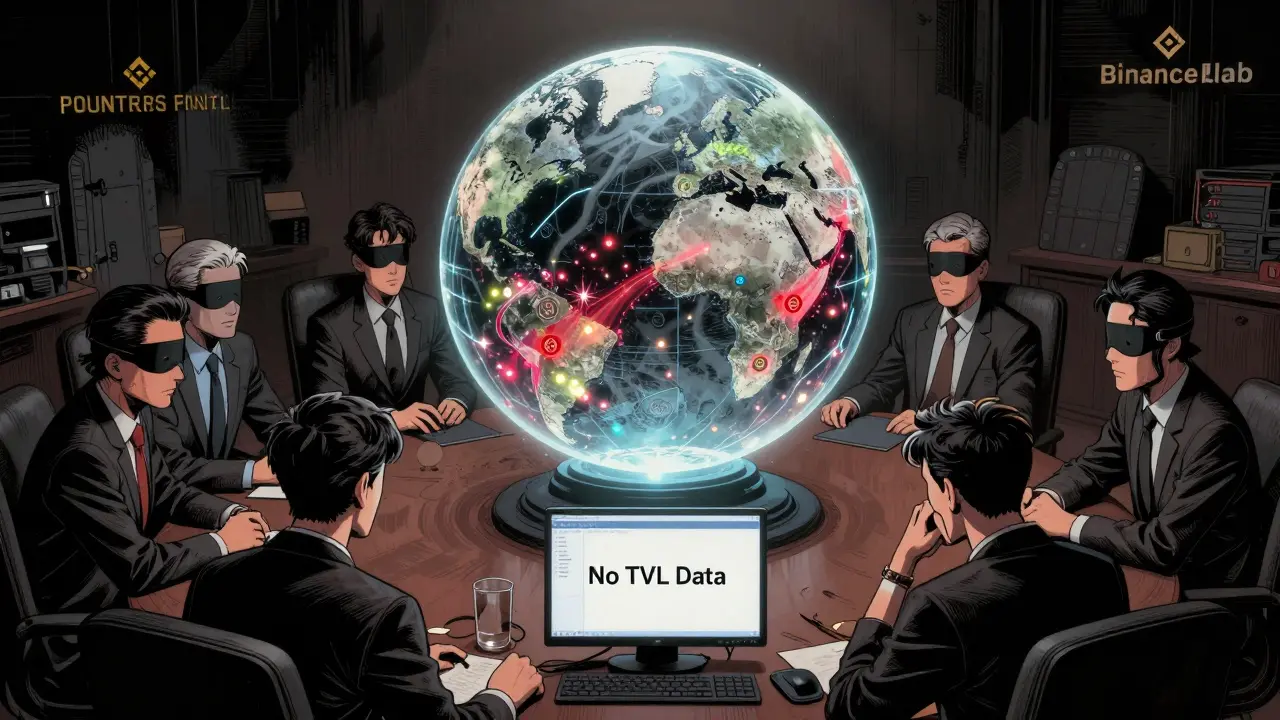
Also, there’s no public data on total value locked (TVL). Without knowing how much money is actually in the protocol, it’s impossible to judge its real adoption. Is it $50 million? $500 million? We don’t know. That’s a red flag. Even lesser-known DeFi projects publish this info. Maverick doesn’t.
And while it’s backed by top VCs, that doesn’t mean it’s safe. Many well-funded crypto projects have failed. The real test isn’t who invested-it’s whether users keep using it. And right now, there’s no community feedback, no Reddit threads, no Twitter discussions, no YouTube reviews. That silence speaks volumes.
Is Maverick Protocol Right for You?
If you’re a seasoned DeFi user who understands liquidity provision, impermanent loss, and governance voting, Maverick could be worth exploring. The dynamic pricing model is technically impressive. The LayerZero integration is ahead of its time. And the community governance model could lead to a truly decentralized exchange one day.
If you’re a casual investor looking for the next big coin to buy and hold? Walk away. MAV isn’t a meme coin. It’s a tool. And tools don’t always go up in price. They only deliver value if you use them correctly.
The biggest risk isn’t price volatility-it’s obscurity. Without transparency on TVL, audits, or user experience, you’re investing in a black box. The team has the backing. But do they have the execution? That’s still unproven.
For now, treat Maverick Protocol like a high-risk, high-reward experiment. Only allocate money you’re willing to lose. And if you do jump in, make sure you understand how veMAV works, how to stake properly, and how to track your liquidity across chains. Don’t just follow the hype. Follow the mechanics.
Is Maverick Protocol a real crypto exchange?
Yes, but not like Binance or Coinbase. Maverick Protocol is a decentralized exchange (DEX) built on blockchain networks like Ethereum and Arbitrum. It doesn’t hold your funds or act as a middleman. Instead, it uses smart contracts to match buyers and sellers directly. You interact with it using a wallet like MetaMask, and you control your own keys.
Can I buy MAV on major exchanges?
MAV is available on several decentralized exchanges like Uniswap and SushiSwap, and a few centralized ones including Gate.io and KuCoin. But it’s not listed on Coinbase, Binance, or Kraken. That limits accessibility for beginners. If you want to buy MAV, you’ll likely need to trade another crypto like ETH or USDC for it on a DEX.
What’s the difference between MAV and veMAV?
MAV is the native token you can buy and trade. veMAV is a locked version of MAV you earn by staking your MAV tokens for a set period-usually 12 weeks or longer. veMAV doesn’t have a market value. It can’t be traded. But it gives you voting power in the protocol’s governance. More veMAV = more influence over where rewards go and what upgrades happen.
Is Maverick Protocol safe to use?
There’s no public audit report from a major firm like CertiK or Quantstamp. Without verified smart contract security checks, there’s always risk. The protocol has backing from reputable VCs, which suggests some due diligence was done, but that doesn’t replace an open audit. Always use small amounts first. Never deposit more than you can afford to lose.
Why is there so much disagreement about MAV’s price?
Because there’s not enough real data to base predictions on. Maverick doesn’t publish TVL, user numbers, or daily active traders. Without usage metrics, analysts are guessing. Some are betting on future adoption. Others are assuming it won’t gain traction. That’s why predictions range from $0.01 to $0.07. The truth? Only time and actual usage will tell.
Should I stake my MAV tokens?
Only if you plan to stay involved long-term. Staking locks your MAV for weeks or months. You can’t sell it during that time. But you earn veMAV, which lets you vote on protocol changes and influence rewards. If you’re just looking to flip MAV for a quick profit, staking isn’t for you. But if you believe in the protocol’s future and want to help shape it, staking is the smart move.





22 Comments
Andy Walton
December 15 2025yo i just staked my MAV and now i feel like a crypto oracle 🧙♂️✨ but like... why does my wallet feel emptier? also can we talk about how no one talks about the TVL?? it's just... silent. like a ghost exchange. 👻
Candace Murangi
December 16 2025I’ve been watching Maverick for months. Honestly? The LayerZero integration is the only thing keeping me from walking away. Most DEXs are stuck in 2021. This feels like 2025 already. But yeah... where’s the TVL data? It’s weird.
Albert Chau
December 17 2025You people are acting like this is the next Bitcoin. It’s not. It’s a glorified liquidity router with a fancy voting system. If you don’t understand veMAV, you shouldn’t be near this. And no, your 0.0616 price isn’t a promise. It’s a trap.
Madison Surface
December 17 2025I literally cried when I read the part about dynamic pricing. After losing so much to impermanent loss on Uniswap... this feels like someone finally listened. But then I looked at the interface and realized I need a PhD to use it. 😭 Why can’t they make a ‘Beginner Mode’? I just want to earn, not debug smart contracts.
Tiffany M
December 17 2025Okay, but why is no one talking about the fact that this is basically Uniswap v4 with a better marketing team?? The tech is cool, sure-but if you’re not staking, you’re just paying gas to watch others get rewards. And the fact that Binance didn’t list it? Red flag. Or maybe genius? I don’t know anymore.
Eunice Chook
December 18 2025Predictions are meaningless without TVL. Period. Stop guessing. Start measuring. If you’re investing based on VC logos, you’re not investing-you’re gambling on reputation. And that’s not smart. It’s sad.
Lynne Kuper
December 19 2025You think you’re being clever by shorting MAV? Bro, you’re shorting the future of cross-chain liquidity. This isn’t about price-it’s about infrastructure. And infrastructure doesn’t go up in a week. It goes up in years. So chill. Let it build.
Jessica Eacker
December 21 2025I staked 500 MAV for 12 weeks. No regrets. I don’t care about the price right now. I care about voting on which pools get boosted. That’s power. That’s ownership. That’s what crypto was supposed to be.
Kathleen Sudborough
December 21 2025I’m a total newbie but I read the whole thing twice. I don’t understand half of it. But I love that people are trying to fix DeFi instead of just pumping coins. Maybe I’ll start small. Like, 10 MAV small. Just to feel part of it. Even if I mess up.
Claire Zapanta
December 21 2025Let me be clear: this is a CIA-backed psyop to drain retail investors while they prepare for the New World Order’s digital currency. Why else would they hide TVL? Why else would they partner with LayerZero? It’s a trap. I’ve seen this before. In 2017. In 2021. Now it’s 2025. Same script. Different emoji.
Kathy Wood
December 23 2025If you’re not staking, you’re complicit. You’re just a speculator. And speculators are the reason this whole thing is broken. Stop pretending you care about decentralization when all you want is a 10x. You’re not a believer-you’re a leech.
Abhishek Bansal
December 25 2025bro i tried to use this and my metamask crashed 3 times. also the gas fees on arbitrum were wild. i gave up. if your app makes my phone scream, it’s not smart. it’s broken.
Anselmo Buffet
December 26 2025I’ve used Uniswap for years. Maverick’s dynamic ranges feel like a cheat code. But yeah, the UI is brutal. I’d pay $50 for a video tutorial. Someone make it. I’ll watch.
Steven Ellis
December 27 2025The elegance of Maverick’s pricing algorithm lies in its ability to minimize slippage through time-variant liquidity curves. This is not merely an improvement-it is a paradigmatic shift in AMM design. That said, the absence of public audit documentation remains a material risk factor. Prudence dictates incremental exposure.
Sue Gallaher
December 27 2025I don't care about your veMAV or your LayerZero or your dynamic pricing. I just want to know if I can buy MAV on Coinbase. If not then why are we even talking? This isn't finance. It's a cult.
Hari Sarasan
December 28 2025The architectural superiority of Maverick’s oracle-integrated liquidity provisioning mechanism renders traditional AMMs obsolete. The veMAV governance model is a quantum leap in DAO functionality. However, the absence of formalized on-chain analytics dashboards constitutes a critical opacity vector. Institutional adoption hinges on transparency.
Stanley Machuki
December 29 2025I’ve been in crypto since 2017. I’ve seen a thousand ‘next big things’. Maverick is different. Not because of the tech-but because the team isn’t screaming ‘TO THE MOON’. They’re quiet. Building. That’s rare. I’m in.
Lloyd Cooke
December 30 2025The fundamental paradox of decentralized governance is this: the more power you grant to the community, the more likely it is to be hijacked by the most vocal, least informed participants. veMAV is a beautiful idea. But history suggests it will become a tool for whales to mask their control. The silence around TVL? That’s not humility. It’s fear.
Kurt Chambers
January 1 2026VCs backed it? Cool. So did Theranos. So did FTX. So did Terra. Money doesn’t mean safe. It means they got paid to say yes. And now you’re all just sheep following the bell. Wake up.
Kelly Burn
January 2 2026i love how this feels like a secret club 😍 i’m not even staking yet but just reading about veMAV made me feel like i’m in on something big. like crypto’s version of a secret handshake 🤫💖
John Sebastian
January 2 2026I don’t understand why people are excited. It’s just another token. People will forget about it in six months. Just like every other DeFi project.
Lois Glavin
January 4 2026I’m not a tech person. I just like that this lets me help decide where rewards go. That’s cool. I don’t need to understand the math. I just need to know I’m not just a spectator. That’s enough for me.