NeutroSwap Crypto Exchange Review: What You Need to Know Before Trading
Have you ever stumbled upon a new cryptocurrency platform that promises the world but offers almost no details? That is exactly where NeutroSwap sits right now. If you are looking for a detailed breakdown of fees, security audits, and customer support hours, you might be scratching your head. The internet is surprisingly quiet about this specific platform. Most major financial news outlets and established crypto review sites have little to say about it. This silence isn't necessarily a red flag on its own, but in the volatile world of digital assets, information is your best defense.
So, what do we actually know? Based on current data from tracking platforms like CoinGecko, NeutroSwap appears primarily as a venue for trading NEUTRO tokens. It is listed as a popular spot for buying and selling these specific assets, likely functioning as a decentralized exchange (DEX) or a niche liquidity pool rather than a massive centralized powerhouse like Binance or Coinbase. But does that make it safe? Does it make it useful for your portfolio? Let's peel back the layers and look at what this means for you as an investor in 2026.
The Reality of Niche Decentralized Exchanges
To understand NeutroSwap, you first need to understand the ecosystem it lives in. Unlike CoinSpot, which boasts over 2.5 million users and operates as a regulated entity in Australia, or global giants like Kraken and Binance US, NeutroSwap doesn't seem to fit the mold of a traditional centralized exchange (CEX). There is no clear evidence of a corporate headquarters, a public team page, or a standard "Know Your Customer" (KYC) process associated with it in mainstream reports.
This suggests NeutroSwap is likely a protocol-based platform. In the world of DeFi (Decentralized Finance), exchanges are often just smart contracts running on a blockchain. You connect your wallet-like MetaMask or Trust Wallet-and swap tokens directly. There is no middleman holding your funds. This is both its greatest strength and its biggest risk. You have full control, but if there is a bug in the code, there is no customer support hotline to call.
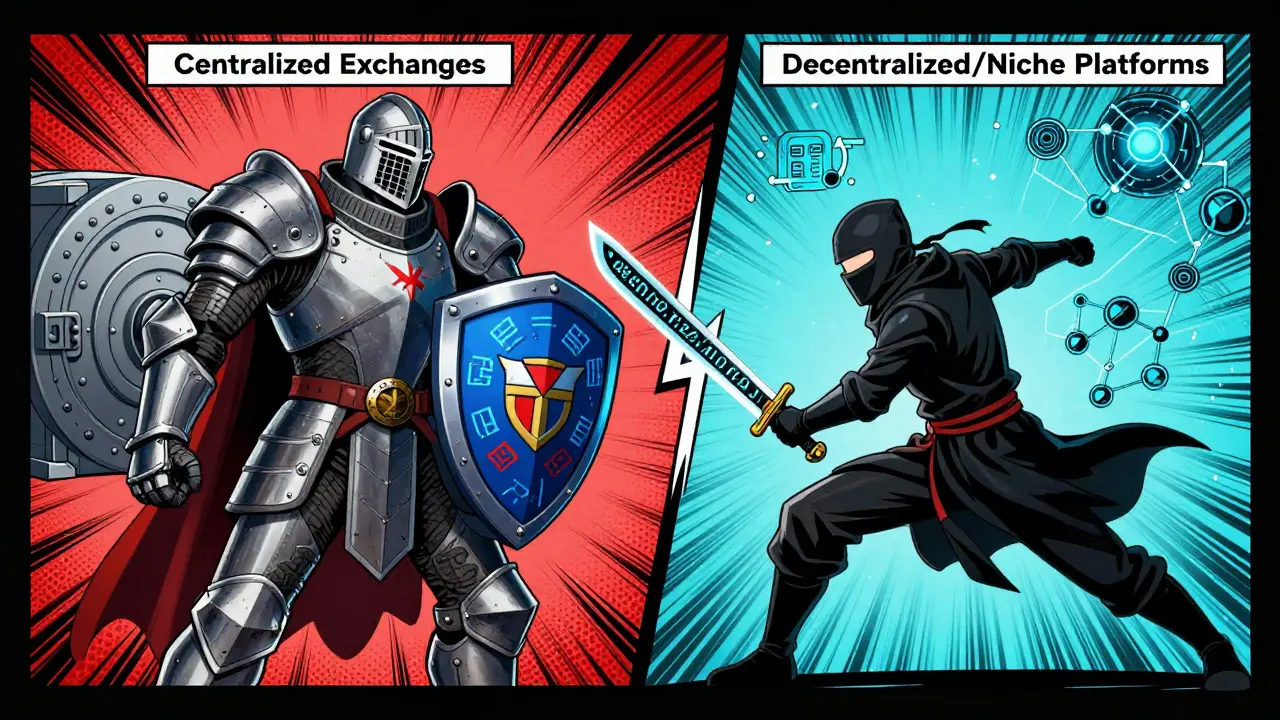
| Feature | Centralized (e.g., Coinbase, Kraken) | Niche/DeFi (e.g., NeutroSwap) |
|---|---|---|
| Custody | Exchange holds your funds | You hold your funds (non-custodial) |
| Regulation | Usually licensed and regulated | Often unregulated or lightly regulated |
| Liquidity | High (deep order books) | Variable (depends on liquidity pools) |
| Fees | Transparent trading + withdrawal fees | Gas fees + protocol fees (can be high) |
| Risk Profile | Hack of exchange, bankruptcy | Smart contract bugs, rug pulls, impermanent loss |
Why Is There So Little Information?
In the crypto space, obscurity can mean two things: either the project is brand new and still building its community, or it is a low-volume platform that hasn't attracted significant media attention yet. For NeutroSwap, the lack of comprehensive data-including founding dates, creator identities, and technical specifications-is a gap you need to fill yourself before sending any money.
When you trade on established platforms, you rely on their reputation. When you trade on a platform like NeutroSwap, you must rely on verification. Have the smart contracts been audited by firms like CertiK or Quantstamp? Is there an active Discord or Reddit community discussing recent trades? Without these signals, you are flying blind. Many small DEXs launch, gain a brief spike in volume due to hype around a specific token like NEUTRO, and then fade into irrelevance. Understanding this lifecycle is crucial for managing your expectations.
Evaluating Liquidity and Slippage
One of the most practical concerns when using a smaller exchange is liquidity. Liquidity refers to how easily you can buy or sell an asset without causing a drastic change in its price. On big exchanges, you can sell $10,000 worth of Bitcoin instantly with minimal price impact. On a niche platform like NeutroSwap, the liquidity pool for NEUTRO tokens might be shallow.
If the pool is small, you might face high slippage. Slippage is the difference between the expected price of a trade and the price at which the trade is executed. Imagine you want to swap 1 ETH for NEUTRO tokens. The interface shows you'll get 1,000 NEUTRO. But because there aren't enough buyers in the pool, you only receive 850 NEUTRO. That 15% loss is pure cost. Always check the "slippage tolerance" setting in your wallet before confirming a trade on such platforms. Setting it too low causes failed transactions; setting it too high exposes you to bad prices.
Security Considerations for Non-Custodial Trading
Since NeutroSwap likely operates without holding your keys, the security burden shifts entirely to you. Here is what that looks like in practice:
- Wallet Security: Ensure your hardware wallet (like Ledger or Trezor) or software wallet is secure. If you lose your seed phrase, no one can help you recover your assets.
- Phishing Risks: Make sure you are accessing the official NeutroSwap interface. Scammers often create fake websites with similar names to drain wallets. Double-check the URL and verify links through official social media channels.
- Token Approvals: When you interact with a DEX, you grant the smart contract permission to spend your tokens. After trading, consider revoking these approvals using tools like Revoke.cash to minimize exposure if the contract is later compromised.
Unlike centralized exchanges that offer insurance funds or chargebacks in rare cases, DeFi interactions are final. Once the transaction is confirmed on the blockchain, it cannot be undone. This permanence requires a higher level of diligence.
Alternatives to Consider
If the uncertainty surrounding NeutroSwap makes you uncomfortable, you are not alone. Many traders prefer sticking to well-established venues unless they are specifically hunting for alpha on new tokens. For general trading, platforms like Coinbase (popular in the US), Kraken (known for strong security), and CoinSpot (leading in Australia) offer robust interfaces, regulatory compliance, and deep liquidity.
If you are specifically interested in DeFi trading but want more transparency, larger decentralized protocols like Uniswap or PancakeSwap have undergone years of scrutiny, multiple audits, and have billions of dollars in total value locked (TVL). They support thousands of tokens, including many that might also be found on smaller swaps. Using a larger DEX reduces the risk of interacting with unaudited or poorly maintained code.

How to Research NeutroSwap Further
Before you commit capital, take ten minutes to do your own due diligence. Here is a quick checklist:
- Check DeFiLlama: Look up NeutroSwap on DeFiLlama. Does it show consistent Total Value Locked (TVL)? A flat or dropping TVL might indicate users are leaving.
- Review Tokenomics: Understand the NEUTRO token. Is it a governance token? A utility token? Who holds the majority of the supply? If a few wallets hold most of the tokens, the price could be manipulated easily.
- Social Sentiment: Search for NeutroSwap on Twitter and Reddit. Are people talking about features, or just price pumps? Genuine communities discuss development updates and bugs.
- Audit Reports: Look for links to audit reports on their website or GitHub. If none exist, proceed with extreme caution.
Final Thoughts on Trading Niche Assets
Trading on platforms like NeutroSwap is a high-risk, high-reward strategy. It allows you to access tokens early, potentially before they hit major exchanges. However, it comes with the baggage of lower liquidity, higher technical complexity, and less regulatory protection. If you are a beginner, it might be wise to stick to centralized exchanges until you are comfortable with wallet management and gas fees. If you are an experienced DeFi user, treat NeutroSwap as you would any other small-cap protocol: start small, verify everything, and never invest more than you can afford to lose.
Is NeutroSwap a safe place to store my crypto?
NeutroSwap is likely a non-custodial decentralized exchange, meaning it does not store your crypto for you. Instead, you keep your assets in your personal wallet (like MetaMask). Safety depends on your wallet security and the integrity of NeutroSwap's smart contracts. Since detailed audit information is scarce, exercise caution and assume higher risk compared to regulated centralized exchanges.
What is the NEUTRO token used for?
Based on available data, NEUTRO is the primary token traded on the NeutroSwap platform. Specific utility details are limited in public sources, but typically such tokens are used for governance, fee discounts, or providing liquidity within the exchange's ecosystem. Check the project's whitepaper for precise use cases.
How do I buy NEUTRO tokens if they are not on Coinbase?
If NEUTRO is not listed on major centralized exchanges, you will likely need to use a decentralized exchange. First, buy a base currency like Ethereum (ETH) or BNB on a platform like Coinbase or Kraken. Transfer it to a compatible wallet (like Trust Wallet or MetaMask). Then, connect that wallet to NeutroSwap and swap your ETH/BNB for NEUTRO tokens.
Are there hidden fees when using NeutroSwap?
While NeutroSwap may not charge explicit trading fees like a centralized exchange, you will pay network "gas" fees to process transactions on the blockchain. Additionally, decentralized swaps often include a small protocol fee (usually 0.3%) that goes to liquidity providers. High slippage during low liquidity periods can also act as a hidden cost.
Can I trust NeutroSwap without knowing who created it?
In the DeFi world, many successful projects are anonymous or pseudonymous. Trust is built through code transparency, third-party audits, and community track record rather than corporate identity. However, anonymity increases risk. Verify if the code is open-source on GitHub and if reputable firms have audited the contracts before trusting it with significant funds.