
Property Titles on Blockchain: How Decentralized Ledgers Are Changing Real Estate Ownership
Imagine losing your home because a fire burned down the courthouse where your property papers were stored. That’s not a scene from a movie-it happened in Haiti after the 2010 earthquake. Over a million people lost legal proof of ownership because their land records were paper-based and stored in one place. Now imagine a system where your property title can’t be destroyed, forged, or lost. That’s what blockchain property titles promise.
What Is a Blockchain Property Title?
A blockchain property title, often called a blocktitle, is a digital record of land ownership stored on a blockchain-a type of shared, tamper-proof digital ledger. Unlike traditional titles kept in county offices or on paper, blockchain titles are encrypted, time-stamped, and copied across hundreds or thousands of computers worldwide. Once a property transfer is recorded, it can’t be changed without the network’s agreement.
This isn’t science fiction. In Georgia, the National Agency of Public Registry started using blockchain in 2016 to record land deeds. What used to take days now takes minutes. In Sweden, the land registry pilot cut transaction times from months to under two weeks. The system works by turning every ownership change into a block on a chain. Each block links to the one before it using cryptography. If someone tries to alter a record, the network spots the mismatch instantly.
How It Works: Smart Contracts and Decentralized Verification
Traditional property sales involve lawyers, title insurers, escrow agents, and government offices-all of whom manually check documents. This process can take weeks. With blockchain, a smart contract automates the whole thing.
Here’s how it plays out:
- A buyer and seller agree on a price.
- Their agreement is coded into a smart contract on the blockchain.
- The contract checks if the seller owns the property (verified by the blockchain ledger).
- It confirms the buyer’s payment has cleared.
- Once both conditions are met, ownership transfers automatically.
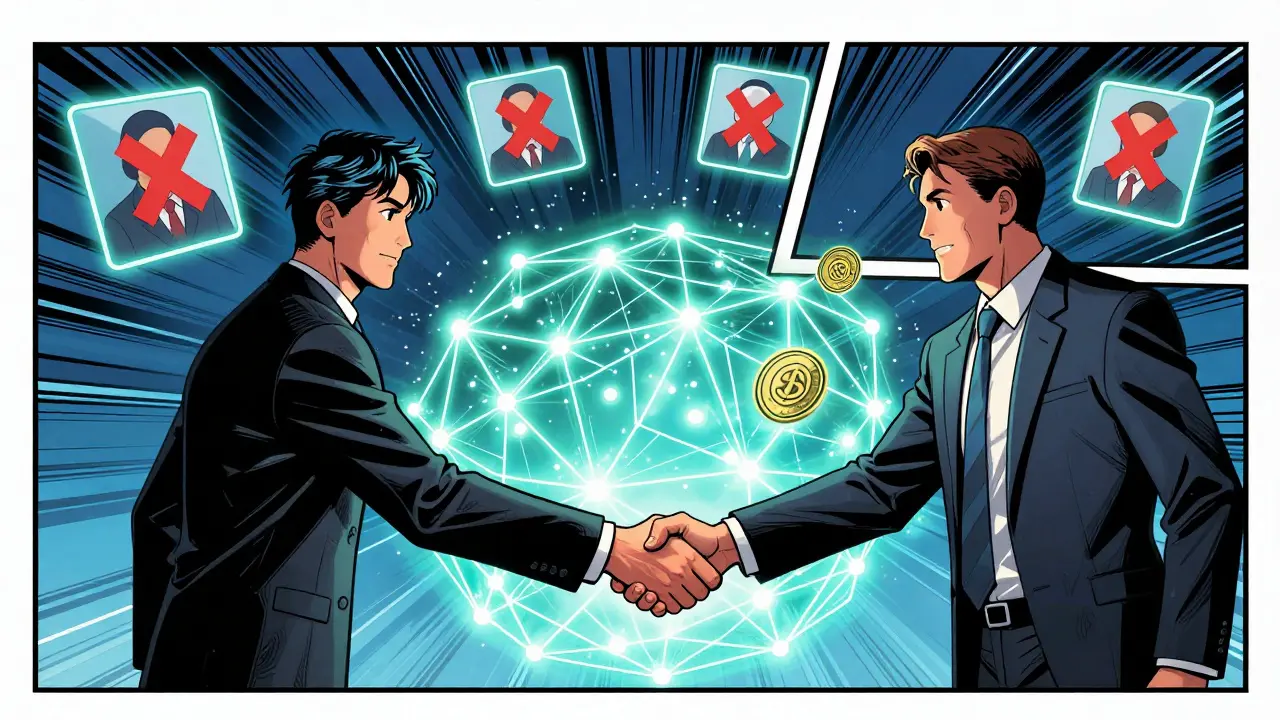
No middlemen. No paperwork. No delays. The entire transaction is public, permanent, and verifiable by anyone with access. This removes human error and reduces fraud. In 2023, Nasdaq called blockchain “the ultimate defense against property title fraud” because altering a record would require hacking every node in the network at once-something that’s practically impossible.
Why Traditional Systems Fail
Old-school land registries are fragile. They rely on centralized databases that can be hacked, corrupted, or destroyed. In 2010, Haiti’s entire land registry was wiped out. In 2017, a hacker in the U.S. altered a property deed in Ohio, stealing a home from its owner. These aren’t rare cases-they’re symptoms of a broken system.
Even in wealthy countries, title searches take days. In New York, a simple title check can cost $500 and require visiting multiple offices. In developing nations, up to 70% of land lacks formal documentation. Hernando de Soto’s 2001 book The Mystery of Capital showed how this blocks economic growth. People can’t use their land as collateral for loans because no one trusts the paper records.
Blockchain fixes this by making every transaction visible and permanent. It doesn’t just store data-it verifies it. Each transfer is confirmed by multiple independent computers, not one government server.
Real-World Examples: Who’s Doing It?
Several countries have tested blockchain land registries:
- Georgia: Since 2016, all land deeds are recorded on blockchain. Transfer times dropped from 3-5 days to under 10 minutes. The system now handles over 250,000 deeds annually.
- Sweden: The Lantmäteriet pilot reduced transaction time from 4 months to 12 days. Real estate agents reported 92% satisfaction with transparency.
- Ghana: In rural areas, farmers used to lose land to disputes because records were handwritten. The blockchain pilot resolved 80% of long-standing boundary conflicts within a year.
- Vermont and Wyoming (USA): These states passed laws in 2016 and 2019 recognizing blockchain records as legally valid for property.
Even private companies are jumping in. J.P. Morgan’s research shows 63% of major real estate firms are exploring blockchain titles. Platforms like RWA.io and Haus are building tools for tokenization-splitting property ownership into digital shares so multiple people can invest in one house.
Tokenization: Owning a Piece of a House
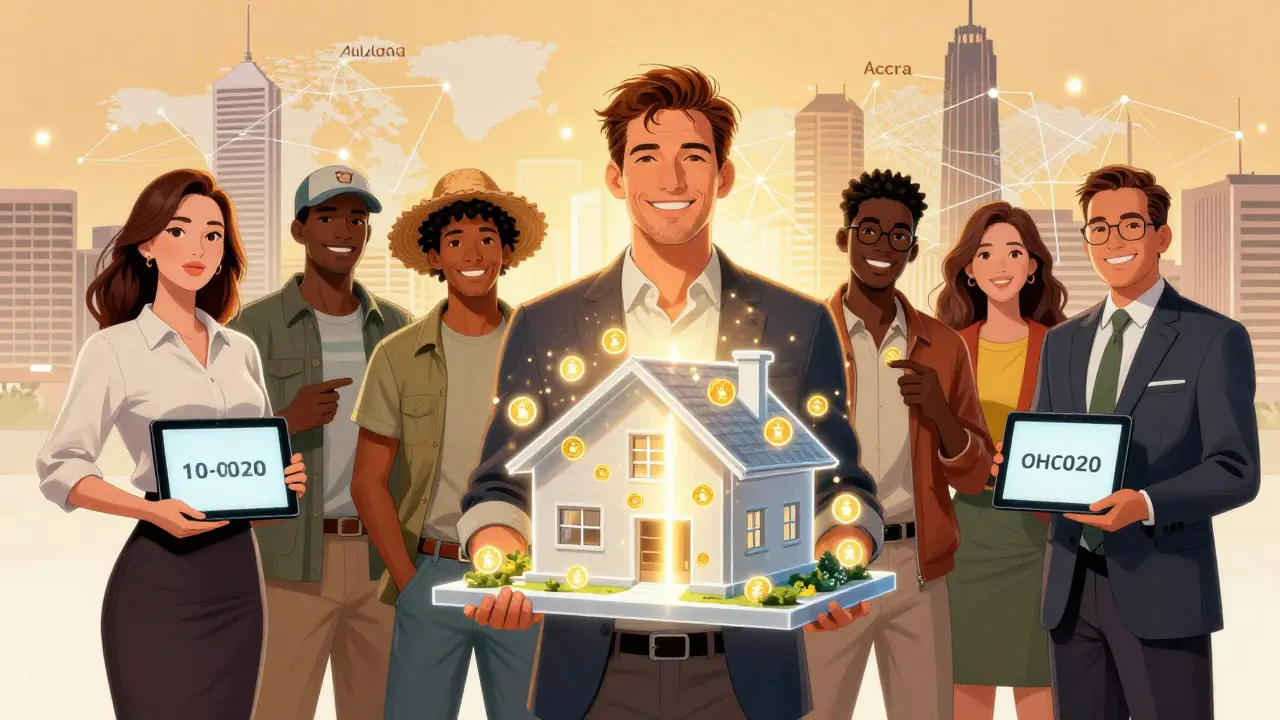
One of the most exciting uses of blockchain property titles is tokenization. Instead of buying a whole house, you can buy a digital token representing 1% of it.
Think of it like buying a stock-but instead of Apple shares, you own a slice of a rental property in Auckland or a warehouse in Chicago. This opens real estate to people who can’t afford $500,000 homes. According to J.P. Morgan, tokenization could bring millions of new investors into real estate.
Here’s how it works:
- A property is divided into 10,000 tokens.
- Each token equals 0.01% ownership.
- Tokens are bought and sold on regulated platforms.
- Rent income is distributed automatically via smart contracts.
It’s not just for rich investors. A teacher in Wellington could invest $200 in a tokenized apartment and earn rent every month. This changes how people think about wealth-building.
Challenges and Risks
It’s not all smooth sailing. Blockchain titles face real hurdles:
- Legal recognition: Only 19 countries legally accept blockchain titles as binding. In most places, you still need paper records.
- Onboarding legacy data: How do you digitize 100-year-old deeds with faded ink and handwritten names? Ghana’s project took two years just to scan and verify existing records.
- Digital literacy: Elderly homeowners in Sweden struggled to understand how blockchain worked. 37% of users needed help during the pilot.
- Cost: Building a blockchain registry costs millions. Small towns can’t afford it.
- Interoperability: If Georgia’s system doesn’t talk to Sweden’s, cross-border sales get messy.
Also, blockchain doesn’t fix bad data. If someone falsely claims ownership before the system goes live, the blockchain will record that lie-forever. That’s why accurate initial audits are critical.
What’s Next? The Road to 2030
Deloitte predicts blockchain will handle 35% of commercial real estate deals by 2030 and 22% of residential ones. But full replacement of paper systems? That won’t happen until 2040 or later.
Future upgrades will include:
- IoT sensors: Drones and ground sensors that automatically verify property boundaries.
- AI fraud detection: Algorithms that flag suspicious transfers before they happen.
- ISO standard: In October 2025, the International Organization for Standardization launched the first global blockchain title protocol to make systems compatible.
What’s clear is this: blockchain won’t replace every land registry. But it will make the system more secure, faster, and fairer-especially where traditional systems are broken.
Is It Right for You?
If you’re a homeowner in a country with strong land records (like New Zealand, Canada, or Germany), you probably don’t need blockchain yet. Your title is safe.
But if you:
- Own rental property and want to sell fractional shares,
- Live in a region where land disputes are common,
- Invest in real estate and want lower entry costs,
- Or just hate waiting weeks for a title search,
then blockchain titles are already relevant to you. Start watching pilot programs in your country. Ask your real estate agent if they’re using blockchain tools. The future of property ownership isn’t coming-it’s already here.
Can blockchain titles replace traditional land registries completely?
Not yet. While blockchain offers strong security and speed, most countries still require paper or centralized digital records for legal validity. Only 19 nations fully recognize blockchain titles as legally binding. Full replacement will take decades because laws, courts, and title insurance industries need time to adapt. Right now, blockchain works best as a parallel system that enhances-not replaces-existing ones.
Are blockchain property titles secure from hackers?
Yes, far more secure than traditional systems. A blockchain title is stored on hundreds of computers worldwide. To alter it, a hacker would need to change the record on over 51% of those computers at the same time-a near-impossible task. Unlike a single government server that can be breached, blockchain has no central point of failure. The ASME Open Engineering Journal confirmed in 2023 that once a title is correctly recorded, its chain remains protected forever.
Can I buy property using blockchain today?
Yes, but only in places with legal support. Georgia, Sweden, and parts of the U.S. (like Wyoming) allow blockchain-based sales. Private platforms like RWA.io and Propy let you buy tokenized properties globally, but these are often treated as investments, not full ownership under local law. Always check your country’s regulations before proceeding.
What’s the difference between blockchain titles and digital titles?
Digital titles are just paper records scanned into a database-still controlled by one government agency. Blockchain titles are decentralized, meaning no single entity owns or controls them. Every transaction is verified by a network, not a clerk. Digital titles can still be deleted or altered. Blockchain titles can’t be changed without consensus.
Do I need cryptocurrency to use blockchain property titles?
Not necessarily. While some systems use crypto for payments, many blockchain land registries operate with regular fiat currency. The blockchain is just the record-keeping layer. You can pay with a bank transfer, credit card, or even cash-depending on the platform. The key is the tamper-proof ledger, not the payment method.

17 Comments
Tobias Wriedt
March 19 2026This is literally the future 🚀 I mean, who even uses paper anymore? My grandma still has her deed in a shoebox. BRO. 😭 Blockchain titles = no more crying over burnt courthouses. #BlocktitleRevolution
Ernestine La Baronne Orange
March 20 2026I'm sorry, but this is just another Silicon Valley fantasy where rich tech bros think they can fix everything with code-when in reality, most people don't even know what a blockchain is, let alone how to use it safely, and now we're supposed to trust a decentralized ledger with our homes?!!?? This is terrifying. What happens when your phone dies? Or your wallet gets hacked? Or some algorithm misreads your fingerprint? You lose your house? That's not innovation-that's a nightmare dressed up in buzzwords. And don't even get me started on tokenization-so now I'm supposed to buy 0.01% of a house like it's a meme stock? This isn't progress. It's financial gambling with your shelter.
Manali Sovani
March 22 2026The concept is theoretically sound. However, the implementation lacks contextual sensitivity. In developing economies, digital infrastructure is not uniformly accessible. To propose blockchain as a panacea is to ignore structural inequities. Furthermore, the legal recognition gap remains substantial. One cannot substitute legitimacy with technological novelty.
Konakuze Christopher
March 23 2026They're already using this to steal land. Mark my words. This is how the elite quietly take over property. No paper trail? No oversight? Perfect. They'll erase your deed, rewrite it, and you'll never know until you show up and find strangers living in your house.
S F
March 24 2026America doesn't need this. We've got the best legal system in the world. Why are we letting some foreign tech startup rewrite our property laws? This is just another globalist takeover. Keep your blockchain out of my land.
Angelica Stovall
March 25 2026So let me get this straight. You're saying we should trust a system that can't be changed even if someone made a mistake? What if the original owner was a scammer? What if the deed was forged before the blockchain went live? You're just locking in fraud forever. That's not security. That's a trap. And now you want grandma to use it? LOL. No.
Taylor Holloman.
March 27 2026I'm honestly just... curious. Not hype, not fear. Just wondering how this actually plays out in real life. Like, what does it look like when a 72-year-old farmer in Alabama tries to transfer his land using a phone app? Is there a hotline? A local office? A person who helps? Or is it just ‘go figure it out on your own’? The tech sounds cool, but if it doesn't work for people-not just coders-it's just a shiny toy.
Bryan Roth
March 28 2026This is actually one of the most hopeful things I've seen in a long time. Imagine a kid in rural Ghana who can finally prove their family’s land belongs to them-not because some bureaucrat liked them, but because the system doesn't lie. Or a single mom in Ohio who can sell half her house to fund her daughter’s education. This isn't about crypto. It's about dignity. It's about giving people power they were never meant to lose. We’re not just changing how we record land-we’re changing how we see people’s right to belong.
sai nikhil
March 29 2026Interesting perspective. However, in India, land records are already chaotic due to legacy systems. Digitization without proper onboarding will only deepen inequality. Blockchain is not magic. It requires infrastructure, literacy, and trust. We are not there yet.
Prakash Patel
March 30 2026Funny how everyone acts like blockchain is the first time someone tried to digitize land records. We had this in the 90s. It failed. Because people are messy. Paper is messy. That's why we have lawyers. Not because they're expensive, but because humans need someone to argue with. You can't code out conflict.
Marc Morgan
March 31 2026So you're telling me a drone and an AI are gonna decide who owns a 100-year-old patch of dirt in Tasmania? Cool. Next you'll say my toaster can sign a deed. I'll believe it when I see a grandma in Perth successfully transfer her bungalow without crying, yelling, or needing three lawyers, two notaries, and a cup of tea.
Anastasia Thyroff
April 1 2026I just watched a video of a man in Georgia crying because he got his title back after 20 years. I haven't cried like that since my dog died. This isn't tech. This is healing. And if you're not moved by that you're not human
Kira Dreamland
April 3 2026I love that tokenization lets people invest small amounts. I put $150 into a tokenized house in Portland last month. Got $12 in rent this month. It feels like magic. Like I'm part of something bigger. Not rich. Just… involved.
Derek Lynch
April 4 2026You think blockchain is the future? Wait until you see the first lawsuit where someone claims their blockchain title was hacked… by their own kid who changed the password. Or when a 90-year-old widow gets locked out because she forgot her seed phrase. This isn't progress. It's a time bomb wrapped in a whitepaper.
Robert Kunze
April 5 2026i just want to say i love how this is helping people in ghana and georgia. my aunt lives in a village where they still use handwritten deeds. one guy stole her land because the paper got wet. she cried for a year. if this helps even one person like her… then it’s worth it. i dont care if its perfect. just dont stop trying
Heather James
April 7 2026The real win isn't the tech. It's the silence. No more waiting months for a title search. No more paying $500 to prove you own your own house. That quiet peace? That’s worth more than any blockchain.
Sarah Hammon
April 7 2026i just read about a woman in sweden who used blockchain to sell her cabin to a couple in canada. no lawyers. no paperwork. just a click. she said it felt like flying. i cried. this is what we're building. not just systems. connection.