Crypto Gaming: What It Is, How It Works, and What You Need to Know
When you hear crypto gaming, a category of video games built on blockchain networks where players earn real digital assets like tokens and NFTs. Also known as play-to-earn gaming, it turns time spent playing into something with actual value—unlike traditional games where your progress dies when you log off. This isn’t just about grinding levels anymore. It’s about owning your in-game items, selling them on open markets, and even earning enough to cover your monthly bills—if you know where to look.
At its core, blockchain games, games built on decentralized ledgers like Ethereum, Solana, or Polygon, where ownership and transactions are recorded permanently give players real control. You don’t just borrow a sword or a skin—you own it. That means you can trade it, rent it out, or sell it anytime. And that’s where NFT gaming, a subset of crypto gaming where in-game items are non-fungible tokens tied to your wallet comes in. These aren’t just digital collectibles—they’re verifiable assets. Think of them like rare trading cards, but with proof of authenticity built into the code. But here’s the catch: most NFT games today have no real players, no utility, and prices that crash the moment hype fades. The ones that last? They tie rewards to actual gameplay, not just waiting for a token drop.
And then there’s the money side: crypto rewards, tokens earned through gameplay, staking, or completing tasks within a game ecosystem. These aren’t always worth much—but in some cases, like early adopters of Axie Infinity or recent projects like Star Atlas, they’ve turned casual players into earners. But don’t fall for the fake airdrops and scam tokens pretending to be the next big thing. Most crypto games you see advertised online are just fronts for pump-and-dump schemes. The real ones don’t need flashy ads—they have active communities, transparent teams, and games that actually feel fun to play.
What you’ll find here isn’t a list of hype-driven tokens. It’s a collection of real stories, warnings, and breakdowns. You’ll see how some players in Venezuela use crypto gaming to survive economic collapse. You’ll learn why a game with a $100 million market cap can vanish overnight. You’ll spot the red flags in fake NFT drops that look just like the real ones. And you’ll understand why holding a governance token in a gaming DAO might matter more than the in-game sword you just bought.
There’s no magic formula to win in crypto gaming. But there is a way to avoid losing everything. The games that last aren’t the ones with the loudest Twitter threads—they’re the ones where the code works, the team shows up, and the rewards come from playing, not just hoping.
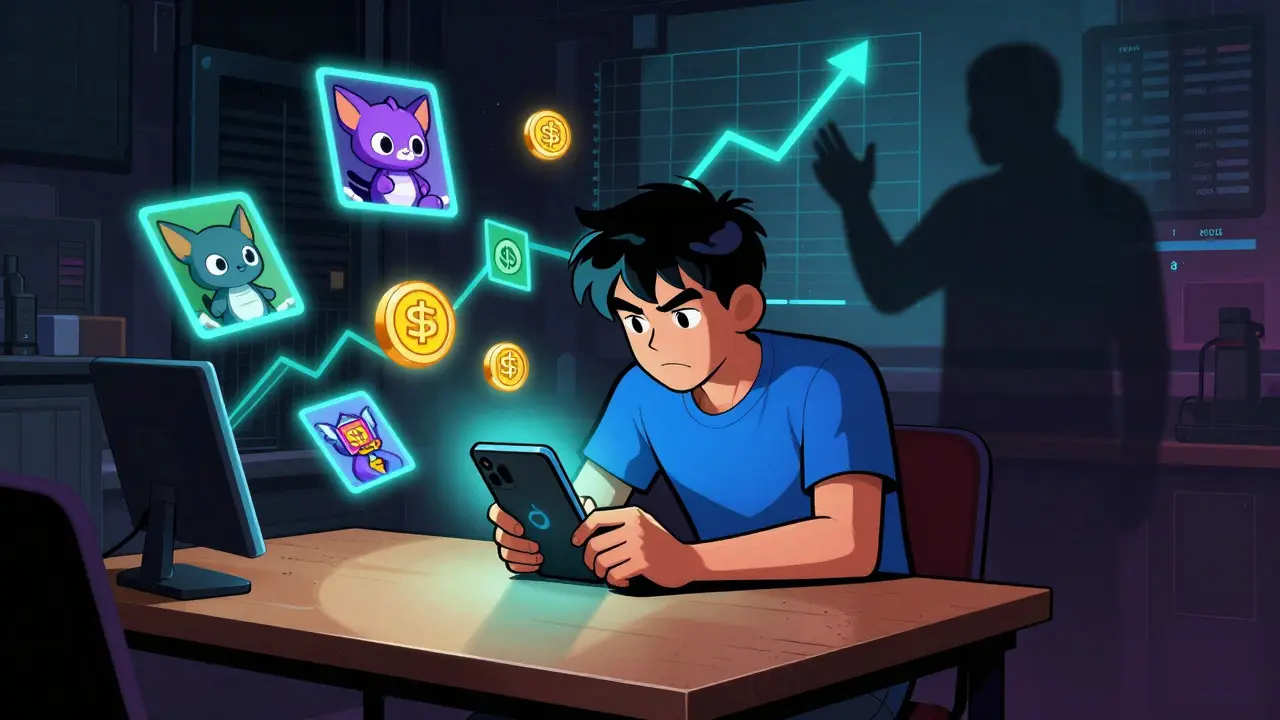
Play-to-earn gaming lets players earn real money through blockchain-based games using NFTs and crypto tokens. Learn how it works, who profits, the risks involved, and how to get started in 2025.
Continue Reading