The Future of NFT Data Storage: From Static Files to Living AI Agents
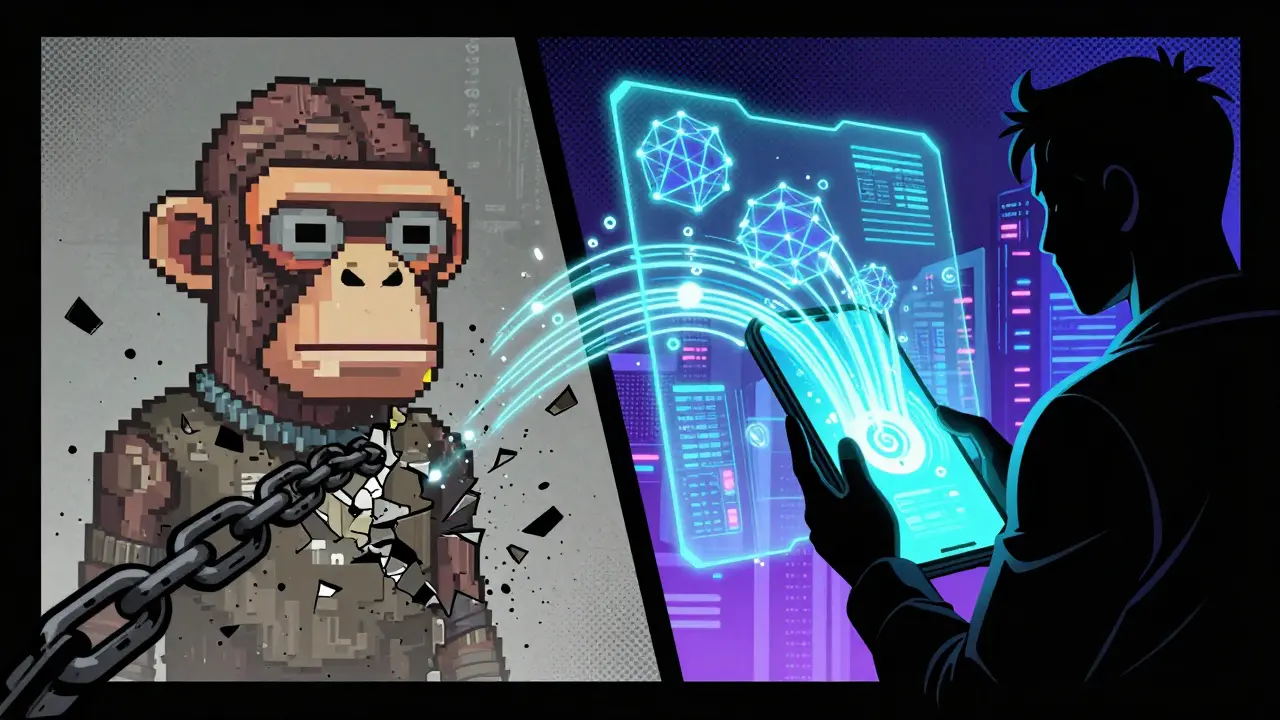
Remember when an NFT was just a JPEG of a bored ape or a pixelated monkey? Those days are fading fast. In the first half of 2025, NFT trading volumes stabilized at $2.82 billion. While that number might sound smaller than the peak hype years, transaction counts actually climbed nearly 80%. What does this shift mean for you? It means the speculation is drying up, and utility is taking over. And with utility comes a massive problem: storage.
If you’re building, buying, or holding digital assets in 2026, you need to understand that the way we store NFT data is undergoing a radical transformation. We are moving from static files sitting on decentralized servers to dynamic, AI-driven entities that change, grow, and interact. The infrastructure behind your digital collectibles is no longer just about keeping a picture safe; it’s about powering programmable digital life.
The Hybrid Reality: Why On-Chain Storage Isn't Enough
Let’s clear up a common misconception right away. Storing every byte of an NFT directly on the blockchain is not just expensive; it’s impractical. Blockchain networks like Ethereum are designed for security and consensus, not for hosting high-resolution videos or complex game assets. Trying to put a 4K video on-chain would cost thousands of dollars in gas fees and slow down the entire network.
This is why almost all modern NFTs use a hybrid storage model. Here’s how it works in plain English:
- On-Chain Metadata: The blockchain holds the "receipt." This includes the token ID, ownership history, and a cryptographic hash (a unique fingerprint) that points to the actual content. This ensures provenance and prevents tampering.
- Off-Chain Content: The actual image, audio, or video file lives outside the blockchain on specialized storage networks. This keeps costs low and allows for large file sizes.
The challenge isn’t the hybrid model itself-it’s ensuring that the off-chain part doesn’t disappear. If the server hosting your JPEG goes offline, your NFT becomes a broken link. That’s where the next generation of storage protocols comes in.
Decentralized Storage Giants: IPFS, Arweave, and Filecoin
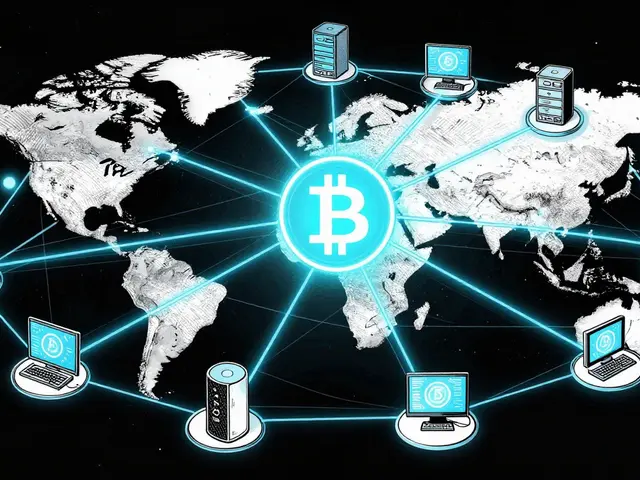
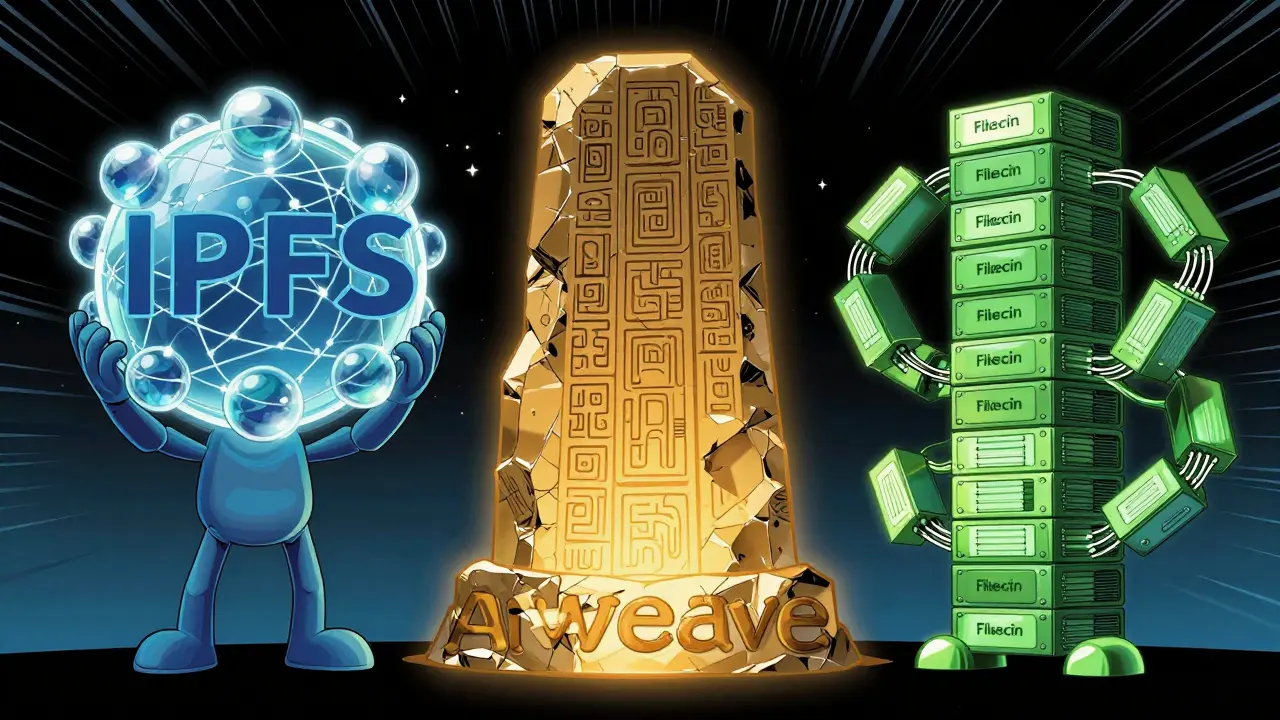
In 2026, three platforms dominate the landscape for off-chain NFT storage. Each has a different philosophy and use case. Understanding the difference is crucial for long-term asset preservation.
| Platform | Storage Model | Cost Structure | Best For |
|---|---|---|---|
| IPFS | Peer-to-Peer Pinning | Free (but requires pinning services) | Static images, metadata pointers |
| Arweave | Permanent One-Time Payment | Upfront fee for lifetime access | Historical records, permanent art |
| Filecoin | Rent-Based Decentralized Network | Ongoing rental payments | Large datasets, enterprise projects |
IPFS is the InterPlanetary File System, a peer-to-peer protocol for storing and sharing files in a distributed file system. It’s the most common standard, but it has a catch: files can be unpinned if no one pays to host them. Many early NFT projects suffered from "link rot" because they relied on free, temporary IPFS nodes.
Arweave is a permanent data storage solution that uses a one-time payment model to ensure indefinite data accessibility. Think of it as paying once to carve your data into stone. For collectors who want their assets to survive forever, Arweave is often the preferred choice despite the higher upfront cost.
Filecoin is a decentralized storage network where users rent unused hard drive space from providers worldwide. It’s ideal for businesses that need scalable, cost-effective storage for large volumes of data, such as gaming assets or high-definition video collections.
The AI Revolution: Enter Intelligent NFTs (iNFTs)
Here is where things get exciting. About 30% of new NFT projects in 2025 incorporated AI elements. We aren’t just talking about AI-generated art anymore. We’re talking about Intelligent NFTs, or iNFTs.
An iNFT isn’t a static image. It’s a programmable agent. Imagine a digital pet that learns from your interactions, changes its appearance based on market conditions, or even manages your portfolio autonomously. These assets require storage systems that can handle mutable data-data that changes over time-while maintaining a secure audit trail on the blockchain.
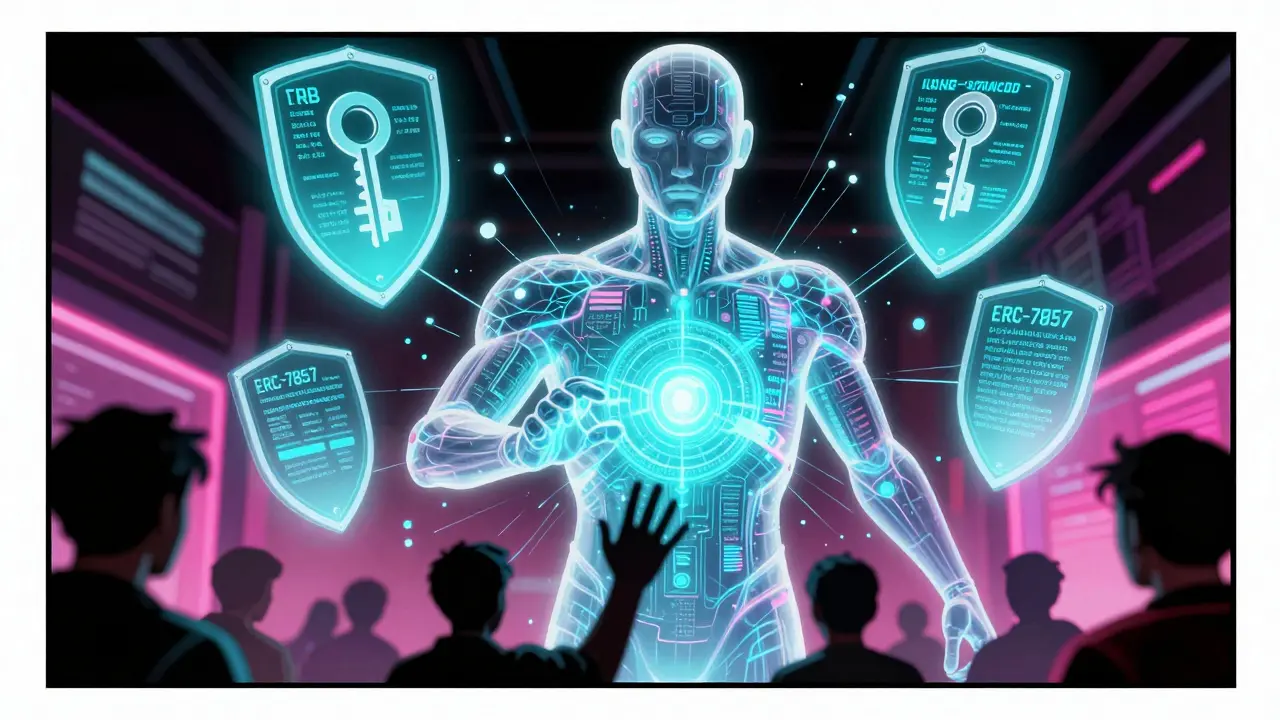
This shift led to the announcement of ERC-7857 by 0G Labs in January 2025. This new standard revolutionizes how we think about NFT storage. Unlike the classic ERC-721 standard, which treats an NFT as a simple pointer to a file, ERC-7857 enables the secure transfer of AI agents with re-encrypted sensitive data for new owners.
Why does this matter? Because an AI agent needs memory. It needs to store preferences, historical interactions, and private keys securely. When you sell an iNFT, you can’t just hand over a public image file; you have to transfer the agent’s brain without exposing its secrets. ERC-7857 provides the framework for this secure, encrypted data transfer, making true digital ownership of AI possible.
Gaming and Interoperability: The $942 Billion Driver
While art collectors worry about permanence, gamers are driving the demand for speed and interoperability. The NFT gaming market is valued at approximately $471.90 billion today and is forecasted to reach $942.58 billion by 2029. That’s nearly a trillion-dollar industry built on digital assets.
In-game assets-characters, weapons, real estate-are heavy. They require rapid loading times and seamless updates. More importantly, around 70% of users now demand cross-platform functionality. You shouldn’t have to leave your sword in one game to buy a helmet in another. You should be able to take both into a third virtual world.
This requirement for interoperability forces storage systems to evolve beyond simple file hosting. Storage solutions must now support:
- Cross-Chain Compatibility: Assets stored on Arweave must be accessible via Ethereum, Solana, and Polygon wallets seamlessly.
- Real-Time Updates: Game states change milliseconds. Storage must sync instantly without lagging behind the blockchain’s confirmation time.
- Privacy Layers: Not all game data should be public. Off-chain storage allows developers to keep strategic gameplay data private while using the blockchain only for ownership verification.
Platforms like ERC-1155 already help with multi-token efficiency, but the next generation of storage will need to act as a universal translator between different gaming ecosystems and blockchains.
Cost Efficiency and Privacy: The Business Case
For enterprises entering the NFT space, cost and privacy are non-negotiable. Storing sensitive customer data or proprietary design files on a public ledger is a compliance nightmare. Regulations like GDPR require the ability to delete personal data-a feature fundamentally incompatible with immutable blockchains.
Off-chain storage solves this elegantly. By keeping sensitive data on encrypted, permissioned off-chain servers (like Filecoin or private IPFS clusters), companies can comply with data protection laws. The blockchain only stores a hash proving the data existed at a certain time. If a user requests deletion, the off-chain file is removed, breaking the link, while the blockchain record remains as a historical artifact of existence, not content.
Furthermore, as the virtual economy surpasses $50 billion, scalability becomes critical. Hybrid architectures reduce network congestion. By offloading bulk data, blockchain transactions become faster and cheaper, improving the user experience for everyone from casual collectors to institutional investors.
What This Means for Your Portfolio
If you hold NFTs, check where your assets live. Are they pinned on a reliable service? Are they on Arweave for permanence? Or are they relying on a centralized server that could shut down tomorrow?
As we move through 2026, the line between a "collectible" and a "utility tool" blurs. Your NFT might soon be an AI tutor, a gaming companion, or a dynamic brand avatar. The storage infrastructure supporting these assets must be robust, flexible, and secure. The future of NFT data storage isn’t just about saving files; it’s about enabling living, breathing digital entities that add real value to your life.
Is IPFS enough for permanent NFT storage?
Not necessarily. IPFS is a protocol, not a storage provider. Files on IPFS can disappear if no node pins them. For true permanence, many creators combine IPFS with Arweave, which guarantees indefinite storage through a one-time payment model.
What is ERC-7857 and why is it important?
ERC-7857 is a new standard for Intelligent NFTs (iNFTs). It allows for the secure transfer of AI agents by re-encrypting sensitive data for new owners. This is crucial for NFTs that contain private keys, memories, or autonomous behaviors, ensuring security during resale.
How do off-chain storage solutions improve privacy?
Off-chain storage keeps sensitive data off the public blockchain. Only a cryptographic hash is stored on-chain. This allows businesses to comply with regulations like GDPR by deleting personal data from off-chain servers while maintaining proof of existence on the ledger.
Which storage platform is best for gaming NFTs?
Filecoin is often preferred for gaming due to its scalability and rental-based model, which handles large datasets cost-effectively. However, the key factor is interoperability; the storage must support cross-chain access so assets can move between different games and platforms.
Will NFT storage costs decrease in the future?
Yes. As off-chain solutions like Arweave and Filecoin mature, economies of scale will likely reduce per-gigabyte costs. Additionally, Layer 2 blockchain solutions are reducing on-chain metadata fees, making the overall hybrid storage model more affordable.