What is Epic Chain (EPIC)? A Guide to the RWA and Entertainment L2
You’ve probably heard of Ethereum scaling solutions like Arbitrum or Optimism. But what happens when a Layer 2 network decides it doesn’t want to compete on general-purpose DeFi speed? Instead, it aims to fix how we buy, sell, and own digital collectibles and real-world assets. That’s the bet behind Epic Chain (EPIC). It’s not just another generic rollup; it’s a specialized platform built to bring the entertainment industry and Real-World Asset (RWA) tokenization onto the blockchain. If you’re wondering whether this coin has legs or if it’s just rebranding hype, let’s break down exactly what Epic Chain is, how it works, and where it fits in the current crypto landscape as of late 2026.
The Rebrand: From Ethernity to Epic Chain
First things first: context matters. You might remember a project called "Ethernity" that got some buzz for its NFTs featuring sports legends and celebrities. Well, that project evolved. According to data from L2BEAT, a reputable tracker for Layer 2 networks, Ethernity rebranded to Epic Chain. This wasn’t just a cosmetic change. The team shifted their focus from purely selling high-end NFTs to building a full-fledged infrastructure layer. They wanted to move beyond being an NFT marketplace and become the underlying highway for entertainment brands entering Web3. By leveraging the Superchain infrastructure-a modular framework popularized by Optimism-Epic Chain positions itself as a low-cost, high-speed environment specifically tuned for consumer-facing applications rather than complex financial derivatives.
How Epic Chain Works Under the Hood
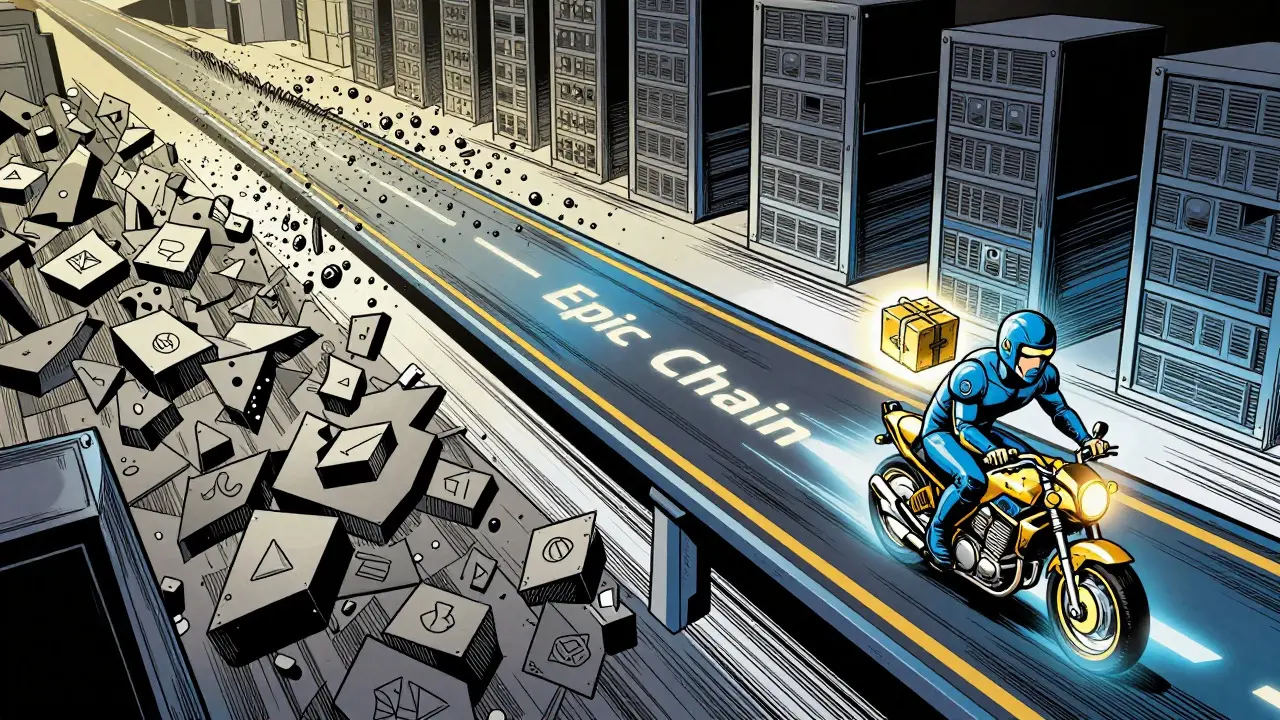
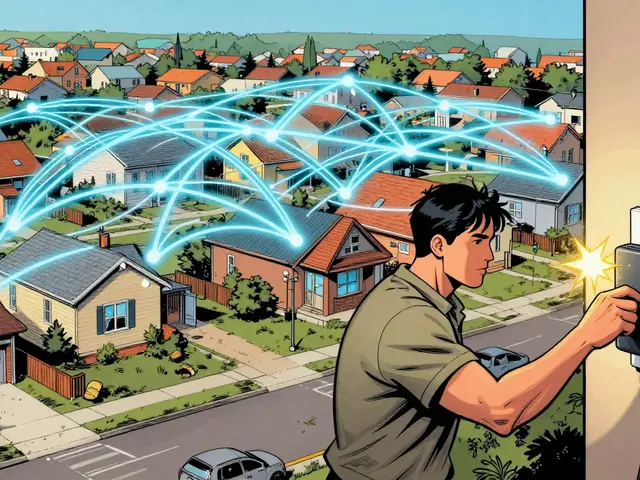
Technically speaking, Epic Chain operates as a Layer 2 solution on top of Ethereum. Think of Ethereum as the main highway-it’s secure but can get congested and expensive during rush hour. Epic Chain is like a dedicated express lane next to it. It processes transactions off the main chain, bundles them up, and then settles the final result back on Ethereum. This gives users the security of Ethereum without the eye-watering gas fees.
The platform is fully EVM-compatible. What does that mean for you? If you already know how to use MetaMask or interact with smart contracts on Ethereum, you can use Epic Chain without learning new tools. Existing tokens, NFT standards, and DeFi protocols can migrate over relatively easily. The transaction speeds are near-instant, and gas fees are negligible, often costing cents instead of dollars. This is crucial for gaming and micro-transactions where paying $5 in fees to buy a $1 item makes no sense.
However, there’s a catch worth noting. Security analysts at L2BEAT have pointed out that Epic Chain currently lacks a robust proof system compared to more mature rollups. In simple terms, this means the network relies heavily on trusted entities to verify transactions correctly. While this allows for faster development and lower costs now, it introduces a degree of centralization risk. A malicious actor could theoretically finalize an invalid state, potentially leading to fund losses, though this is mitigated by the team’s operational controls.
The Core Mission: Bridging Entertainment and RWAs
Why build a specific chain for entertainment? Because the traditional entertainment industry is desperate for better ways to monetize fan engagement. Epic Chain targets two massive sectors: the entertainment vertical and Real-World Assets (RWAs).
RWAs are physical assets-like real estate, gold, or credit-that are represented as tokens on the blockchain. Epic Chain provides the infrastructure to tokenize these assets efficiently. Imagine owning a fraction of a rare comic book collection or a piece of commercial real estate, all traded instantly on-chain. The platform supports diverse asset classes, including commodities and collectibles, aiming to make these investments accessible to everyday users, not just institutional whales.
On the entertainment side, the goal is seamless integration. Brands want to launch loyalty programs, digital collectibles, and interactive experiences without worrying about blockchain complexity. Epic Chain offers plug-and-play toolkits that allow creators to launch storefronts and tokens with minimal coding knowledge. This lowers the barrier to entry significantly, allowing non-technical partners to jump into Web3 quickly.
| Feature | Epic Chain | General L2s (e.g., Arbitrum) |
|---|---|---|
| Primary Focus | Entertainment & RWAs | DeFi & General dApps |
| Gas Fees | Negligible | Low to Moderate |
| Security Model | Trusted Proposer (Centralized) | ZK Proofs / Fraud Proofs (Decentralized) |
| Ecosystem Tools | Fanable, Arcbound, Exorians | Uniswap, Aave, GMX |
Key Products in the Epic Ecosystem
A blockchain is only as good as the apps running on it. Epic Chain isn’t just empty infrastructure; it hosts several flagship products designed to drive user adoption.
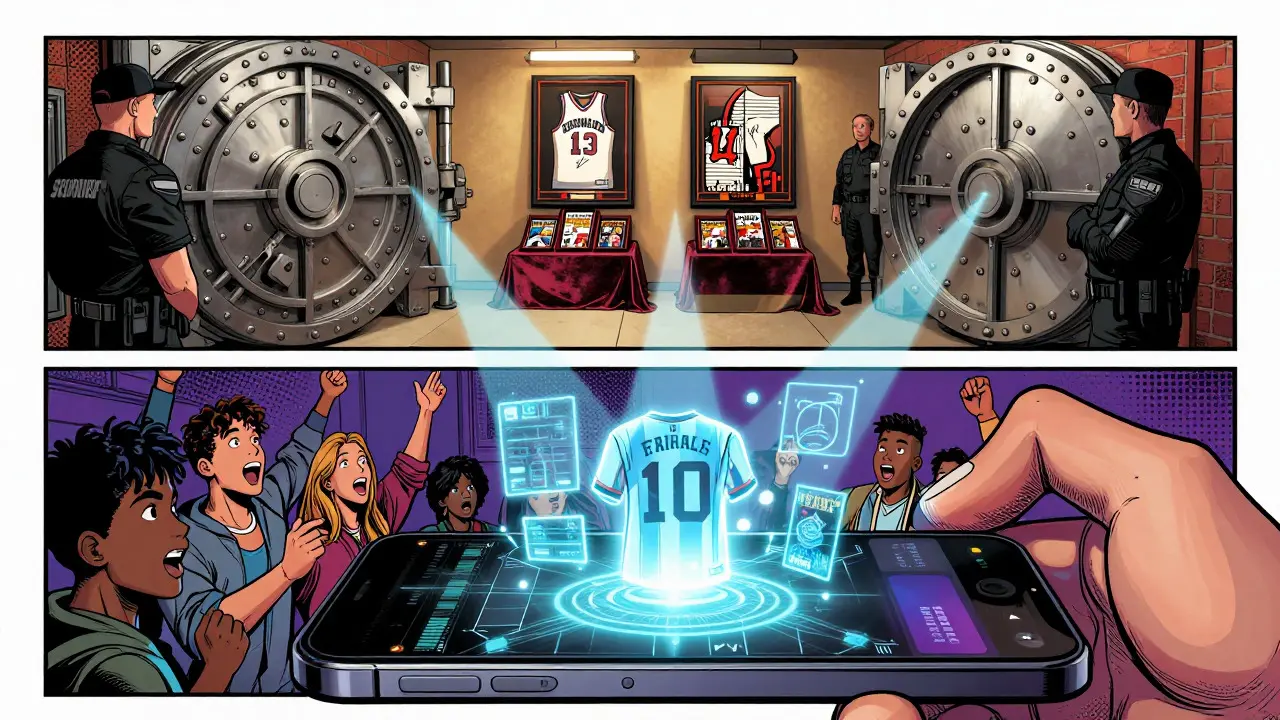
- Fanable: This is arguably the crown jewel. Fanable is a digital ownership platform that combines blockchain tech with physical security provided by Brink’s. Users can buy limited-edition physical collectibles (like signed jerseys or art) and receive a digital twin on the blockchain. This solves the trust issue in collecting-you know the item is authentic because it’s backed by both code and a vault. Fanable generates over $1.2 million annually in on-chain fees, proving people are actually using it.
- Arcbound: For comic book fans, Arcbound Studios released a 12-issue sci-fi series. This isn’t just a PDF; it’s part of a larger franchise strategy where characters and storylines can be expanded through NFTs and community governance.
- Exorians: Developed by Culprit Studios, this is a PFP (Profile Picture) project that doubles as a gateway to Web3 gaming. It’s less about speculative flipping and more about utility within the ecosystem’s gaming vertical.
- 0xLoans: This DeFi primitive lets users borrow stablecoins against their NFT collateral. If you own a valuable digital asset but need cash flow, you can unlock liquidity without selling your collection.
An upcoming feature, the Epic Marketplace, aims to consolidate these experiences into one hub where users can showcase, list, and trade all their collectibles across different verticals.
The EPIC Token: Utility and Market Performance
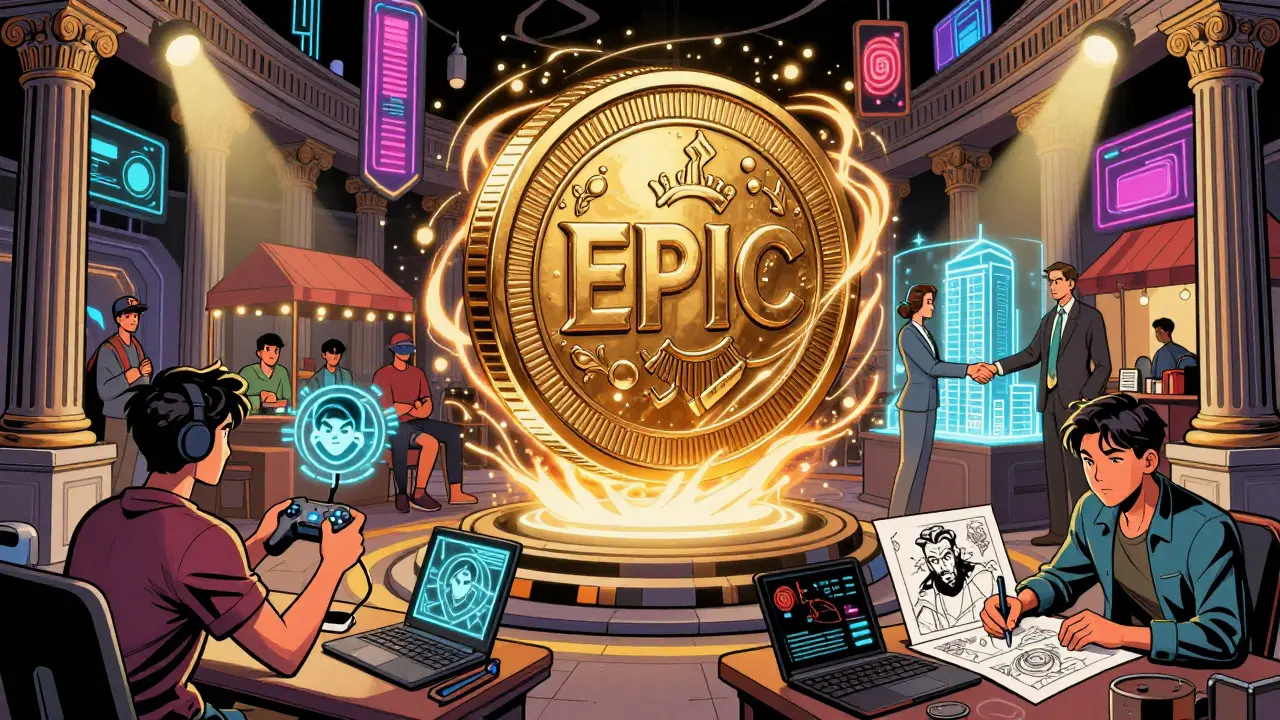
The native currency, EPIC, serves multiple roles. Initially launched as an ERC-20 token on Ethereum, it is structured to integrate with the XRP Ledger’s EVM-compatible sidechain. This dual-network approach is unique. Most tokens stick to one ecosystem. By bridging Ethereum and XRP, Epic Chain hopes to tap into the massive liquidity and institutional interest surrounding Ripple’s network.
As of August 2026, the EPIC token trades around $1.81 USD. With a 24-hour volume hovering near $7.8 million, it has decent liquidity. You can find it on major exchanges like Binance, Coinbase, KuCoin, and Uniswap. The token is used for paying gas fees, participating in governance, and accessing premium features within the ecosystem apps. Its value proposition is tied directly to the adoption of the Fanable platform and the growth of the RWA market.
Pros and Cons: Is It Worth Your Attention?
No crypto project is perfect. Here’s a balanced look at where Epic Chain stands.
The Good:
- Niche Focus: By specializing in entertainment and RWAs, it avoids direct competition with giant DeFi chains.
- Real Revenue: Fanable generating $1.2M+ in annual fees shows product-market fit.
- User Experience: Low fees and easy onboarding make it friendly for non-crypto natives.
- Sustainability: The network claims carbon-neutral operations, appealing to environmentally conscious investors.
The Bad:
- Security Risks: The lack of a decentralized proof system means you’re trusting the operators more than you would on Optimism or zkSync.
- Competition: Other chains are also targeting RWAs. Polygon and Avalanche have strong enterprise partnerships.
- Newness: As a rebranded entity, it still needs to prove long-term resilience beyond its initial hype cycle.
Final Thoughts
Epic Chain represents a pragmatic shift in blockchain development. Instead of trying to solve every problem at once, it picks a lane: making digital ownership fun, affordable, and connected to real-world value. For collectors and gamers, the low friction and tangible backing of assets like those on Fanable offer genuine utility. For investors, the play is betting on the continued mainstream adoption of Web3 entertainment and the tokenization of physical goods.
If you’re skeptical of pure speculation, Epic Chain offers something grounded in actual usage. Just keep an eye on the technical developments regarding their security model. As they decentralize further, the risk profile will improve, potentially unlocking greater institutional trust. Until then, it remains a compelling, albeit slightly centralized, option in the crowded Layer 2 space.
Is Epic Chain the same as Ethernity?
Yes, Epic Chain is the rebranded version of the Ethernity project. While Ethernity focused primarily on NFTs, Epic Chain expanded its scope to include a broader Layer 2 infrastructure for entertainment and Real-World Assets.
Where can I buy EPIC tokens?
EPIC is available on major centralized exchanges such as Binance, Coinbase, KuCoin, HTX, and Gemini. It can also be traded on decentralized exchanges like Uniswap.
What makes Fanable different from other NFT platforms?
Fanable pairs digital NFTs with physical collectibles secured by Brink’s, a global security company. This hybrid model ensures that the digital token represents a verified, physically stored item, reducing the risk of fraud common in purely digital collections.
Is Epic Chain decentralized?
Currently, Epic Chain relies on a trusted proposer model for state updates, which is less decentralized than rollups using ZK proofs or optimistic fraud proofs. This means users must trust the core team to operate the network honestly, though plans are in place to increase decentralization over time.
Does Epic Chain support XRP?
While Epic Chain is built on Ethereum infrastructure, the EPIC token is structured to integrate with the XRP Ledger’s EVM-compatible sidechain. This creates a bridge between the Ethereum ecosystem and the XRP network, potentially enhancing interoperability.



20 Comments
nic c
August 29 2026Look, I get it, you want to believe that some obscure Layer 2 is going to save the world from the tyranny of gas fees and centralized exchanges, but let’s not pretend that Epic Chain isn’t just a rebranded cash grab with a fancy new coat of paint. The fact that they are relying on a 'trusted proposer' model means we are essentially trusting a small group of insiders to not rug pull us into oblivion while we buy overpriced digital comic books. It’s the same old story: take an existing project, slap a new name on it, add some buzzwords like RWA and entertainment, and hope the retail investors don’t realize they’re buying into a centralized database disguised as blockchain tech. If you actually care about decentralization, you’d run for the hills because this thing has more centralization points than a government bureaucracy.
Steve Sulley
August 29 2026man u guys always hate on everything... its innovation bro
they fixing the mess eth made
real assets need real chains
stop crying about centralization when ur bank is centralized too
Trista Dennis
August 31 2026The article reads like it was written by someone who has never actually tried to migrate an NFT collection across chains without losing their mind or their wallet keys. Epic Chain is basically Optimism Lite with a marketing degree, and honestly, the focus on 'entertainment' feels like a desperate attempt to find a use case because nobody wants to DeFi on yet another L2. You’re paying premium prices for a product that offers marginal utility improvements over what already exists on Arbitrum, all while ignoring the glaring security trade-offs that come with a trusted proposer model. It’s cute that they think tokenizing a signed jersey solves fraud, but Brink’s can still lose your stuff, and code bugs happen every day, so good luck with that 'hybrid' trust model.
J Shepherd
September 1 2026Hey everyone, great discussion here! Just wanted to chime in and say that while the skepticism is valid, we should look at the actual metrics before writing off the ecosystem entirely. Fanable generating $1.2M in annual fees is a tangible proof of product-market fit that many other L2s lack, showing that users are willing to pay for convenience and physical backing. The EVM compatibility is also a huge win for developers, meaning we don't have to learn Solidity variations or deal with weird tooling issues. Sure, the centralization risk is there, but if the team executes on their roadmap for decentralized proofs, this could be a massive win for consumer adoption. Let's keep our eyes on the long-term utility rather than just short-term price action.
David Powell
September 2 2026How quaint. Another 'niche' blockchain trying to convince the masses that they’ve invented fire again. The idea that tokenizing a fraction of a rare comic book will bring institutional money is laughable; institutions want liquidity and regulatory clarity, not a gimmick involving Brink’s vaults and sci-fi comics. This is clearly designed for retail tourists who want to feel like they’re part of something exclusive without understanding the underlying infrastructure risks. It’s the crypto equivalent of selling bottled air to people who live in polluted cities.
Dave Worth
September 3 2026🚨 WAKE UP SHEEPLE 🚨
Why do you think they rebranded? Because Ethernity failed! 📉 They are hiding behind the 'RWA' narrative to pump the bag before dumping on us. 😤 The 'Trusted Proposer' is just a fancy word for 'The Devs Can Steal Your Money'. 👀 Watch out for the XRP Ledger integration – that smells like Ripple influence creeping in. 🦈 Don't let them fool you with pretty pictures of jerseys. 🏃♂️💨 Run!
Ellie Brooks
September 4 2026I absolutely love the energy around this project because it finally feels like blockchain is moving away from complex financial derivatives and toward things that everyday people actually enjoy and understand! 🌟 The concept of having a digital twin for a physical collectible secured by a reputable company like Brink’s is just brilliant because it bridges the gap between traditional collecting habits and modern tech seamlessly. Imagine being able to prove ownership of your favorite sports memorabilia instantly without needing a notarized document or a specialized appraiser, that’s true innovation right there! And the low gas fees mean that even small transactions, like buying a single issue of a comic book, make economic sense instead of costing more in fees than the item itself. Plus, the community governance aspect through Arcbound gives fans a real voice in how their favorite franchises expand, which is so empowering for creators and consumers alike. It’s refreshing to see a platform that prioritizes user experience and accessibility over jargon-heavy technical specifications that only confuse newcomers. I’m genuinely excited to see how the Epic Marketplace consolidates these experiences because it could really become the go-to hub for Web3 entertainment enthusiasts worldwide. Keep up the amazing work, team, because this is exactly the kind of practical application we’ve been waiting for since Bitcoin started!
Martha Packard
September 6 2026This entire premise is fundamentally flawed because it assumes that 'convenience' outweighs 'sovereignty', which is the core tenet of why blockchain exists in the first place. By introducing a trusted third party like Brink’s and a centralized proposer, Epic Chain has effectively created a Web2 database with a crypto veneer, stripping away the immutability and censorship resistance that define true decentralization. You are trading one set of risks (smart contract bugs) for another (custodial failure), and history shows that custodians fail spectacularly. Stop pretending this is an evolution; it’s a regression dressed up in shiny clothes to sell to lazy investors who don’t want to manage their own keys.
Jane yuan
September 6 2026America needs to lead in tech, not follow Asia’s trends blindly. If Epic Chain is built on US infrastructure and partners with American security firms, then we support it. We don’t need foreign hype dictating our market values. Stand firm on domestic innovation.
Alan Hawkins
September 7 2026I think there’s merit in both sides of the argument here. On one hand, Martha makes a strong point about sovereignty, but J Shepherd highlights the importance of actual revenue generation. Maybe the solution isn't all-or-nothing but rather a phased approach where they maintain centralization for speed now and gradually introduce ZK proofs later. Collaboration between skeptics and optimists usually leads to better due diligence anyway.
Linda Jevne
September 8 2026There is a profound philosophical shift happening here, one that transcends mere technology and touches upon the very nature of ownership and value in the digital age. When we tokenize a physical object, we are not just creating a ledger entry; we are creating a new form of cultural artifact that exists simultaneously in the material and virtual realms. Epic Chain seems to understand that the future of art and entertainment lies not in replacing the physical, but in augmenting it with a layer of verifiable truth. This hybrid approach respects the tactile joy of holding a comic book while embracing the global connectivity of the blockchain. It is a beautiful synthesis of tradition and innovation, reminding us that technology should serve human connection rather than replace it. I am deeply moved by the potential for such platforms to democratize access to culture, allowing anyone, anywhere, to participate in the preservation and appreciation of artistic heritage. This is not just finance; it is the digitization of soul.
Valentine Okpala
September 9 2026oh please 🙄 another 'revolutionary' chain that requires you to trust a bunch of guys in suits more than you trust math. sure, fanable is cool if you like paying premiums for 'security' that could be hacked anyway. i’ll stick to my zksync rollups thanks. ✨
Paul Needham
September 11 2026Did anyone else notice that the table compares Epic Chain to Arbitrum but conveniently leaves out Base or Polygon? Typical cherry-picking. Also, who is actually using Exorians? Seems like a ghost town to me.
Kelechi Precious Nwachukwu
September 12 2026I respect the enthusiasm, truly.
But we must be careful not to ignore the risks involved in trusting a single entity with state updates.
It is important to remain grounded in reality while appreciating the vision.
Let us proceed with caution and wisdom.
Laine Van Sickle
September 12 2026i dont get why everyone is fighting. if its fun then its fun. i bought a jersey and its cool. stop overthinking it. its just toys with receipts.
Jarnail Singh
September 13 2026As an Indian, I appreciate any project that aims for global inclusivity, but let us not forget that the true strength of blockchain lies in its ability to transcend borders without relying on Western-centric narratives of 'security' companies. The integration with XRP is interesting, but we must ensure that this does not become another vehicle for capital flight from emerging markets. India has its own robust blockchain initiatives, and while Epic Chain is promising, we should evaluate it based on its ability to serve the Global South, not just the US entertainment industry. Let us remain vigilant against neo-colonial tech practices while celebrating genuine innovation. 🇮🇳🤝🌍
Carey Thornton
September 15 2026Oh, the sheer audacity of calling a centralized oracle system 'decentralized infrastructure' is simply breathtaking. It’s like calling a gated community a public park. The elitism inherent in requiring users to trust Brink’s-essentially outsourcing trust to a legacy institution-is antithetical to the ethos of Web3. One wonders if the founders have ever read Satoshi’s whitepaper or if they merely skimmed the abstract for keywords. Truly, the decline of critical thinking in this space is palpable.
Ashwini Chaskar
September 16 2026its sad that people are so negative... the team is working hard... they deserve support not criticism... i hope they succeed despite the haters... its all about belief...
Jillian Pye
September 17 2026I tend to observe silently, but I find the tension between security and usability fascinating. 🧐 It seems Epic Chain is attempting to solve the UX problem by sacrificing some decentralization, which might be a necessary compromise for mass adoption. However, the transparency regarding the 'trusted proposer' risk is appreciated. It allows users to make informed decisions rather than being misled by false promises of full decentralization. I will watch how the proof system evolves. 🌱
Melanie Armijo
September 18 2026Ultimately, we are all seeking meaning in a chaotic digital landscape. Epic Chain offers a narrative of belonging-a tribe of collectors and gamers. Whether the tech is perfect matters less than the feeling of participation it engenders. That is the human element often overlooked in pure technical analysis.