What is RealEstate (REALESTATE) Crypto Coin? Understanding Tokenized Real Estate on Blockchain
There’s no widely recognized cryptocurrency called RealEstate (REALESTATE) on major exchanges like CoinGecko or CoinMarketCap as of March 2026. If you’ve heard this name, it’s likely either a very small, obscure token, a scam project, or a misunderstanding of the broader trend: tokenized real estate. This isn’t about one coin-it’s about how entire properties are being broken into digital pieces and traded like stocks, using blockchain technology.
What Actually Exists: Tokenized Real Estate, Not One Coin
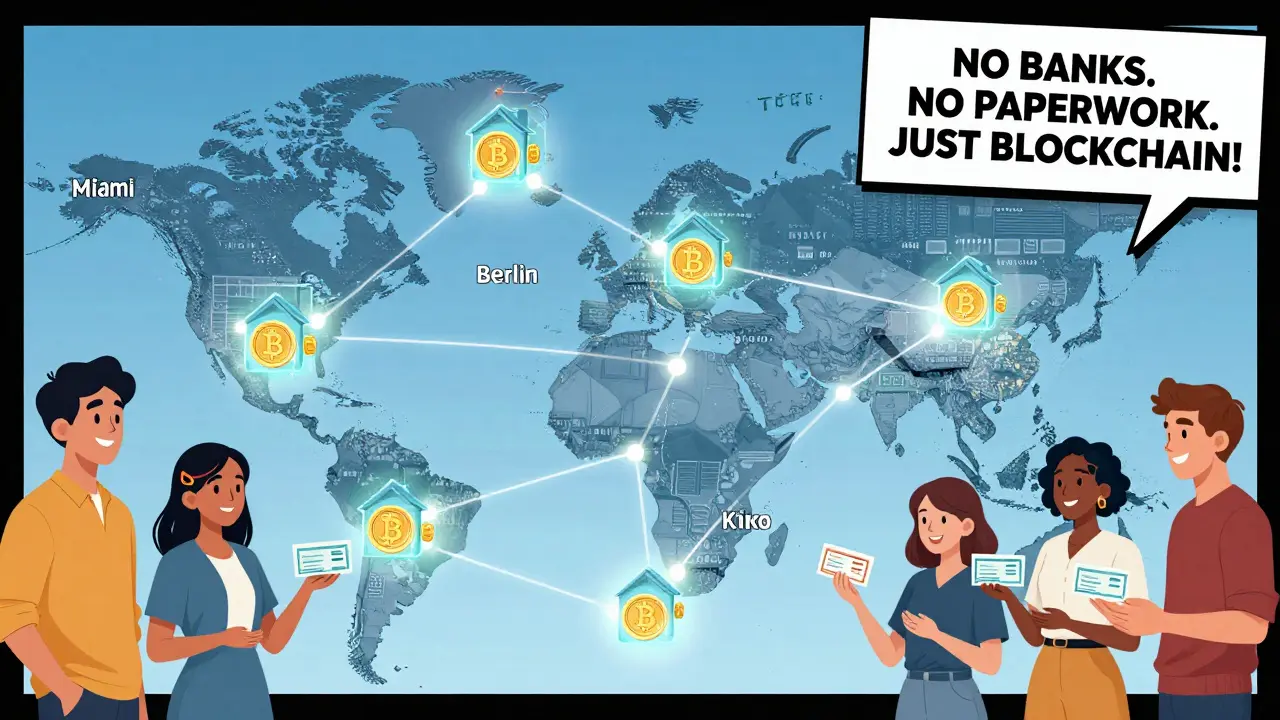
Instead of a single coin named RealEstate, you’ll find dozens of platforms turning real-world properties into digital tokens. These aren’t speculative meme coins. They’re backed by actual buildings: apartments in Miami, warehouses in Berlin, or offices in Tokyo. Each token represents a share of ownership in that property. Think of it like buying one share of Apple, but instead of a company, you’re buying 0.05% of a rental building.When you buy a token on a platform like RealT or Propy, you’re not just holding a number on a screen. You’re legally entitled to a portion of the rent that property generates. That rent gets automatically sent to your crypto wallet every month. No property managers calling you about leaky faucets. No paperwork. Just clean, digital income.
How Tokenized Real Estate Works
It’s simpler than it sounds. Here’s the step-by-step:- A real estate owner or developer decides to tokenize a property-say, a 10-unit apartment building worth $2 million.
- The property is divided into 2 million tokens, each worth $1. These tokens are issued on a blockchain, usually Ethereum or a compatible network.
- Buyers from anywhere in the world can purchase tokens using stablecoins like USDC or DAI. No need for a bank loan or a local lawyer.
- Smart contracts automatically handle rent collection. When tenants pay rent, the system splits the money and sends each token holder their share.
- Ownership is recorded on the blockchain. If you sell your tokens, the transfer is instant and verifiable.
This system removes the old barriers. You don’t need $500,000 to own a building. You can start with $10. And because the blockchain is public, you can see every transaction-no hidden fees, no shady landlords.
Why This Matters: The Real Benefits
Most people think crypto is just about Bitcoin and gambling. But tokenized real estate solves real problems:- Fractional ownership: You can own part of a luxury condo in Singapore while living in Wellington. No visa, no currency conversion, no notary.
- Liquidity: Selling a house takes months. Selling your real estate token takes minutes on a decentralized exchange.
- Transparency: Every payment, every transfer, every change in ownership is permanently recorded. No more forged deeds or lost paperwork.
- Global access: If you’re from Nigeria, Indonesia, or Argentina, you can invest in U.S. real estate without a U.S. bank account.
- Passive income: Tokens often pay monthly dividends from rent. That’s real cash flow, not speculation.
Compare this to traditional real estate. You need a down payment, a mortgage, property insurance, a tenant screening process, and a repair budget. With tokens? You click, you pay, you earn.
Platforms Leading the Way
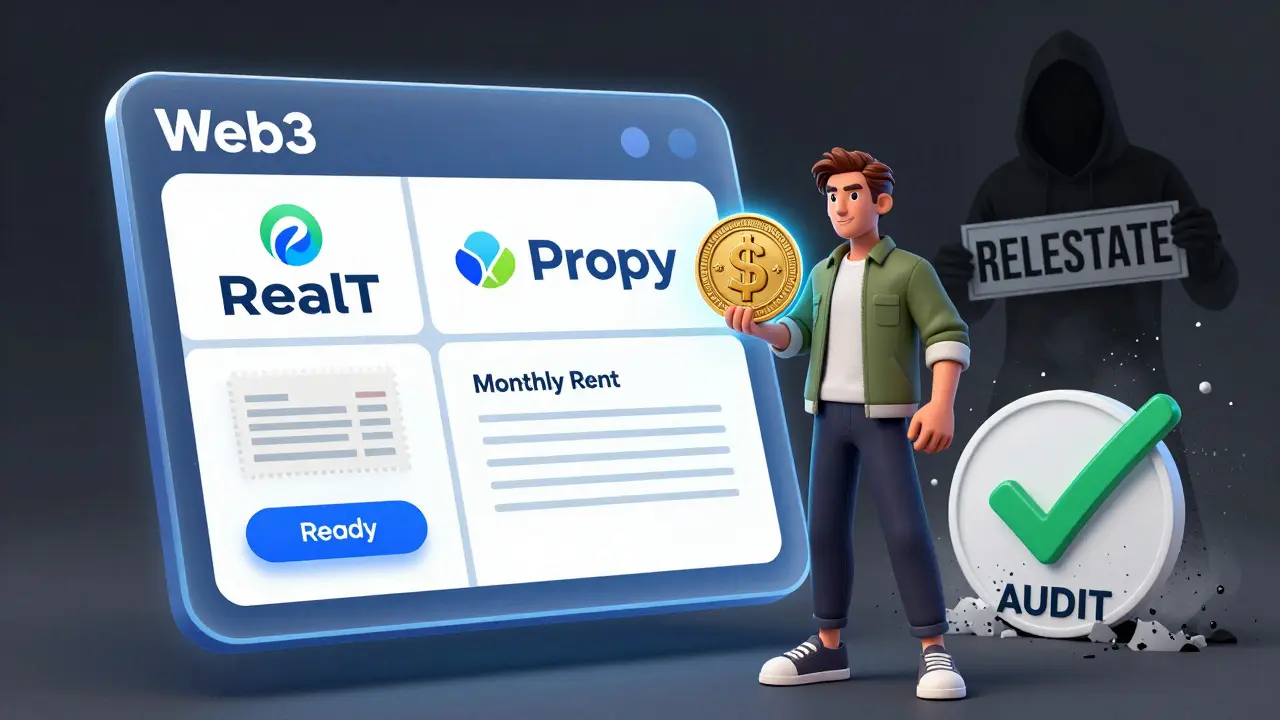
You won’t find a coin called REALESTATE, but you can find real projects:- RealT: Offers tokenized properties in the U.S., with rent paid in USDC. Investors have earned over $12 million in passive income since 2020.
- Propy: Executed the first blockchain-based real estate sale in 2017-a home in Ukraine bought by a buyer in China using Ethereum. Since then, they’ve completed hundreds of cross-border deals.
- Real Estate Token (RET): A token on the Binance Smart Chain that represents ownership in commercial properties across Southeast Asia.
These aren’t theory. They’re live, operating, and paying out. RealT alone has over 12,000 token holders as of early 2026.
The Regulatory Shift: Stablecoins Are Now Legally Backed
One major change happened in July 2025: the U.S. passed federal law requiring all payment stablecoins to be 100% backed by cash or U.S. Treasury bonds. That means USDC and USDT are now as safe as bank deposits-regulated, audited, and insured against collapse.This matters because almost all real estate tokens use stablecoins for transactions. You don’t want to buy a property token with volatile Bitcoin. You want to use USDC, where $1 = $1. That law made the entire sector more trustworthy. Banks and institutional investors are starting to take notice.
What About That REALESTATE Coin You Saw?
If you’re looking at a coin called REALESTATE with a website promising 500% returns or claiming to be "the official real estate coin," run. There is no official RealEstate coin. No major project uses that name. Any token with that ticker is likely a pump-and-dump scheme.Check CoinGecko or CoinMarketCap. Search for "real estate" under tokens. You’ll see projects like RealT, Propy, and others-but no "REALESTATE." If you find one, look at its trading volume. If it’s under $10,000 per day, it’s dead. If it’s got no team, no property backing, no audits-avoid it.
How to Get Started Safely
If you want to invest in tokenized real estate, here’s how:- Buy USDC or DAI on a regulated exchange like Kraken or Coinbase.
- Transfer it to a Web3 wallet like MetaMask.
- Visit a trusted platform like RealT or Propy.
- Choose a property. Read the docs. See the location. Check the rental history.
- Buy tokens. Wait for rent.
You don’t need to be a tech expert. You just need to avoid sketchy tokens and stick to platforms that show real buildings, real leases, and real audits.
The Bigger Picture: Real Estate Is Going Digital
The global market for tokenized real estate hit $6.31 billion in 2025. That’s not a niche anymore. It’s a growing slice of the $360 trillion global property market. Countries like Switzerland, Singapore, and Estonia are creating legal frameworks to make this seamless. Even major banks are testing blockchain-based property registries.What’s next? You might soon see your KiwiSaver fund investing in tokenized warehouses in Auckland. Or your local council using blockchain to sell public land to global investors. This isn’t the future. It’s happening now.
Forget the hype. Forget the coin named REALESTATE. The real story is that real estate, one of the oldest and most locked-up asset classes, is finally becoming open, liquid, and accessible to anyone with an internet connection.
Is there a real coin called RealEstate (REALESTATE)?
No, there is no legitimate cryptocurrency named RealEstate (REALESTATE) listed on major exchanges like CoinGecko or CoinMarketCap as of March 2026. Any token using that name is likely a scam or a very low-liquidity project with no real-world backing. The real trend is tokenized real estate, where platforms like RealT and Propy turn physical properties into digital tokens-there’s no single "RealEstate" coin.
How can I invest in tokenized real estate?
Start by buying a stablecoin like USDC on a regulated exchange like Coinbase or Kraken. Transfer it to a Web3 wallet such as MetaMask. Then visit trusted platforms like RealT or Propy, where you can browse actual properties, read lease agreements, and buy tokens representing ownership shares. Always verify the property location, rental history, and audit reports before investing.
Are tokenized real estate investments safe?
They can be, but only if you choose reputable platforms. Projects that show real property deeds, verified rental income, and third-party audits are far safer than anonymous tokens promising high returns. Since July 2025, U.S. law requires stablecoins used in these transactions to be 100% backed by cash or treasuries, adding a layer of financial security. Still, treat it like any investment: research, diversify, and never invest more than you can afford to lose.
Do I need to be a U.S. citizen to invest in U.S. tokenized real estate?
No. Platforms like RealT and Propy allow investors from over 100 countries to buy property tokens. You don’t need a U.S. bank account, visa, or tax ID. All you need is a crypto wallet and a stablecoin. The blockchain handles cross-border transactions without intermediaries, making global real estate investment accessible to anyone with internet access.
How do I earn money from tokenized real estate?
You earn through rental income. When tenants pay rent, the platform collects the payments in fiat or stablecoin and automatically distributes your share based on how many tokens you own. For example, if you own 100 tokens out of 10,000 total tokens for a building, you get 1% of the monthly rent. These payments go directly into your crypto wallet-usually monthly. Some platforms also let you sell your tokens for profit if the property’s value rises.

17 Comments
Sharon Tuck
March 7 2026Love this breakdown. I started with $50 in RealT last year and now get $12/month in passive rent-no landlord drama, no maintenance calls. Just chillin’ while my tokens work for me. 🌍
Sherry Kirkham
March 9 2026Tokenization isn’t magic-it’s mechanics. The real revolution isn’t blockchain. It’s the collapse of gatekeeping. Who decided only the rich could own buildings? Now a nurse in Manila can own a piece of a Miami apartment. That’s power.
Olivia Parsons
March 10 2026Just to clarify-when you say USDC is backed by treasuries now, does that mean it’s FDIC-insured too? Or just that the issuer has to hold the assets?
Megan Lutz
March 10 2026It’s not insured. FDIC only covers banks. USDC is backed 1:1 by cash and Treasuries, audited monthly. That’s safer than most banks right now. But yeah, still not FDIC. Don’t confuse the two.
Jonathan Chretien
March 11 2026Yesss! 🙌 Finally, real utility in crypto. Not just ‘buy bitcoin and hope’-this is actual wealth creation. I bought a token in Berlin last month. Got my first rent payout yesterday. Felt like a landlord… without the leaky pipes. 😎
Issack Vaid
March 12 2026Let’s be real-this is just Wall Street repackaging real estate for crypto bros. You think a Nigerian farmer is really going to understand smart contracts? Or is this just another way for rich people to outsource risk?
Jesse VanDerPol
March 14 2026It’s not about understanding the tech. It’s about access. The farmer doesn’t need to know how the blockchain works. Just like you don’t need to know how electricity works to turn on a light.
Datta Yadav
March 15 2026Oh please. You think this is democratization? RealT’s top 10 investors hold 68% of all tokens. The platform charges 5% fees. The properties are all in low-growth markets. This isn’t revolution-it’s a subscription service for the gullible. And don’t get me started on the legal gray zones in 80% of the countries involved. This is a house of cards built on stablecoins that could vanish tomorrow if the Fed changes its mind.
Jackson Dambz
March 15 2026Why are we even talking about this? It’s all a scam. Every single one of these platforms is just a front for laundering money from darknet markets. I’ve seen the on-chain flows. They’re all routed through mixers before hitting RealT. Wake up.
Jennifer Pilot
March 16 2026While I appreciate the optimism surrounding tokenized real estate, I must express my profound concern regarding the legal enforceability of fractional ownership under international private law. The notion that a blockchain-registered token confers binding property rights across jurisdictions is, frankly, a legal fiction of the highest order. Furthermore, the reliance upon USDC as a stable medium of exchange-despite its purported backing-ignores the systemic counterparty risk inherent in centralized issuers. One must not confuse transparency with legitimacy.
jonathan swift
March 17 2026BRUH. 🤡 They’re using blockchain to sell you shares of buildings… while the government watches every transaction. Next thing you know, your rent payout gets flagged for ‘suspicious activity’ and your tokens get frozen. This is the surveillance state wearing a crypto hoodie. I’m not buying in. #NotMyBlockchain
Shawn Warren
March 19 2026This is the future and you’re all overthinking it. The tech works. The math adds up. The rent flows. The world is changing. Get on board or get left behind. Period.
James Burke
March 20 2026I bought into RealT after reading this post. Got 50 tokens in a Chicago apartment. First rent check came in last week. $3.20. Not life-changing. But it’s real. No fluff. No hype. Just money from a building I didn’t have to visit. That’s wild.
Bill Pommier
March 22 2026While I acknowledge the theoretical appeal of this model, I must emphasize the absence of recourse in the event of systemic platform failure. Smart contracts are immutable, yes-but they are not infallible. A single vulnerability, a compromised oracle, or a regulatory crackdown could erase millions in investor value overnight. This is not investment; it is financial gambling dressed in academic language.
Lydia Meier
March 22 2026Interesting. But where are the audits? Who verifies the rental income? Are the property titles actually transferred? Or is this just a glorified crowdfunding site with a blockchain sticker on it?
Nick Greening
March 23 2026Everyone’s acting like this is new. In 2014, I invested in a Delaware LLC that owned a warehouse. Same thing. Same returns. Just with more paperwork and less crypto. This isn’t innovation. It’s rebranding.
prasanna tripathy
March 24 2026From India, I bought 20 tokens on RealT. No visa. No bank account. Just MetaMask and USDC. Got my first rent in 3 days. It’s not about the money. It’s about feeling like I belong to a world that didn’t used to let me in. That’s worth more than dividends.