What is Venus LTC (vLTC)? A Practical Guide to the Interest-Bearing Token
Imagine you have a stack of cash sitting in your pocket. It’s safe, but it isn’t doing anything for you. Now imagine putting that cash into a high-yield savings account. You still own the money, but now it’s working for you, earning interest every day. In the world of decentralized finance (DeFi), vLTC works exactly like that receipt from the bank.
If you’ve been staring at your Litecoin holdings and wondering how to make them work harder without selling them, you’ve probably stumbled upon Venus LTC. But what exactly is it? Is it a new coin? A scam? Or just another confusing acronym in the crypto space?
Let’s cut through the noise. vLTC isn’t a standalone cryptocurrency you buy on an exchange to hold as an investment in the traditional sense. It’s a derivative asset-a digital receipt that proves you’ve lent your Litecoin to the Venus Protocol, an algorithmic money market platform on BNB Smart Chain. When you deposit LTC, you get vLTC back. And while you hold vLTC, its value slowly grows because it represents your original deposit plus the interest you’re earning.
The Mechanics: How vLTC Actually Works
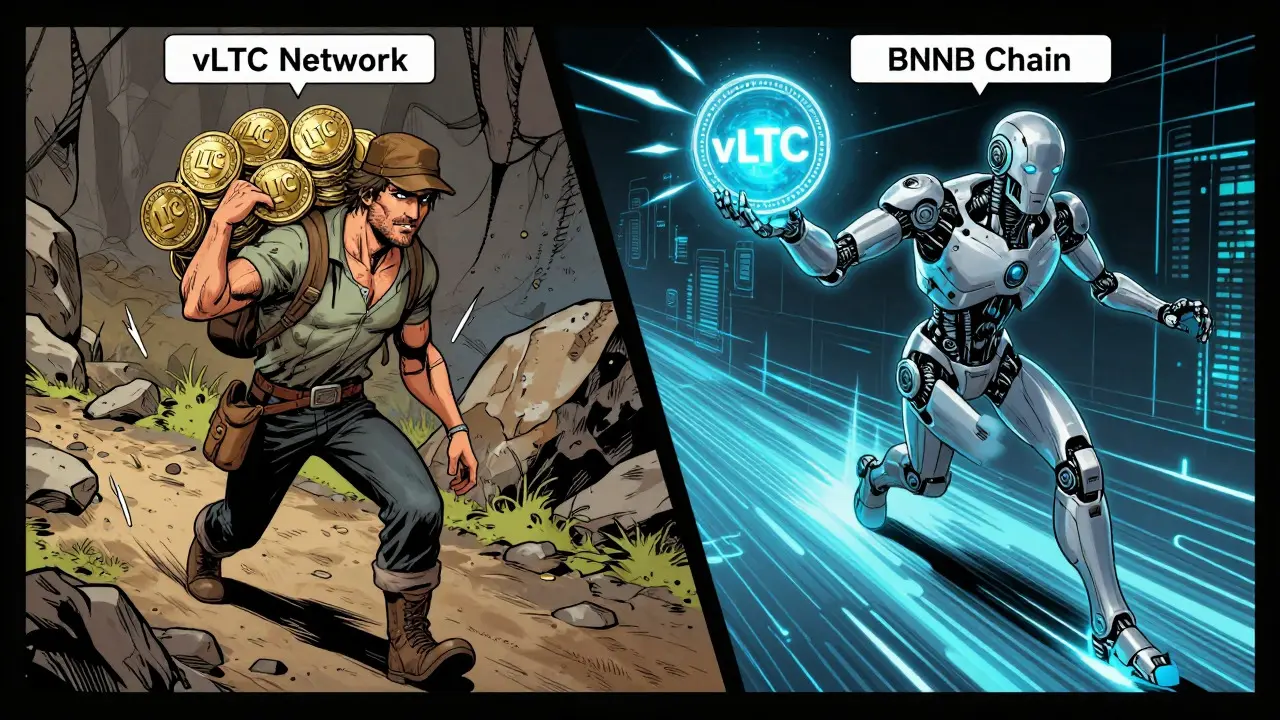
To understand vLTC, you need to understand the machine that creates it. The Venus Protocol operates on BNB Smart Chain, which is essentially a faster, cheaper alternative to Ethereum. Think of BNB Smart Chain as the highway, and Venus as a specific building on that highway where people go to lend and borrow money.
Here is the step-by-step process of how vLTC comes into existence:
You Deposit LTC: You connect your wallet (like MetaMask or Trust Wallet) to the Venus dashboard. You transfer your Litecoin (specifically, wrapped Litecoin compatible with BNB Chain) into the Venus lending pool.
Venus Mints vLTC: Instantly, the protocol mints a corresponding amount of vLTC tokens and sends them to your wallet. If you deposit $100 worth of LTC, you might receive $100 worth of vLTC initially.
Interest Accrues: Other users in the system borrow your deposited LTC by paying interest. This interest goes into the pool. Over time, each vLTC token becomes worth more underlying LTC. Your balance of vLTC tokens stays the same number, but the *value* of each token rises.
Collateral Utility: Because vLTC sits in your wallet, you can use it as collateral to borrow other assets within the Venus ecosystem, like USDT or BUSD, without ever touching your original LTC.
This mechanism turns a static asset (Litecoin) into a productive one. You aren’t just holding rock; you’re holding a share of a lending pool.
vLTC vs. LTC: What’s the Difference?
This is the most common point of confusion. Many beginners think vLTC is just "Litecoin 2.0." It isn’t. They are two completely different assets living on different blockchains with different purposes.
Comparison between native Litecoin and Venus LTC
Feature
Litecoin (LTC)
Venus LTC (vLTC)
Blockchain
Litecoin Network (Layer-1)
BNB Smart Chain (BEP-20)
Primary Function
Peer-to-peer payments, store of value
Earning yield, serving as collateral in DeFi
Yield Generation
No (unless staked/lent elsewhere)
Yes (accrues interest automatically)
Ownership
Direct ownership of coins
Claim on a portion of a lending pool
Liquidity
High (listed on major exchanges)
Low/Niche (mostly traded via DEXs or redeemed)
The key takeaway here is liquidity. You can sell LTC on Coinbase, Binance, or Kraken instantly. Selling vLTC is trickier. It’s not listed on most major centralized exchanges. To "sell" vLTC, you typically redeem it back into LTC within the Venus protocol, or swap it on a decentralized exchange (DEX) like PancakeSwap, which often has lower liquidity and higher slippage.
Market Reality: Supply, Price, and Volatility
Let’s look at the hard numbers. As of mid-2026, data from trackers like CoinMarketCap and Bitget shows that vLTC has a fixed circulating supply of approximately 4,142,378 tokens. There is no maximum supply cap coded into the contract because the total supply expands and contracts dynamically based on how much LTC is deposited into or withdrawn from the Venus pool. However, recent snapshots suggest this number has stabilized around the 4.14 million mark.
The price of vLTC is notoriously volatile and varies wildly depending on where you look. Why? Because there isn’t a single dominant exchange setting the price. On some days, you might see it trading near $0.91 on certain aggregators, while on others, it spikes to over $2.20 on venues with deeper liquidity pools. Historical data shows an all-time high around $8.28 during peak DeFi mania, followed by sharp corrections down to under $1.00.
This volatility isn’t just about market sentiment; it’s about liquidity depth. With a market capitalization hovering between $3.7 million and $9.8 million, vLTC is a small-cap asset. A large trade can move the price significantly. If you are looking to park millions of dollars here, you will face serious slippage risks. For smaller retail investors, the impact is less severe, but the risk remains.
Who Should Use vLTC? (And Who Should Avoid It)
Not every crypto holder needs vLTC. It serves a very specific job. Here is who benefits most:
The Yield Farmer: You believe Litecoin will stay stable or rise, but you want passive income. By converting LTC to vLTC, you earn variable interest rates determined by demand for borrowing LTC on BNB Chain.
The Leverage Seeker: You want to keep your LTC exposure but need liquid cash (stablecoins) for other opportunities. You deposit LTC, get vLTC, and borrow USDT against it. You never sell your LTC, so if LTC pumps, you still benefit.
The DeFi Native: You are comfortable using wallets like MetaMask, paying gas fees in BNB, and interacting with smart contracts directly.
On the flip side, avoid vLTC if:
You want simplicity: If you don’t know what a "slippage tolerance" or "gas fee" is, stick to holding plain LTC in a hardware wallet.
You need instant exit liquidity: If you need to convert your assets to fiat currency quickly, vLTC adds an extra step (redeeming for LTC first).
You fear smart contract risk: All DeFi carries the risk of bugs or hacks. While Venus has been audited, no code is 100% immune.
Risks You Can’t Ignore
We love DeFi for its freedom, but we must respect its risks. When you hold vLTC, you are exposed to three main threats:
1. Smart Contract Risk: Your funds are locked in Venus’s code on BNB Smart Chain. If a hacker finds a vulnerability in the Venus vaults, your vLTC could be drained. Always check for recent security audits from firms like CertiK or PeckShield before depositing large sums.
2. Liquidation Risk: If you use vLTC as collateral to borrow other assets, and the value of LTC drops sharply, your position might get liquidated. This means the protocol sells your underlying LTC to repay the loan, potentially leaving you with nothing. Always maintain a healthy health factor.
3. Liquidity Traps: During market crashes, liquidity dries up. You might find that you have vLTC in your wallet, but when you try to redeem it for LTC or swap it, the transaction fails or costs exorbitant fees due to low pool depth. Check the Total Value Locked (TVL) in the Venus LTC market before entering.
How to Get Started with vLTC
If you’ve decided this fits your strategy, here is the practical path forward:
Set Up a Wallet: Install MetaMask or Trust Wallet. Configure it to connect to BNB Smart Chain. Ensure you have some BNB (BSC) in your wallet to pay for transaction gas fees.
Access Venus: Go to the official Venus Protocol website. Double-check the URL to avoid phishing sites.
Bridge Your LTC: Since native Litecoin doesn’t live on BNB Chain, you likely need to bridge your LTC to become wLTC (Wrapped Litecoin) on BNB Chain, or use a cross-chain bridge service supported by Venus.
Supply Assets: Navigate to the "Markets" tab on Venus. Find the LTC row. Click "Supply." Approve the transaction in your wallet. Confirm the deposit.
Receive vLTC: Once confirmed, refresh your wallet. You should see vLTC appear. Your journey as a lender has begun.
Remember, once you have vLTC, you can choose to leave it there to earn interest, or use it as collateral to borrow stablecoins. Just monitor your positions daily. DeFi doesn’t sleep, and neither do liquidation bots.
Future Outlook: Is vLTC Worth It in 2026?
The DeFi landscape in 2026 is more mature than in previous years. Users are less chasing 10,000% APYs and more focused on sustainable yields and security. Venus Protocol has established itself as a core infrastructure layer on BNB Smart Chain, alongside competitors like PancakeSwap’s lending features and other specialized protocols.
vLTC remains a niche instrument. It won’t replace Bitcoin or Ethereum. It may not even replace standard LTC for everyday payments. But for those who understand the mechanics of collateralized debt positions (CDPs) and want to maximize capital efficiency on BNB Chain, it offers a unique utility. The project is described by analysts as "developing" with potential in its niche, suggesting steady integration rather than explosive growth.
Your decision to use vLTC should hinge on one question: Do you trust the Venus Protocol’s code and governance more than you fear missing out on idle yields? If the answer is yes, vLTC is a powerful tool in your belt. If not, keeping your LTC in a cold wallet is perfectly fine too.
Is vLTC the same as Litecoin?
No. Litecoin (LTC) is a standalone cryptocurrency on its own blockchain. vLTC is a BEP-20 token on BNB Smart Chain that represents a deposit of LTC into the Venus Protocol. Holding vLTC means you own a claim on a lending pool, not direct ownership of the underlying Litecoin coins until you redeem them.
Can I buy vLTC directly on Coinbase or Binance?
Generally, no. Major centralized exchanges like Coinbase do not list vLTC for direct trading. To get vLTC, you usually need to interact with the Venus Protocol directly on BNB Smart Chain by depositing wrapped Litecoin, or trade it on decentralized exchanges (DEXs) like PancakeSwap.
How does vLTC earn interest?
When you deposit LTC into Venus, borrowers take that LTC and pay interest. This interest accumulates in the pool. Instead of sending you more tokens, the protocol increases the exchange rate of vLTC to underlying LTC. So, one vLTC token buys you slightly more LTC over time.
What happens if the Venus Protocol gets hacked?
If the smart contracts governing Venus are exploited, your vLTC could lose value or become unredeemable. This is known as smart contract risk. While Venus undergoes regular audits, DeFi always carries this inherent risk compared to holding assets in a personal non-custodial wallet.
Why is the price of vLTC different across websites?
vLTC has low liquidity compared to major coins like BTC or ETH. Prices vary depending on the specific exchange or aggregator tracking it, and the depth of the trading pools at that moment. Always check multiple sources and be aware of slippage when trading.
Hey everyone, just wanted to say this guide is actually super helpful for people like me who are still figuring out the whole DeFi thing. It’s wild how we can make our crypto work for us instead of just letting it sit there doing nothing. I’ve been holding LTC for years and never thought about lending it out until now. The explanation about vLTC being a receipt rather than a new coin really clicked for me. It makes so much more sense when you think of it that way.
Patrick Quairoli
August 16 2026
wait till they hack venus lol its only a matter of time before some dev drains the pool and runs away with your ltc classic rug pull setup
Melissa G
August 16 2026
The philosophical underpinning of decentralized finance often obscures the practical realities of risk management. While the concept of interest-bearing assets is appealing, one must consider the ontological status of the token itself. Is it truly ownership, or merely a contractual claim subject to the whims of code? This distinction is crucial for any serious investor navigating the complexities of modern digital economies.
Claudio Perrone
August 17 2026
i dont get it why would u trust some random website with ur money?? seems sketchy af to me honestly
Aaron Morrissey
August 18 2026
Indeed, my dear friend Claudio, the skepticism is warranted in such volatile times. However, one must also appreciate the elegance of the algorithmic mechanisms at play here. It is a dance of numbers and trust, a ballet on the blockchain. To dismiss it entirely is to ignore the profound shift in how value is perceived and exchanged in our contemporary society.
Marco Maldonado
August 18 2026
Listen up folks, if you cant handle the volatility you shouldnt be in crypto period. Vltc is for smart money who knows how to leverage their positions. Stop crying about hacks and start learning how to use wallets properly. Its basic financial literacy 101.
Sarah Campbell
August 19 2026
Ugh, another complicated crypto scam trying to trick Americans into losing their savings! 🇺🇸 Keep your money in real banks where it belongs, not these weird foreign chains. So tired of all this tech bro nonsense ruining our economy 😤💸
Darren Moon
August 20 2026
Quite frankly, the liquidity metrics presented here are utterly disappointing. The slippage risks alone render this instrument practically useless for any significant capital deployment. One wonders if the authors have ever executed a trade larger than $500 without suffering catastrophic losses due to poor pool depth.
Quang Thai Tran
August 20 2026
It is evident that the centralized exchanges are suppressing the true potential of decentralized protocols to maintain their hegemony over the global financial system. The volatility observed is not a bug, but a feature designed by shadowy elites to confuse the masses and keep them from achieving true financial sovereignty through proper collateralized debt positioning.
Dianne Ritter
August 21 2026
I think it’s interesting how different people perceive the risks involved. Some see opportunity, others see danger. It really comes down to personal comfort level with technology and understanding of the underlying mechanics.
Calliope Clio
August 22 2026
Oh, please. Only the uninitiated fall for these yield farming traps. True sophistication lies in holding blue-chip assets that don’t require constant monitoring or interaction with dubious smart contracts. How dreadfully tedious all this clicking around must be for the common plebeian. 🙄✨
Tasha Davis
August 23 2026
You guys are missing out on so much fun!! Imagine waking up to more coins in your wallet every day! It’s like magic but with math! Who doesn’t want free money? Let’s gooo! 🚀🌈
Teri W
August 23 2026
If you’re going to gamble with your life savings, at least do it with a clear conscience. But seriously, isn’t it immoral to rely on complex algorithms that could fail anyone at any moment? We need transparency and accountability, not just promises of high yields.
Stephanie Millar
August 24 2026
As someone who has navigated various financial systems across Europe, I find the cross-chain bridging aspect particularly fascinating. It represents a significant leap in interoperability. However, the security implications remain paramount. One must ensure that the bridges used are robust and well-audited to prevent any unfortunate incidents.
Nikki keller
August 24 2026
This is a balanced view of the situation. On one hand, the potential for passive income is attractive. On the other hand, the technical barriers and risks are real. It’s important to weigh both sides carefully before making any decisions. Knowledge is power, after all.
miranda gamboa
August 24 2026
Has anyone considered the impact of impermanent loss when using vLTC as collateral in other pools? The APY might look good, but if the underlying asset price diverges significantly, you could end up worse off than just holding. Need to crunch those numbers carefully!
Kiran Jayaram
August 26 2026
typical retail investors will get rekt because they dont read the fine print. smart contract risk is real and most of you are walking into a trap. wake up sheeple
Patrick Pat
August 26 2026
Sure, let's pretend the code is perfect. Because that always works out well in the end. /s
Zothana Pachuau
August 27 2026
Don't listen to the haters. If you take small steps and learn as you go, you'll be fine. Start with a small amount, understand the process, and then scale up. It's all about education and patience.
Ami Elizabeth
August 29 2026
i just bridge my ltc and forget about it. seems easy enough to me. why is everyone so stressed?
michelle aguilar
August 31 2026
How utterly pedestrian. The notion that one must actively manage a portfolio to achieve returns is beneath the discerning investor. We prefer our wealth to accumulate quietly, without the vulgar display of clicking buttons on a screen. 🥱
Lance Konig
September 1 2026
Let me clarify something for the benefit of those struggling to grasp the basics. vLTC is not an investment in the traditional sense; it is a utility token representing a deposit. Confusing the two leads to poor decision-making. Read the documentation before posting.
Dina Lazarova
September 2 2026
The prose here is adequate, though somewhat dry. A more nuanced discussion of the historical precedents for such lending protocols would have elevated the piece. As it stands, it serves as a mere primer for the uninitiated.



23 Comments
Hicham Mounir
August 15 2026Hey everyone, just wanted to say this guide is actually super helpful for people like me who are still figuring out the whole DeFi thing. It’s wild how we can make our crypto work for us instead of just letting it sit there doing nothing. I’ve been holding LTC for years and never thought about lending it out until now. The explanation about vLTC being a receipt rather than a new coin really clicked for me. It makes so much more sense when you think of it that way.
Patrick Quairoli
August 16 2026wait till they hack venus lol its only a matter of time before some dev drains the pool and runs away with your ltc classic rug pull setup
Melissa G
August 16 2026The philosophical underpinning of decentralized finance often obscures the practical realities of risk management. While the concept of interest-bearing assets is appealing, one must consider the ontological status of the token itself. Is it truly ownership, or merely a contractual claim subject to the whims of code? This distinction is crucial for any serious investor navigating the complexities of modern digital economies.
Claudio Perrone
August 17 2026i dont get it why would u trust some random website with ur money?? seems sketchy af to me honestly
Aaron Morrissey
August 18 2026Indeed, my dear friend Claudio, the skepticism is warranted in such volatile times. However, one must also appreciate the elegance of the algorithmic mechanisms at play here. It is a dance of numbers and trust, a ballet on the blockchain. To dismiss it entirely is to ignore the profound shift in how value is perceived and exchanged in our contemporary society.
Marco Maldonado
August 18 2026Listen up folks, if you cant handle the volatility you shouldnt be in crypto period. Vltc is for smart money who knows how to leverage their positions. Stop crying about hacks and start learning how to use wallets properly. Its basic financial literacy 101.
Sarah Campbell
August 19 2026Ugh, another complicated crypto scam trying to trick Americans into losing their savings! 🇺🇸 Keep your money in real banks where it belongs, not these weird foreign chains. So tired of all this tech bro nonsense ruining our economy 😤💸
Darren Moon
August 20 2026Quite frankly, the liquidity metrics presented here are utterly disappointing. The slippage risks alone render this instrument practically useless for any significant capital deployment. One wonders if the authors have ever executed a trade larger than $500 without suffering catastrophic losses due to poor pool depth.
Quang Thai Tran
August 20 2026It is evident that the centralized exchanges are suppressing the true potential of decentralized protocols to maintain their hegemony over the global financial system. The volatility observed is not a bug, but a feature designed by shadowy elites to confuse the masses and keep them from achieving true financial sovereignty through proper collateralized debt positioning.
Dianne Ritter
August 21 2026I think it’s interesting how different people perceive the risks involved. Some see opportunity, others see danger. It really comes down to personal comfort level with technology and understanding of the underlying mechanics.
Calliope Clio
August 22 2026Oh, please. Only the uninitiated fall for these yield farming traps. True sophistication lies in holding blue-chip assets that don’t require constant monitoring or interaction with dubious smart contracts. How dreadfully tedious all this clicking around must be for the common plebeian. 🙄✨
Tasha Davis
August 23 2026You guys are missing out on so much fun!! Imagine waking up to more coins in your wallet every day! It’s like magic but with math! Who doesn’t want free money? Let’s gooo! 🚀🌈
Teri W
August 23 2026If you’re going to gamble with your life savings, at least do it with a clear conscience. But seriously, isn’t it immoral to rely on complex algorithms that could fail anyone at any moment? We need transparency and accountability, not just promises of high yields.
Stephanie Millar
August 24 2026As someone who has navigated various financial systems across Europe, I find the cross-chain bridging aspect particularly fascinating. It represents a significant leap in interoperability. However, the security implications remain paramount. One must ensure that the bridges used are robust and well-audited to prevent any unfortunate incidents.
Nikki keller
August 24 2026This is a balanced view of the situation. On one hand, the potential for passive income is attractive. On the other hand, the technical barriers and risks are real. It’s important to weigh both sides carefully before making any decisions. Knowledge is power, after all.
miranda gamboa
August 24 2026Has anyone considered the impact of impermanent loss when using vLTC as collateral in other pools? The APY might look good, but if the underlying asset price diverges significantly, you could end up worse off than just holding. Need to crunch those numbers carefully!
Kiran Jayaram
August 26 2026typical retail investors will get rekt because they dont read the fine print. smart contract risk is real and most of you are walking into a trap. wake up sheeple
Patrick Pat
August 26 2026Sure, let's pretend the code is perfect. Because that always works out well in the end. /s
Zothana Pachuau
August 27 2026Don't listen to the haters. If you take small steps and learn as you go, you'll be fine. Start with a small amount, understand the process, and then scale up. It's all about education and patience.
Ami Elizabeth
August 29 2026i just bridge my ltc and forget about it. seems easy enough to me. why is everyone so stressed?
michelle aguilar
August 31 2026How utterly pedestrian. The notion that one must actively manage a portfolio to achieve returns is beneath the discerning investor. We prefer our wealth to accumulate quietly, without the vulgar display of clicking buttons on a screen. 🥱
Lance Konig
September 1 2026Let me clarify something for the benefit of those struggling to grasp the basics. vLTC is not an investment in the traditional sense; it is a utility token representing a deposit. Confusing the two leads to poor decision-making. Read the documentation before posting.
Dina Lazarova
September 2 2026The prose here is adequate, though somewhat dry. A more nuanced discussion of the historical precedents for such lending protocols would have elevated the piece. As it stands, it serves as a mere primer for the uninitiated.