Chivo Wallet and Bitcoin in El Salvador: The Rise, Restrictions, and Reality Check
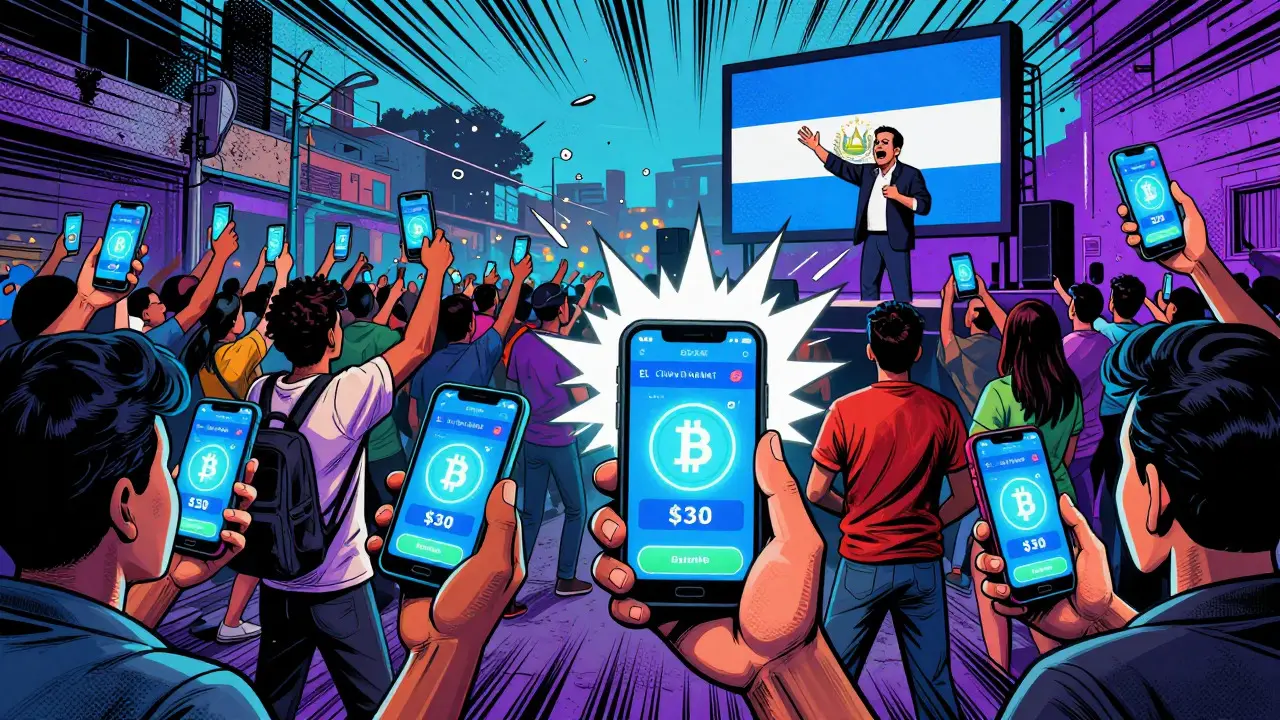
Imagine downloading a government app that instantly gives you $30 just for signing up. In September 2021, that was the reality for millions of people in El Salvador. It was the launch of the Chivo wallet, the official national cryptocurrency wallet designed to facilitate Bitcoin transactions with zero fees. This wasn't just another fintech startup; it was a bold experiment by President Nayib Bukele to make Bitcoin legal tender alongside the US Dollar. But fast forward to August 2026, and the story has shifted dramatically from hype to hard lessons about regulation, volatility, and international pressure.
The Bold Beginning: Why Chivo Was Created
To understand where things stand today, you have to look at why the project started. Before Chivo, about 70% of Salvadorans didn't have bank accounts. They relied on cash or expensive remittance services like Western Union to send money home from abroad. Remittances made up nearly 20% of the country's GDP. The idea was simple: use Bitcoin’s borderless nature to cut out middlemen and save families hundreds of millions in fees.
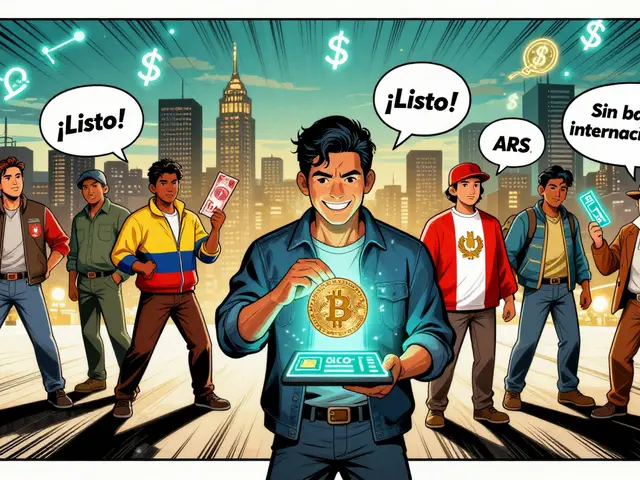
The wallet was built by AlphaPoint, a technology provider specializing in blockchain infrastructure and exchange backend systems, leveraging their experience in the Bitcoin space. At launch, the government offered $30 seed money to anyone who downloaded the app. The result? Roughly 46% of the population installed it. That is massive adoption for a new financial tool in a developing economy. For a moment, Chivo became the most-used fintech app in the country.
But high download numbers don't always mean healthy usage. While the initial excitement was real, the technical foundation struggled under the weight of millions of simultaneous users. Glitches shut down the platform temporarily. Identity theft cases emerged. Security breaches shook user confidence. These weren't minor bugs; they were systemic issues that highlighted the difficulty of scaling a national cryptocurrency infrastructure overnight.
The Volatility Problem: When Money Loses Value Overnight
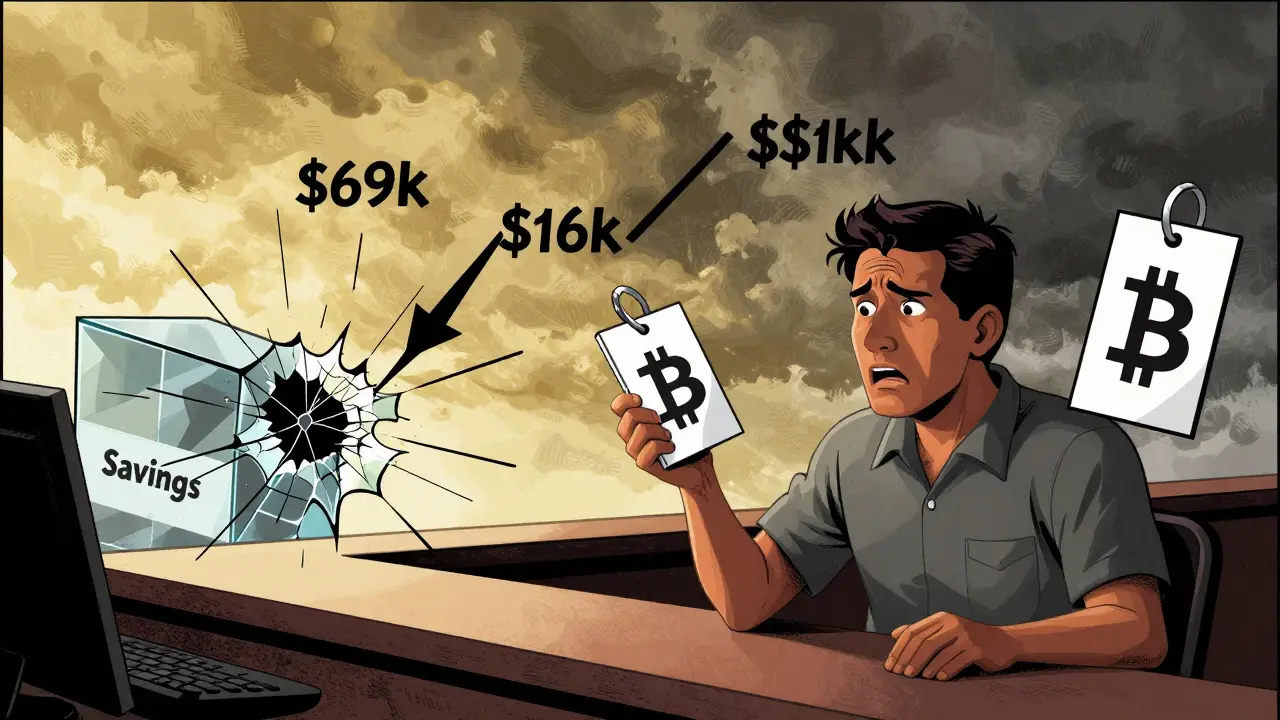
The biggest hurdle for everyday users wasn't just technology-it was price stability. Bitcoin is known for its wild swings. During 2022, the value of Bitcoin dropped from a high of around $69,000 to roughly $16,000. For a merchant accepting payment in Bitcoin, this meant their revenue could vanish if they didn't convert to dollars immediately. For a worker receiving a salary in Bitcoin, their purchasing power fluctuated daily.
This volatility created a disconnect between policy and practice. The government wanted everyone to use Bitcoin, but people naturally preferred holding onto stable currencies like the US Dollar. By 2024, data showed that eight out of ten Salvadorans did not actively use Bitcoin for daily transactions, despite having the Chivo wallet installed. The $30 incentive got them in the door, but it didn't keep them there. Most users treated the wallet as a savings account for the free money rather than a tool for commerce.
IMF Pressure and the End of Legal Tender Status
The turning point came from outside El Salvador. The International Monetary Fund (IMF), an international organization focused on global monetary cooperation and financial stability had long warned that adopting Bitcoin as legal tender exposed the country to unnecessary financial risk. They argued that the lack of transparency in how the government managed its Bitcoin reserves threatened fiscal health.
In January 2025, the pressure culminated. To secure a $1.4 billion financial assistance program through an Extended Fund Facility, El Salvador agreed to remove Bitcoin's status as legal tender. This was a major shift. It meant merchants were no longer required to accept Bitcoin, and the government stepped back from forcing the issue. However, the deal came with specific conditions regarding the Chivo wallet itself.
Under the agreement, the government committed to unwinding public sector participation in the Chivo wallet by July 2025. This means civil servants and other public employees are no longer paid in Bitcoin through the system. The goal was to isolate the state from direct exposure to Bitcoin's price movements while allowing private citizens and businesses to continue using it voluntarily.
| Feature | 2021-2024 (Legal Tender Era) | 2025-Present (Post-IMF Agreement) |
|---|---|---|
| Status of Bitcoin | Legal tender alongside USD | Private asset, not legal tender |
| Government Payroll | Civil servants paid in BTC via Chivo | Public sector payroll moved off Chivo |
| Mandatory Acceptance | Merchants required to accept BTC | Voluntary acceptance only |
| Regulatory Body | Bitcoin Law oversight | National Commission of Digital Assets (CNAD) |
| User Adoption | High downloads, low active usage | Stabilized among crypto enthusiasts |
New Regulations: The Role of CNAD
Even though Bitcoin is no longer legal tender, El Salvador hasn't abandoned crypto entirely. Instead, it has moved toward a more structured regulatory framework. In 2023, the government introduced the Digital Assets Issuance Act (LEAD). This law created the National Commission of Digital Assets (CNAD), the regulatory body responsible for overseeing digital asset issuance and operations in El Salvador.
The CNAD provides clarity for businesses. If you want to operate a crypto exchange or issue tokens in El Salvador today, you need approval from this commission. This marks a shift from the chaotic early days of Chivo to a more professionalized environment. The focus is now on protecting investors and ensuring transparency, rather than forcing mass adoption of a single currency.
For the average person, this means fewer restrictions on personal use but stricter rules for companies. You can still hold Bitcoin, trade it, and use the Chivo wallet if you choose to. But the government is no longer pushing it as the primary way to pay for groceries or coffee. This distinction is crucial for understanding the current landscape.
Current Status: What Happened to the Government's Bitcoin?
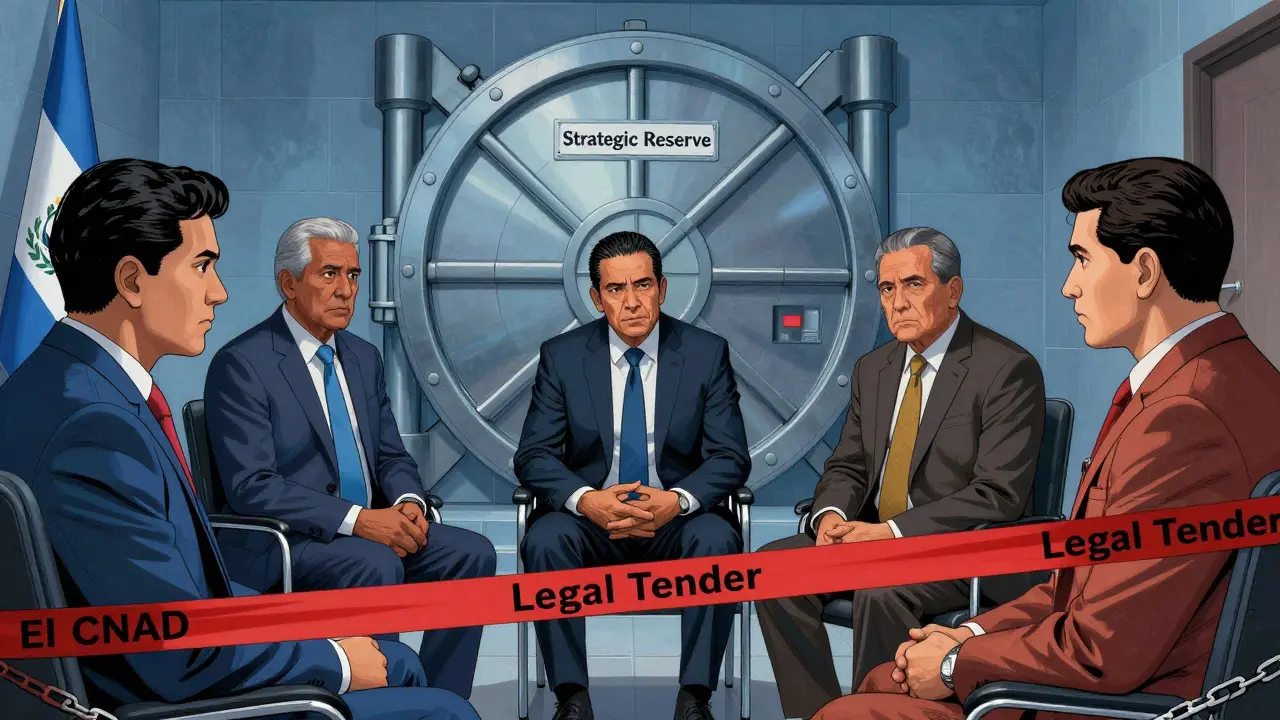
One of the most controversial aspects of the original plan was the government's purchase of Bitcoin. Critics worried that taxpayers' money was being gambled on a volatile asset. Under the IMF agreement, the government promised not to increase its holdings beyond a certain limit. However, reports from March 2025 indicate that the Strategic Bitcoin Reserve Fund held 6,102 coins, worth approximately $500 million at the time.
This reserve remains a point of debate. Supporters argue that the government bought Bitcoin during lower price points and has benefited from subsequent rallies. Skeptics point out that the funds are locked away and don't directly benefit the economy unless sold. The key takeaway is that the government maintains a significant position in Bitcoin, but it is ring-fenced from day-to-day fiscal operations.
Lessons Learned: What This Means for Global Crypto Adoption
El Salvador's experiment offers valuable insights for other countries considering similar moves. First, technology alone cannot solve financial inclusion. Without trust, education, and stability, even the best-designed wallet will struggle. Second, international institutions like the IMF play a powerful role in shaping national monetary policy. No country operates in a vacuum, especially when seeking financial aid.
Third, voluntary adoption works better than mandates. When people were forced to use Bitcoin, resistance grew. When the requirement was lifted, those who truly believed in the technology stayed, while others returned to traditional banking. This suggests that future crypto initiatives should focus on incentives and education rather than coercion.
Finally, security and scalability are non-negotiable. The early glitches of Chivo damaged reputation quickly. As blockchain technology matures, we expect smoother experiences, but the lesson remains: if your wallet doesn't work reliably, people won't use it, no matter the subsidy.
Looking Ahead: Is There Still Hope for Chivo?
Despite the setbacks, El Salvador continues to position itself as a regional hub for cryptocurrency. The PLANB Forum 2025, hosted in January, attracted thousands of attendees and signaled ongoing interest in digital assets. The Chivo wallet still exists and functions for those who wish to use it. It serves as a reminder of what happens when ambition outpaces preparation.
For users today, the path is clearer. You can download Chivo, verify your identity, and transact in Bitcoin without fear of losing your job or facing legal penalties for non-compliance. The restrictions have eased, replaced by a more balanced approach that respects both innovation and economic stability. Whether this model will be replicated elsewhere remains to be seen, but one thing is certain: El Salvador has already changed the conversation about money, sovereignty, and technology forever.
Is the Chivo wallet still available in 2026?
Yes, the Chivo wallet remains available for download and use. While Bitcoin is no longer legal tender, individuals can still use the app to store, send, and receive Bitcoin and US Dollars. The government has ceased mandatory promotion, but the platform operates for voluntary users.
Why did El Salvador stop using Bitcoin as legal tender?
El Salvador removed Bitcoin's legal tender status in January 2025 to meet conditions set by the International Monetary Fund (IMF) for a $1.4 billion financial assistance program. The IMF cited concerns over transparency, volatility, and fiscal risk associated with mandating Bitcoin usage across the economy.
Do I need to close my Chivo account now?
No, you do not need to close your account unless you wish to. The wallet continues to function for private transactions. However, public sector employees are no longer paid through Chivo, so if you were relying on it for government wages, you must update your payment details.
What is the National Commission of Digital Assets (CNAD)?
The CNAD is the regulatory body established under the Digital Assets Issuance Act (LEAD) in 2023. It oversees the issuance and operation of digital assets in El Salvador, providing licenses to exchanges and ensuring compliance with national regulations. It replaces the less defined oversight mechanisms of the early Bitcoin Law era.
How much Bitcoin does the El Salvador government still hold?
As of March 2025, the government's Strategic Bitcoin Reserve Fund held approximately 6,102 Bitcoins. The IMF agreement requires that the total amount of Bitcoin held by the government remain unchanged, preventing further purchases with public funds until the situation is reassessed.
Are there fees for using the Chivo wallet today?
The Chivo wallet originally promoted zero-commission fees for Bitcoin transfers. While the core structure remains, users should check the latest terms for any potential changes related to fiat conversions or network congestion fees, which can vary based on market conditions.
Can foreigners use the Chivo wallet?
Technically, the Chivo wallet is designed for residents of El Salvador and requires local identity verification. Foreigners visiting or living in the country may face difficulties registering without proper documentation. Most expats prefer international wallets like Coinbase or Binance for easier access.

22 Comments
Walker Perry
August 17 2026They think they can just hand out free money and expect us to forget about the debt crisis lol. The IMF is basically holding a gun to their head again. It's always the same globalist script. First they promise freedom with Bitcoin then they bow down to the bankers in Washington. Typical. We need to take back our sovereignty before it's too late for everyone else.
Alexander Scheel
August 19 2026One might observe that the initial enthusiasm was largely manufactured by subsidies rather than genuine economic utility. The notion that a volatile asset could serve as stable currency for daily transactions was, frankly, absurd from a moral and practical standpoint. People were paid to download an app not because they believed in the technology but because thirty dollars is thirty dollars when you are struggling to make ends meet. It is hardly a testament to the superiority of decentralized finance when the primary incentive is a government bribe. Now that the subsidy has dried up and the legal mandate removed we see the true picture. A hollow shell of an experiment built on sand.
Evelyn Kula
August 19 2026I mean honestly who even thought this was a good idea?? Like seriously?? You want me to buy coffee with something that loses half its value while I'm waiting in line?? It's insane. And don't get me started on the security breaches. My cousin lost his entire savings because some hacker got into his Chivo account. The government didn't even help him. They just said 'oops' and moved on. Typical incompetence. We deserve better than this circus act. 🙄
manish jha
August 20 2026The lesson here is clear. Greed blinds people to reality. When the government tries to play God with money they always fail. The people suffered because leaders wanted to look innovative instead of being wise. Now they have to pay the price. This is karma for arrogance. Learn from El Salvador so others do not repeat the mistake. Stability is more important than novelty.
Sarah Hafner
August 21 2026It's actually really interesting how the narrative shifted from hype to regulation. I worked in fintech for a bit and seeing a whole country try to onboard millions of users onto a blockchain wallet overnight was always going to be a nightmare technically. The glitches weren't just bugs; they were signs of systemic overload. But giving them credit for trying is important. Most countries wouldn't dare touch this topic. Now with the CNAD overseeing things it seems like a more mature approach. Hope it works out for the everyday user :)
Susan Kiley
August 23 2026Oh please. Let's pretend this wasn't a massive waste of taxpayer money from the start. The elites in San Salvador wanted to feel like tech pioneers while the poor folks were left holding the bag when Bitcoin crashed. It's disgusting really. All that talk of financial inclusion but really it was just about boosting Bukele's ego. Now they're scrambling to clean up the mess. What a joke. 😒
Gary Straiton
August 24 2026This is exactly why America stays strong. We don't gamble our national economy on digital magic beans. We stick to the dollar. Real money. Backed by industry and military power. Not some internet coin that crashes whenever Elon tweets. El Salvador tried to be clever and now they're begging the IMF for help. Pathetic. Stick to what works or go broke. Simple as that. The rest of the world should watch and learn. Don't let these crypto bros ruin your life.
alex fordy
August 25 2026It makes you think about what money really means though. Is it just a tool or does it hold social trust? When that trust breaks everything falls apart. The volatility was the killer here. No one wants their rent money to disappear by lunchtime. But maybe there's still hope if they focus on education instead of force. People need to understand the tech before they use it. Otherwise it's just chaos. 🤔💭
Nia Franklin
August 27 2026i totally get why ppl were skeptical at first!! like imagine if my bank account went down 50% in a week?? scary right?? but i think the real issue was just bad timing and lack of prep. they rushed it! big time. now with the new rules maybe it will be smoother? fingers crossed for the little guy. we all wanna feel secure in our finances yknow? ❤️✨
Mohamed Shoaeb
August 28 2026Good read. From where I sit in India we see similar experiments with UPI which worked because it solved a real problem instantly without forcing new assets. Here they forced a new asset first. Big difference. Volatility kills adoption for daily needs. But for remittances it still has potential if fees stay low. Time will tell if they can fix the UX issues. Seems like a learning curve for sure.
SHIV SHANKAR KANTA
August 29 2026The soul of commerce is broken when value is uncertain. They sought power through technology but found only emptiness. The market corrected them harshly. Now they hide behind regulations. It is a tragedy of hubris. The people suffered for the vanity of politicians. Silence speaks louder than their excuses. The void remains.
Daniel Brown
August 30 2026I checked the terms of service for Chivo last week and noticed they changed the liability clause regarding identity theft. It used to say the government covered losses up to a certain amount now it says users bear full risk unless negligence is proven. That is a huge shift. People downloading it now need to read the fine print very carefully. It is not the safe haven it claimed to be anymore. Just saying.
Marco Maldonado
August 30 2026Look guys stop crying about it. The IMF forced them to change. What else did you expect? Weak nations always bow to the strong. If you want real freedom you gotta be strong enough to ignore them. But El Salvador isnt that yet. Maybe later. For now they gotta play nice to get the cash. Smart move actually. Survive first revolutionize later. Stop acting like victims. 💪
Darren Moon
September 1 2026A classic case of regulatory capture disguised as innovation. The terminology used in the press releases is deliberately obfuscating. 'Digital Assets Issuance Act' sounds benign but essentially creates a licensing regime that favors established players over grassroots innovators. The CNAD is merely a gatekeeper mechanism. One must scrutinize the composition of this commission closely. It reeks of bureaucratic inertia masquerading as progress. Disappointing.
Quang Thai Tran
September 3 2026It is no coincidence that the collapse coincided with increased surveillance capabilities in the region. The blockchain provides a perfect ledger for tracking every transaction made by citizens. Once the novelty wore off the control aspect became apparent. The IMF deal was merely the excuse needed to dismantle the public-facing narrative while keeping the backend data collection intact. Wake up. Your financial privacy was never the goal. Control was.
Dianne Ritter
September 5 2026I think both sides have valid points. The tech had potential but the execution was flawed. The IMF pressure was real but so was the need for stability. Hopefully the new balanced approach helps everyone find common ground. Peace and prosperity should be the goal not winning an argument.
Calliope Clio
September 6 2026Boring article. Nothing new here. Everyone knows Bitcoin is a bubble waiting to pop. Why are we still discussing this trash? Save your breath. 🥱📉
Tasha Davis
September 6 2026Let's keep moving forward!! Mistakes happen but we learn from them. El Salvador showed courage. Now they show wisdom. Together we can build better financial systems. Believe in progress! 💖🚀
Abigail Sparks
September 7 2026Stop making excuses for failure. The plan was bad from day one. Zero fees on Bitcoin transfers is economically unsustainable without subsidizing the network fees which the government did. When the reserves ran dry the system collapsed. Basic economics. Read a textbook before commenting. Fix your wallet or lose your users. Simple.
Teri W
September 8 2026This is such a drama queen situation. First they hype it up like it's the end of times then they cry to the IMF. Can they just make up their minds?? It's exhausting watching this rollercoaster. My nerves can't take it. Just give us normal money already!!! 😫
Leah Humphrey
September 10 2026The semantic drift in the policy documents is notable. 'Legal tender' implies enforceability whereas 'private asset' implies optionality. The shift represents a fundamental decoupling of state authority from cryptographic verification. Interesting theoretical implications for monetary sovereignty but practically it renders the initial investment moot. Meh.
Alexander Scheel
September 11 2026Precisely. The lack of foresight is staggering. To believe that a commodity known for its speculative nature could underpin a national economy is not just naive it is morally irresponsible towards the vulnerable populations who relied on it. The subsequent regulatory tightening is merely damage control for a catastrophic error in judgment. One hopes future policymakers exercise more restraint and less fantasy.