Kalata (KALA) Airdrop: Is It Real? How to Verify & Avoid Scams
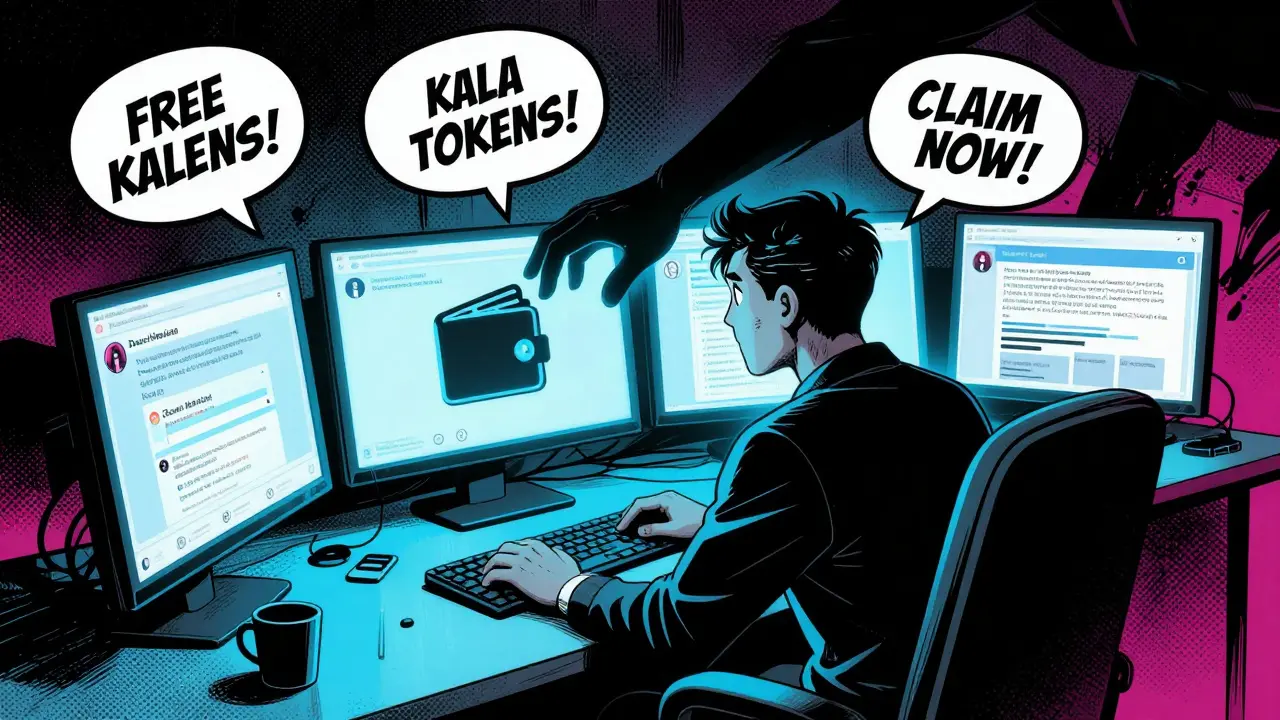
Have you seen the rumors swirling about a Kalata (KALA) is a cryptocurrency project that has recently become the subject of unverified airdrop claims and speculation within online trading communities? The internet is flooded with messages promising free tokens if you just connect your wallet or complete a few simple tasks. It sounds too good to be true, doesn't it? In the world of crypto, when something sounds too good to be true, it usually is.
Right now, there is no official, verified announcement from any reputable source regarding a Kalata (KALA) airdrop. Major tracking platforms like CoinCodex, which monitor thousands of tokens, show price data for KALA but list zero active distribution campaigns. This silence is loud. When legitimate projects launch airdrops, they announce them on their official Twitter accounts, Discord servers, and major news outlets. They don’t hide behind random Telegram groups or suspicious links sent by strangers.
The Current Status of Kalata (KALA)
To understand why you should pause before clicking any link related to KALA, we need to look at the hard data. As of mid-2026, Kalata trades at approximately $0.00003217. The market sentiment is bearish, with low volatility and neutral momentum indicators. While these numbers tell us about the token's performance, they tell us nothing about an airdrop because none exists in the public record.
Legitimate airdrops are part of a project’s marketing strategy to build community and decentralize ownership. Projects like Phantom Wallet or various Solana ecosystem protocols have transparent roadmaps. You can find their eligibility criteria, snapshot dates, and distribution mechanics clearly outlined on their official websites. Kalata lacks this transparency. There are no whitepapers detailing token allocation, no smart contract audits published by firms like CertiK, and no official social media channels confirming a giveaway.
This absence of information is a red flag. If you cannot find the details on the project’s own website, do not trust third-party aggregators or social media influencers. They are often paid to spread hype, regardless of whether the project is real.
How Crypto Airdrop Scams Work
Scammers know that "free money" is a powerful motivator. They use this psychology to drain wallets. Here is how a typical fake Kalata airdrop scam unfolds:
- The Hook: You receive a DM on Twitter, Telegram, or Discord claiming you’ve been selected for the KALA airdrop. The message creates urgency, saying you must claim within 24 hours.
- The Fake Site: You click a link that looks identical to a legitimate crypto platform. The URL might be slightly off, like `kalata-airdrop.com` instead of an official domain, or it might use a newly registered domain to avoid blacklist filters.
- The Connection: The site asks you to connect your wallet (MetaMask, Phantom, etc.) to "verify eligibility." This is where the trap springs shut.
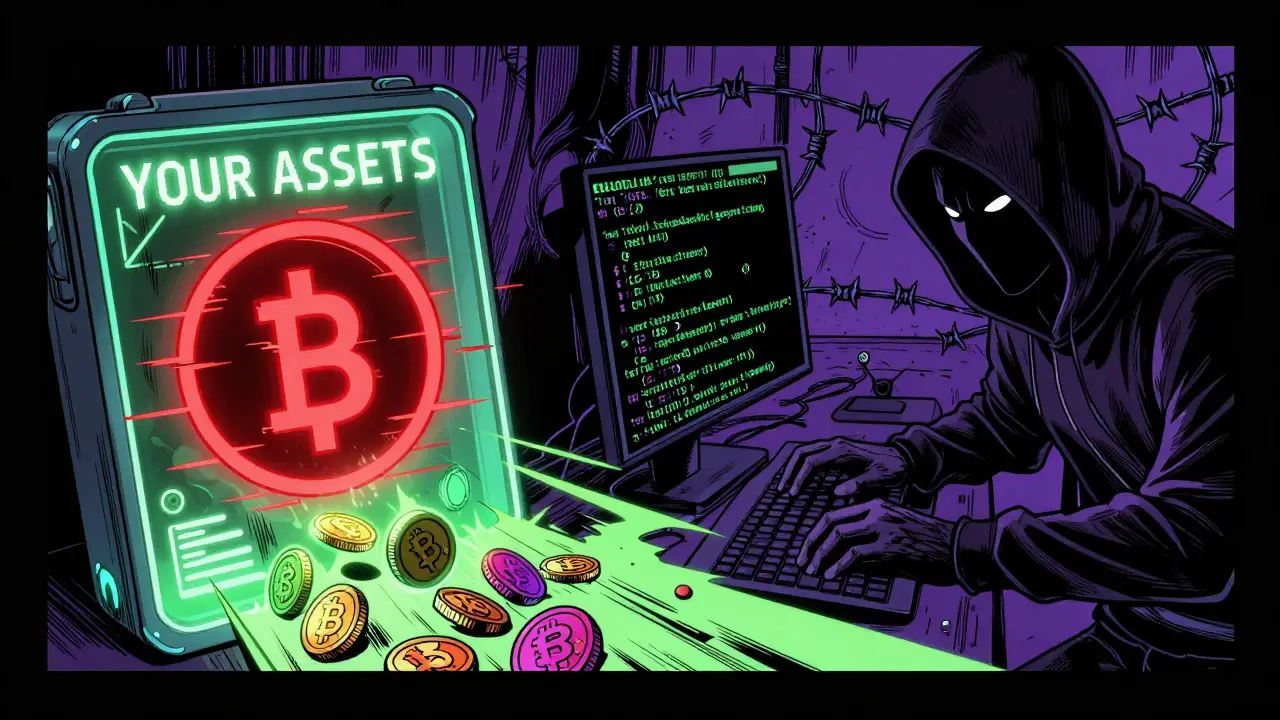
- The Drain: Once connected, the malicious smart contract requests permission to spend your tokens. If you approve this transaction, the script instantly drains your USDT, ETH, SOL, or other assets. It happens in seconds.
Another common tactic involves "gas fee" scams. The site tells you that you need to pay a small network fee to unlock your KALA tokens. You send the fee, but no tokens arrive. The scammers keep the gas fees, and you lose both the fee and potentially your private keys if you entered them into a phishing form.
Red Flags: How to Spot a Fake KALA Claim
You don’t need to be a blockchain expert to spot a scam. Look for these specific warning signs. If you see even one of these, walk away immediately.
| Feature | Legitimate Project | Fake Scam (e.g., Fake KALA) |
|---|---|---|
| Official Announcement | Posted on verified Twitter/Discord with clear rules | Rumors, DMs, or anonymous Telegram posts |
| Website Domain | Older domain, HTTPS, professional design | Newly registered domain, typos, poor design |
| Cost | Never asks for upfront payment or private keys | Asks for "gas fees," deposits, or seed phrases |
| Smart Contract | Audited by reputable firms, open-source code | No audit, hidden code, or pressure to act fast |
| Community Reaction | Discussion on Reddit/CryptoTwitter with skepticism | Bots spamming positive comments, no real discussion |
Notice the pattern? Scams rely on secrecy and speed. Legitimate projects rely on transparency and time. If a project wants you to rush, they want your money, not your participation.
Verification Steps Before You Act
If you still think there might be a real opportunity, follow this strict verification protocol. Do not skip any step.
- Check Official Channels: Go directly to the project’s official website. Do not use search engine ads. Look for a "News" or "Announcements" section. If there is no mention of an airdrop there, it does not exist.
- Verify Social Media Handles: Check the project’s official Twitter account. Look for blue checks (or equivalent verification badges). Read the recent tweets. Are they talking about an airdrop? If not, ignore the rumors.
- Use Reputable Trackers: Visit sites like CoinMarketCap, CoinGecko, or Airdrop.io. Search for "Kalata." If the page says "No active airdrops" or lists only historical data, trust that data over a DM from "CryptoKing99".
- Analyze the Smart Contract: If you are advanced, paste the contract address into Etherscan, Solscan, or BscScan. Check if the contract is verified. Look at the holder distribution. If one wallet holds 90% of the supply, it’s a honeypot or a rug pull waiting to happen.
- Ask the Community: Post in independent forums like Reddit’s r/CryptoCurrency. Ask, "Has anyone heard of a real KALA airdrop?" Watch for responses. If everyone says "scam," listen to them.
Why Kalata Might Be Generating Hype
Even without an airdrop, why is Kalata being discussed? Often, low-cap tokens like KALA (trading at fractions of a cent) are targets for pump-and-dump schemes. Traders buy up the cheap tokens, then spread rumors of partnerships or airdrops to drive up the price. Once the price spikes, they sell their holdings, leaving new buyers with worthless tokens.
This is different from an airdrop. An airdrop gives you tokens for free. A pump-and-dump makes you pay for tokens that will soon crash. Both are dangerous, but the latter requires you to spend money, while the former tries to steal what you already have.
In 2025 and 2026, regulators are cracking down harder on these practices. The SEC and other global bodies are issuing warnings about unregistered securities and fraudulent distributions. Participating in unverified schemes puts you at legal and financial risk.
Safer Alternatives for Earning Crypto
If you are looking to grow your crypto portfolio without risking your savings, consider proven methods instead of chasing phantom airdrops.
- Staking: Many established networks like Ethereum, Solana, and Cardano allow you to stake your tokens to secure the network. In return, you earn rewards. This is low-risk if you hold the underlying asset.
- Learn-to-Earn Platforms: Apps like Coinbase Earn or Binance Learn offer small amounts of crypto for watching educational videos and taking quizzes. These are safe because they are backed by major exchanges.
- Testnet Participation: Some new protocols invite users to test their beta versions. While not guaranteed to yield tokens, interacting with testnets is a legitimate way to support development. Always ensure the testnet is officially announced by the project team.
- DeFi Yield Farming: Provide liquidity to established decentralized exchanges. Understand the risks of impermanent loss, but choose reputable platforms like Uniswap or Aave rather than unknown tokens.
These methods require effort or capital, but they are transparent. You know exactly what you are getting into. With fake airdrops, you are gambling with your digital identity.
What To Do If You Already Connected Your Wallet
Panic won’t help, but quick action will. If you clicked a link and connected your wallet to a suspicious Kalata site, assume the worst.
- Disconnect Immediately: Go to your wallet settings (MetaMask, Phantom, etc.) and disconnect the site. Revoke any pending approvals.
- Revoke Permissions: Use tools like Revoke.cash (for EVM chains) to check and revoke any allowances given to unknown contracts. This prevents future drains.
- Move Funds: Transfer your remaining assets to a new wallet with a fresh seed phrase. Do not leave anything in the compromised wallet.
- Change Passwords: If you entered any passwords or seed phrases on the site, change all related passwords immediately. Enable two-factor authentication everywhere.
- Monitor Activity: Watch your transaction history closely for the next 48 hours. Report any unauthorized transactions to your wallet provider and local authorities.
Remember, once private keys or seed phrases are exposed, the damage is often irreversible. Prevention is always better than cure.
Final Thoughts on Kalata (KALA)
The crypto space moves fast, and FOMO (Fear Of Missing Out) is a powerful emotion. But discipline protects your wealth. Currently, there is no evidence of a legitimate Kalata (KALA) airdrop. The lack of official announcements, combined with the token’s low market cap and bearish trend, suggests that any claims of free tokens are likely scams designed to exploit hopeful investors.
Stick to verified sources. Trust data over hype. And never, ever share your seed phrase. If a deal seems too good to be true, it’s almost certainly a trap. Stay safe, stay skeptical, and keep your funds in cold storage whenever possible.
Is the Kalata (KALA) airdrop real?
As of June 2026, there is no official confirmation of a Kalata (KALA) airdrop from reputable sources or the project’s official channels. Most claims are likely scams.
How can I verify if a crypto airdrop is legitimate?
Check the project’s official website and verified social media accounts. Look for announcements on trusted tracking sites like CoinMarketCap. Never trust DMs or unsolicited links.
What should I do if I connected my wallet to a fake airdrop site?
Immediately disconnect the wallet, revoke all token approvals using tools like Revoke.cash, move your funds to a new wallet, and change your passwords.
Does Kalata (KALA) have a high market value?
No, Kalata trades at a very low price (around $0.000032) with bearish sentiment. Low price does not equal high potential; it often indicates low liquidity and high risk.
Are there any safe ways to earn free crypto?
Yes, through learn-to-earn programs on major exchanges, staking established cryptocurrencies, or participating in officially announced testnets by reputable projects.
Why do scammers target low-cap tokens like KALA?
Low-cap tokens have less scrutiny and fewer loyal communities. Scammers can easily create fake narratives around them because there is little official information to contradict the lies.
Can I get rich quick with crypto airdrops?
While some legitimate airdrops have rewarded users significantly, most are small. Relying on airdrops for income is risky and often leads to falling victim to scams. Diversify your strategy.
Where can I track upcoming legitimate airdrops?
Use dedicated platforms like Airdrop.io, CoinMarketCap’s airdrop section, or follow verified crypto news outlets. Always cross-reference with the project’s official channels.
13 Comments
ravi mahla
June 10 2026Oh look, another 'too good to be true' guide. Groundbreaking stuff right here folks. I've been in crypto since 2013 and let me tell you, the only thing real about KALA is the rug pull waiting to happen. You guys really need to wake up.
pankaj chawla
June 11 2026I agree with the sentiment here but we need to be more assertive about protecting our community. The lack of transparency from Kalata is unacceptable. We should demand audits before any token distribution even gets considered for discussion on these boards. It's not just about avoiding scams; it's about holding projects accountable to basic standards of integrity and security for all participants involved in this ecosystem.
Filbert Reeves
June 13 2026its not a scam its a psyop by the fed to track your wallet addresses so they can freeze your assets when cbdc launches next month. i know because my uncle works at treasary and he told me. kalata is actually a front for money laundering but they are testing the smart contract vulnerabilities on purpose. dont connect your wallet ever. also check your fridge for microchips.
Eric Scheinberg
June 14 2026The procedural steps outlined for verification are sound. One must exercise due diligence. Connecting a wallet to an unverified contract is akin to handing over the keys to one's residence without inspecting the lock mechanism first. Prudence is paramount in decentralized finance interactions where recourse is virtually non-existent upon compromise of private credentials or approval signatures granted to malicious entities.
Andrea Burd
June 15 2026boring article. everyone knows this. why do we need a whole essay to tell us not to click links? typical reddit handholding for degens who cant read a url. waste of my time.
Amit Thakur
June 16 2026You're missing the bigger picture here. The alpha isn't in the airdrop itself but in the pre-market liquidity pools that form around these narratives. If you have the technical acumen to analyze the mempool transactions and spot the whale accumulation patterns before the retail crowd realizes the scam, you can still extract value. It's high risk, sure, but the asymmetric upside potential for those who understand order flow dynamics and slippage tolerance settings is massive. Don't sleep on the data layer.
Charles Pawlikowski
June 17 2026this is why america is failing. people falling for foreign scams like this. stay woke patriots. use gold and silver not this digital garbage controlled by globalists. :)
Akeem Whittaker
June 18 2026Let's keep the focus on safety rather than politics or conspiracy theories. The most practical advice here is using Revoke.cash. I've seen too many people lose everything because they approved an unlimited allowance once and forgot about it. Make it a habit to audit your connected apps weekly. It takes five minutes and saves you thousands. Let's support each other in staying secure.
Nick Rice
June 18 2026Listen up! This is exactly the kind of discipline you need to survive in this market. Most people are emotional gamblers. They see 'free tokens' and their brain turns off. You need to be aggressive with your security protocols. Treat every link like it's malware. Verify every domain. Check the contract address on Etherscan yourself. Do not trust influencers. Do not trust DMs. Be the master of your own financial destiny by being paranoid enough to protect what you have earned through hard work and smart investing strategies.
Sonya O'Brien
June 18 2026I found myself nodding along with much of what was said regarding the importance of verifying sources through official channels such as verified Twitter accounts or Discord servers which often provide more immediate updates than news aggregators might offer during rapid development cycles or unexpected announcements that could change the landscape entirely for investors looking for early entry points into promising ecosystems that are still building out their infrastructure and user base simultaneously while trying to maintain decentralization principles which is quite challenging given the current regulatory environment we find ourselves navigating today.
Jessica Lane
June 20 2026This is a very thorough breakdown. I appreciate the clear distinction between pump-and-dump schemes and actual airdrops. It is crucial for new users to understand that legitimate projects do not operate in secrecy. The step-by-step verification protocol is excellent. I will be sharing this with my local crypto study group to ensure everyone is aware of these red flags. Thank you for prioritizing educational content over hype.
Abby Sivertsen
June 20 2026Look, I get the hype but honestly, connecting your wallet to random sites is just asking for trouble. I’ve seen friends lose their life savings because they wanted free tokens. It’s not worth the stress. Just stick to staking or buying blue chips if you want to play it safe. Your mental peace is worth more than some imaginary KALA coins that probably won’t even list on a decent exchange.
Mark Brunschwiler
June 21 2026The void stares back when you connect your wallet. We are but pixels in a matrix designed to drain our essence. Why do we seek validation from tokens? Is it fear? Is it greed? Or is it the hollow echo of a society that has forgotten the value of tangible labor? The smart contract is a mirror reflecting our own desperation. To approve is to surrender. To disconnect is to reclaim a fragment of lost soul. But who am I to judge the path of the lost wanderer in the digital desert?