POPG Coin Review: Web3 Entertainment Token Explained
Most crypto tokens promise to change the world. POPG is a Web3 entertainment utility token built on the Ethereum network, designed to power an ecosystem of VIP rewards, iGaming, and exclusive live events. Launched in mid-2024, it positions itself as a community-centric alternative to traditional entertainment platforms, aiming to bring transparency and sustainability to the space. But does it actually deliver on that promise? Let's break down what you're getting into when you look at this specific asset.
The Core Ecosystem: What Actually Uses POPG?
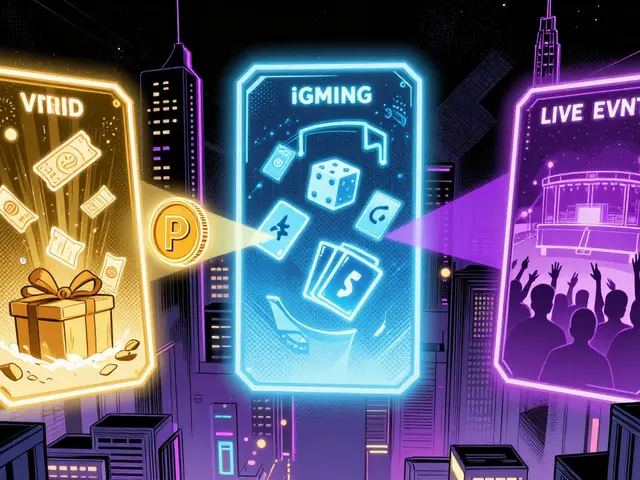
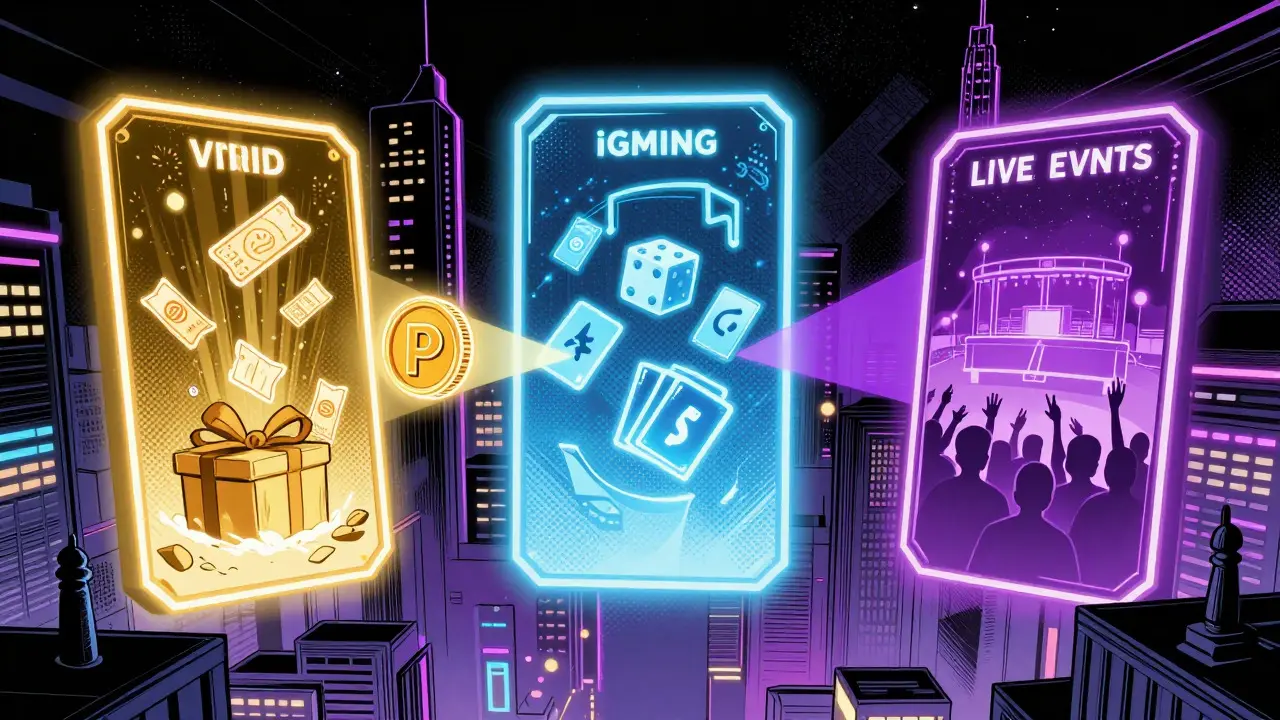
You can't understand the value of the token without understanding the platforms it supports. The project operates through three distinct but interconnected components. Each one serves a different function within the broader ecosystem, creating a closed loop for users who engage with multiple parts of the system.
- POP.VIP: This is the tiered rewards engine. You earn rebates by holding and locking your $POPG tokens. The higher your tier, the bigger the rebate. These aren't just points; they are redeemable for actual entertainment products and services. It also acts as a gatekeeper, determining your access level to other platforms.
- POP.GAME: An iGaming platform that explicitly markets itself on "responsible gaming" and transparency. Unlike many centralized casinos, it claims to build policies with direct community input. If you are a fan of blockchain-based gambling, this is where the action happens.
- POP.LIVE: The premium event access layer. Here, your VIP tier determines your ability to buy tickets for concerts, sports matches, and other major events. It’s essentially a loyalty program that grants real-world perks.
The POPG token acts as the gateway currency for all three. Without it, you don't have access to the rewards, the games, or the events. This utility model is the primary argument for its long-term viability beyond pure speculation.
Tokenomics: Supply, Distribution, and Inflation Risks
Let's talk numbers, because these often tell the real story behind the marketing. POPG has a maximum total supply of 10 billion tokens. However, not all of them are in circulation yet. According to recent data, the self-reported circulating supply sits around 2 billion POPG tokens.
This creates a significant gap between the current market cap and the fully diluted valuation (FDV). As of May 2026, the market cap was approximately $95.89 million, while the FDV stood at roughly $479.45 million. That is a 5x multiplier. What does that mean for you? It means there is still a lot of supply coming to the market. The project uses a structured release schedule, adding new tokens every six months. For investors, this implies ongoing inflation pressure unless demand grows significantly to absorb these new releases.
| Metric | Value | Implication |
|---|---|---|
| Max Supply | 10 Billion | High potential dilution if adoption doesn't match supply release |
| Circulating Supply | ~2 Billion | Only 20% of max supply is currently active |
| Market Cap | ~$95.89M | Small-cap status (Rank #7771) |
| Fully Diluted Valuation | ~$479.45M | Significant future sell pressure expected from unlocks |
| Holder Count | 398 Addresses | Highly concentrated ownership; low decentralization |
Price Action and Market Liquidity
Cryptocurrency prices can be confusing when you look at different exchanges. POPG has shown considerable volatility since its launch. It hit an all-time high of $0.06645 in March 2025 and dropped to an all-time low of $0.04663 in May 2025. By May 2026, prices varied across platforms:
- Coinbase: ~$0.0578 per token.
- CoinMarketCap: ~$0.04794 per token.
- Bybit: ~$0.04767 per token.
Notice the discrepancy? Coinbase showed a higher price than the others. This usually indicates liquidity differences. More importantly, look at the trading volumes. On some days, 24-hour volume on smaller exchanges like Bybit was as low as $36.68. Even on Coinbase, it hovered around $850. For a token with a nearly $100 million market cap, those are tiny numbers. Low volume means high slippage. If you try to buy or sell a large amount, you will likely move the price against yourself. This is a critical risk factor for anyone considering entering a position larger than a few hundred dollars.
Technical Infrastructure and Accessibility
POPG lives on the Ethereum blockchain. This is a double-edged sword. On one hand, you get the security and decentralization of one of the most mature networks in existence. You don't have to worry about a small team running a private chain that could rug-pull overnight. On the other hand, you inherit Ethereum's gas fees. While Layer 2 solutions have mitigated this somewhat, transactions on mainnet can still be costly during peak times.
For storage, compatibility is wide. You can use mainstream wallets like MetaMask or Trust Wallet. There is no need for a proprietary hardware wallet or a niche software client. This lowers the barrier to entry significantly. If you already hold ETH or other ERC-20 tokens, adding POPG to your portfolio is technically straightforward. You just need to add the contract address to your wallet interface.
Risks: The Elephant in the Room
We need to be honest about the risks here. First, the holder count is a red flag. With only 398 addresses holding the majority of the supply, the market is highly concentrated. A few whales moving their bags can crash the price instantly. This lack of distribution makes the token vulnerable to manipulation. Second, the regulatory environment for iGaming is tricky. POP.GAME operates in a sector that is heavily scrutinized by governments worldwide. While the project touts "responsible gaming," any regulatory crackdown on blockchain casinos could impact the entire ecosystem's utility. If POP.GAME faces legal hurdles, the primary use case for the token weakens considerably. Finally, there is the adoption question. The YouTube presence is modest, with reviews garnering tens of thousands of views rather than millions. Mainstream awareness is limited. For the token to succeed, it needs to convert its 398 holders into thousands, then millions. Until user growth outpaces the semi-annual token unlocks, price pressure will likely remain downward.
Who Is This Token For?
POPG isn't for everyone. It is not a general-purpose DeFi token like Uniswap or Aave. It is a niche play. It suits investors who believe in the convergence of blockchain and live entertainment. If you are already a fan of the specific events or games offered by the POP ecosystem, the token offers tangible utility. You get discounts, early access, and rebates. For pure financial investors, however, the math is tough. You are betting on a small-cap asset with high inflation risk and low liquidity. The upside potential exists if the ecosystem explodes in popularity, but the downside is protected only by the floor of zero. Diversify carefully. Don't put more money in here than you are willing to see locked up for years while the token unlocks continue.
What blockchain is POPG built on?
POPG is built on the Ethereum network. This means it follows the ERC-20 standard and can be stored in any Ethereum-compatible wallet such as MetaMask or Trust Wallet.
How much POPG is in circulation?
As of mid-2026, approximately 2 billion POPG tokens are in circulation out of a maximum supply of 10 billion. New tokens are released every six months according to the project's distribution schedule.
Is POPG a good investment right now?
This depends on your risk tolerance. The token has high utility within its specific ecosystem but suffers from low liquidity, high supply concentration, and significant future inflation from token unlocks. It is considered a high-risk, speculative asset suitable for diversification rather than core holdings.
What are the main platforms in the POPG ecosystem?
The ecosystem consists of three main platforms: POP.VIP (tiered rewards), POP.GAME (iGaming), and POP.LIVE (exclusive event access). The POPG token serves as the currency for all three.
Why is the trading volume so low?
Low trading volume reflects the token's small market size and limited retail adoption. With only around 400 holder addresses, there is less daily buying and selling activity compared to major cryptocurrencies like Bitcoin or Ethereum.