Bitcoin Venezuela: How Crypto Is Changing Life in Venezuela
When people talk about Bitcoin Venezuela, the use of Bitcoin as a survival tool in a country where the national currency has collapsed. Also known as crypto resistance, it’s not a trend—it’s a lifeline for millions. In Venezuela, where inflation hit over one million percent and salaries became worthless, Bitcoin didn’t arrive as an investment. It arrived as a way to feed your family, pay for medicine, or send money to relatives abroad without the government freezing your account.
Behind this movement is something even more surprising: the government tried to control it. SUNACRIP, Venezuela’s state agency that regulates digital assets. Also known as National Digital Mining Pool, it forces miners to register, join a government-run mining pool, and pay heavy taxes. This isn’t decentralization. It’s state surveillance with a blockchain label. And yet, people still mine. They still trade. They still use Bitcoin because the alternative—waiting for bolívar checks that never clear—is worse.
What you’ll find in this collection isn’t hype. It’s hard facts. You’ll read about how Venezuela’s crypto mining laws in 2025 make it one of the most restrictive places on Earth to mine Bitcoin—even though it’s one of the few places where Bitcoin actually works. You’ll see how scams pretend to offer "official" Venezuelan crypto airdrops, while real users rely on peer-to-peer apps like LocalBitcoins and Paxful. You’ll learn why holding Bitcoin here isn’t about speculation—it’s about keeping your savings from disappearing overnight.
There are no grand theories here. No lectures on monetary policy. Just what people are doing, right now, to survive. Whether it’s using crypto to buy groceries, avoiding bank seizures, or bypassing currency controls, Bitcoin in Venezuela is the quiet revolution no one in Wall Street talks about—but everyone in Caracas lives.
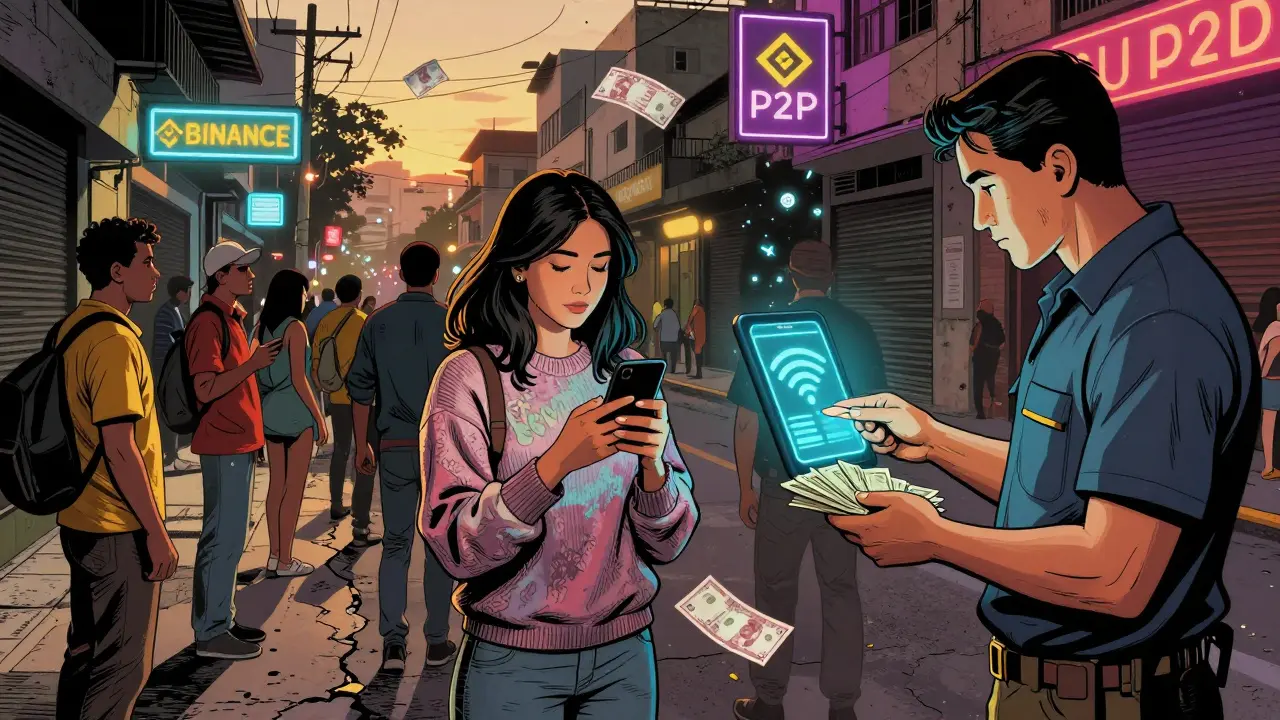
In Venezuela, Bitcoin and USDT have become essential tools for survival amid hyperinflation and a collapsed currency. Millions use crypto daily to buy food, pay rent, and send remittances-bypassing a broken financial system.
Continue Reading