P2E Economics: How Play-to-Earn Games Really Work and Why Most Fail
When you hear P2E economics, the financial system behind blockchain games that rewards players with crypto tokens. Also known as play-to-earn, it promises you can make money just by playing games. But here’s the truth: 95% of these games don’t last a year. Why? Because they confuse rewards with real value. P2E economics isn’t about giving out free tokens—it’s about balancing supply, demand, and player behavior so the whole system doesn’t collapse.
Successful P2E models rely on three things: a real reason to play, a way to spend what you earn, and a limited supply of tokens. Games like Axie Infinity started strong because players could breed, battle, and sell digital pets. But when too many new players joined, the token supply exploded, prices crashed, and the economy broke. That’s not a bug—it’s a feature of bad design. The game tokenomics, the rules that control how tokens are created, distributed, and used inside a game must be tight. If players can earn 100 tokens a day but only spend 10, the system dies. Real P2E economics ties earnings to effort, skill, or time—not just logging in.
And it’s not just about the tokens. The blockchain gaming, the use of decentralized ledgers to track in-game assets and transactions needs to feel useful. If your NFTs can’t be traded, upgraded, or used outside the game, they’re just digital collectibles with no real value. That’s why most P2E projects fail—they build flashy interfaces but forget the core principle: people play for fun, not just for cash. The best ones make earning feel like a side benefit, not the main goal.
You’ll see this in the posts below. Some cover fake airdrops pretending to be P2E opportunities. Others expose tokens with zero utility, like CAKEBANK or CKN, where the only thing being earned is regret. There are also real examples of how tokenomics can work—or fail—when players have actual reasons to hold, trade, or spend. This isn’t about getting rich overnight. It’s about understanding why some games survive while others vanish overnight. If you’ve ever wondered why your P2E rewards keep dropping, or why a game you loved suddenly turned into a ghost town, the answers are in the economics. Not the hype. Not the airdrop claims. The numbers. The rules. The flow of value. That’s what matters.
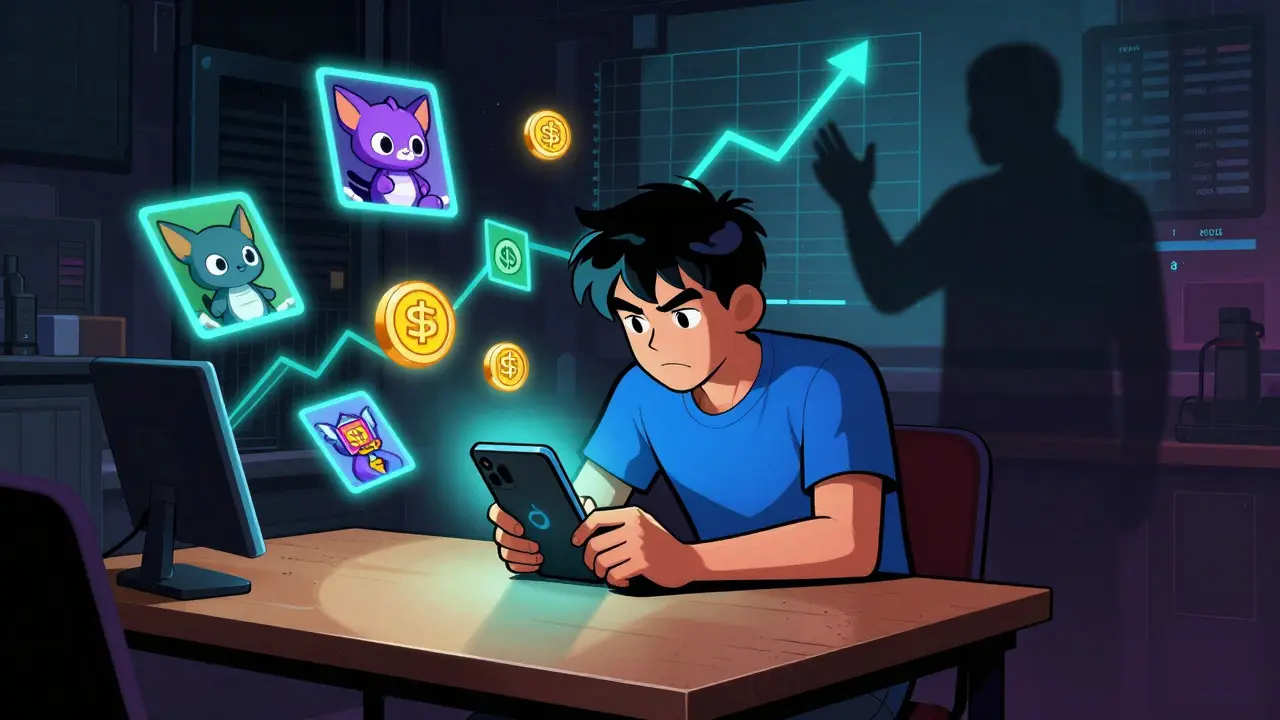
Play-to-earn gaming lets players earn real money through blockchain-based games using NFTs and crypto tokens. Learn how it works, who profits, the risks involved, and how to get started in 2025.
Continue Reading