Uniswap V3 on Blast Review: Is This New DEX Worth Your Crypto in 2026?
You’ve probably heard the buzz around Blast. It’s that Layer 2 solution promising native yields for both staked ETH and stablecoins. But here’s the real question: does connecting your wallet to Uniswap V3 on Blast actually deliver on that promise, or is it just another shiny new chain with thin liquidity?
If you’re looking for a quick answer, Uniswap V3 on Blast is a functional, low-cost swap interface that inherits the powerful concentrated liquidity mechanics of its Ethereum mainnet counterpart. However, as of mid-2026, it remains a niche player. With only four trading pairs and limited depth, it isn’t ready to replace your primary trading hub. Instead, it serves specific users who want to trade within the Blast ecosystem while benefiting from lower gas fees than Ethereum mainnet.
What Exactly Is Uniswap V3 on Blast?
To understand this specific deployment, we need to separate the protocol from the network. Uniswap is the dominant automated market maker (AMM) protocol in decentralized finance, known for allowing peer-to-peer token swaps without intermediaries. Version 3 introduced "concentrated liquidity," which lets providers allocate capital to specific price ranges rather than across the entire curve. This efficiency boosts returns for providers but requires more active management.
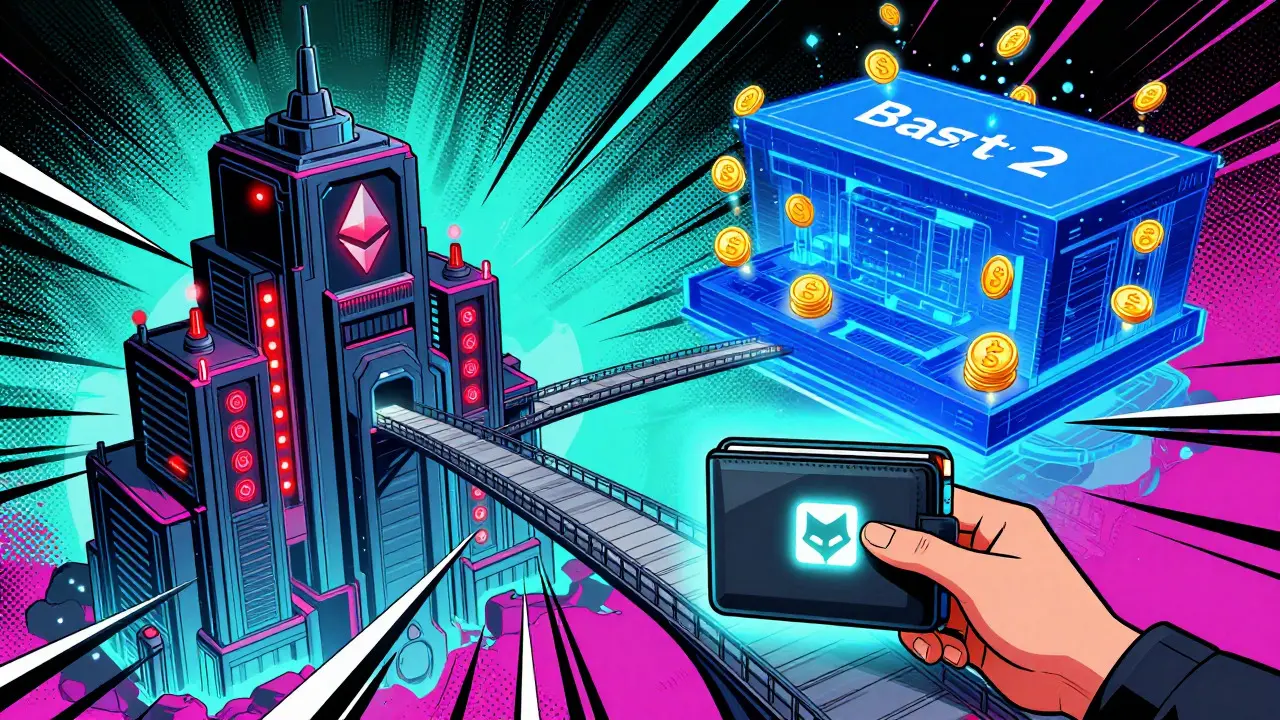
Blast is an Ethereum Layer 2 rollup designed to generate native yield for users. Unlike Arbitrum or Optimism, which focus primarily on speed and cost, Blast integrates yield mechanisms directly into its architecture. When Uniswap V3 was deployed on Blast in 2024, it combined these two technologies. You get the sophisticated liquidity tools of Uniswap V3 running on a chain that promises better base-layer economics.
The result is a non-custodial exchange where you retain control of your private keys. There are no account sign-ups, no KYC checks, and no frozen funds. If you can connect a Web3 wallet like MetaMask or Rabby, you can start swapping immediately. This permissionless nature is the core appeal of DeFi, and Blast aims to make it more profitable through its unique yield structure.
Liquidity and Trading Pairs: The Reality Check
Here is where expectations often meet reality. Liquidity is the lifeblood of any decentralized exchange. Without it, slippage eats your profits, and large trades become impossible. As of July 2026, Uniswap V3 on Blast supports only two coins and facilitates trading through four trading pairs.
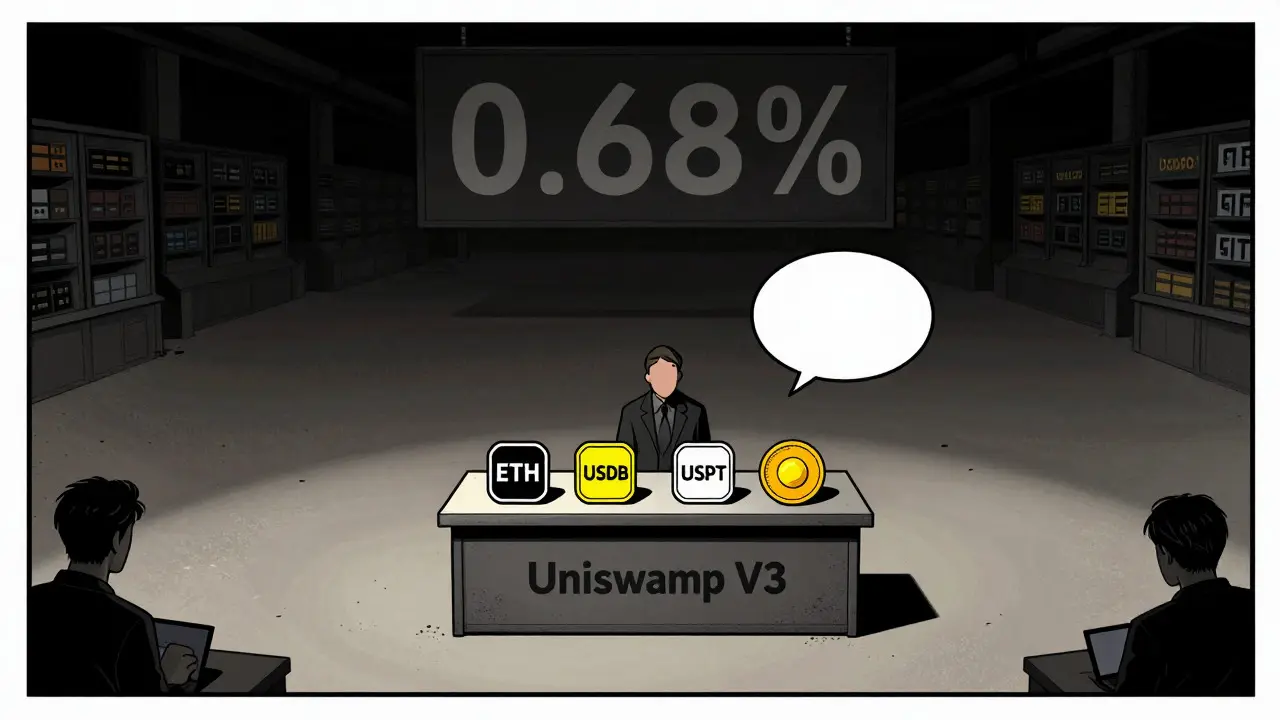
Let’s put that in perspective. The main Uniswap protocol across all chains handles billions in daily volume with thousands of tokens. Even established L2s like Arbitrum One have hundreds of pairs. On Blast, you are largely restricted to the most fundamental assets, likely including ETH and major stablecoins like USDB or USDT. If you’re trying to swap a new meme coin or a niche altcoin, you won’t find it here yet.
This limited selection impacts the bid-ask spread. Data shows an average spread of 0.68% on this deployment. For context, tight spreads on mature markets are often below 0.1%. A 0.68% spread means you lose nearly seven-tenths of a percent on every trade before you even factor in fees. For high-frequency traders, this is unacceptable. For casual users moving larger sums occasionally, it might be tolerable, especially if gas costs are negligible.
| Feature | Uniswap V3 (Blast) | Uniswap V3 (Ethereum) |
|---|---|---|
| Trading Pairs | 4 | Thousands |
| Avg. Bid-Ask Spread | 0.68% | <0.1% (for major pairs) |
| Gas Fees | Low (L2 costs) | High (Mainnet congestion) |
| Native Yield | Yes (via Blast) | No (unless staked separately) |
| Regulatory Status | Unregulated | Unregulated |
Fees and Costs: What Are You Actually Paying?
Costs in DeFi come in two flavors: protocol fees and network fees. Understanding both is crucial for profitability.
Protocol Fees: Uniswap V3 typically charges a tiered fee structure based on the volatility of the pair. Standard pairs usually incur a 0.30% fee. Stablecoin pairs might charge 0.05%, while exotic pairs could go up to 1%. These fees go to liquidity providers, not the platform itself. Since Blast is a newer deployment, fee structures align with standard V3 models, but competition is minimal, so providers set the terms.
Network Fees: This is where Blast shines. On Ethereum mainnet, a simple swap can cost $5 to $50 depending on congestion. On Blast, thanks to its Layer 2 status, transaction fees are fractions of a cent. This makes small trades economically viable. You aren’t paying a premium to move money around.
However, remember the spread. If you buy ETH for $3,000 and the spread is 0.68%, you effectively bought it at $3,020. To break even, ETH needs to rise by 0.68% just to cover that hidden cost. Always check the "price impact" warning before confirming a swap. If it exceeds 1%, reconsider the trade size or timing.
User Experience and Accessibility
Using Uniswap V3 on Blast feels familiar if you’ve used the main app. The interface is clean, intuitive, and stripped of clutter. You connect your wallet, select the Blast network (if not auto-detected), choose your input and output tokens, and slide the amount. It’s straightforward.
But there’s a catch for beginners. DeFi requires self-custody. If you lose your seed phrase, your funds are gone forever. There is no customer support hotline to call. No "Forgot Password" link. This barrier to entry keeps many traditional investors away, despite the ease of the UI.
For funding your wallet, you’ll likely need to bridge assets from Ethereum or another L2. Third-party on-ramps like MoonPay allow you to buy crypto with a credit card, charging between 2.55% and 3.65%. These fees are steep compared to bank transfers, which sit around 0.99%, but they offer instant access. Once your funds are in your wallet, switching to the Blast network is seamless via bridges like Stargate or native Blast bridges.
Who Should Use Uniswap V3 on Blast?
Not every trader fits this profile. Let’s break down who benefits and who should stay away.
Good for:
- Blast Ecosystem Participants: If you’re already using Blast for other DeFi protocols (like lending or yield farming), swapping here saves you the hassle of bridging back to Ethereum or Arbitrum.
- Small Traders: Those making micro-transactions where Ethereum gas fees would eat their entire profit margin.
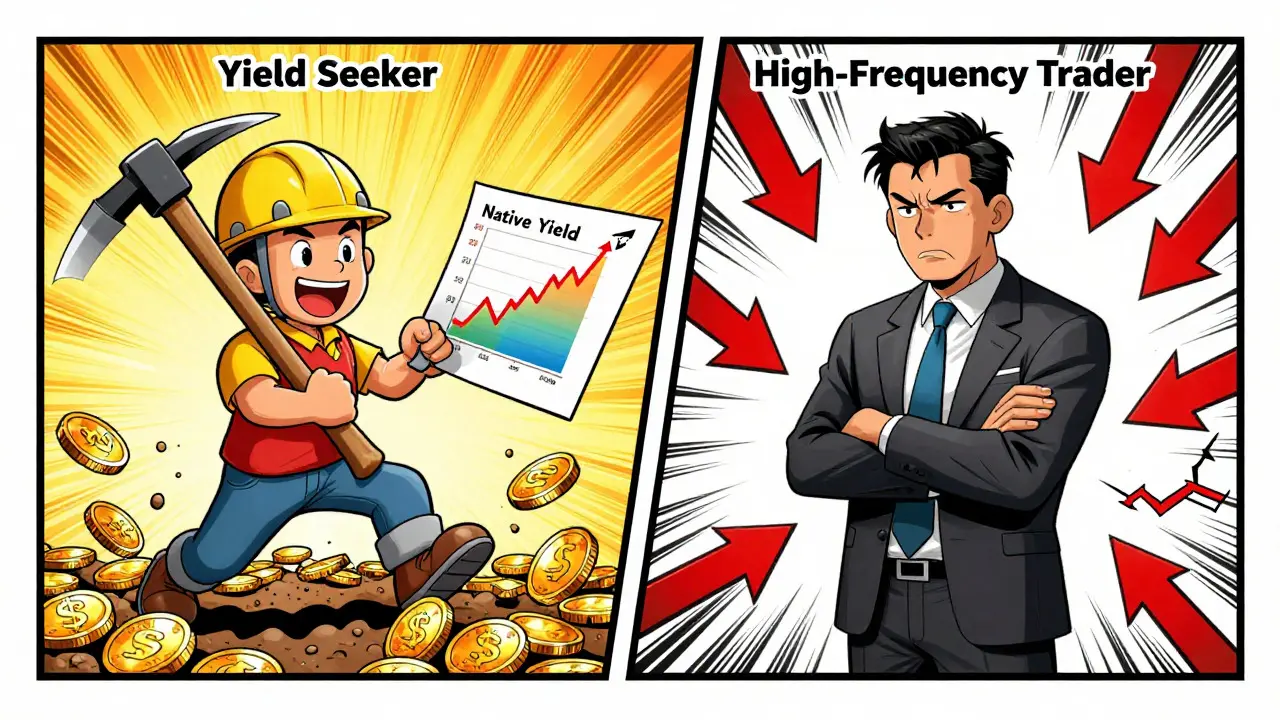
- Yield Seekers: Users interested in providing liquidity to capture both trading fees and Blast’s native yield incentives.
Bad for:
- High-Frequency Traders: The 0.68% spread and limited pairs will destroy your alpha.
- Altcoin Hunters: You won’t find the latest trending tokens here.
- Beginners Unsure of Wallet Security: The lack of hand-holding can lead to costly mistakes.
Security and Regulatory Landscape
Security in DeFi rests on code, not companies. Uniswap V3 has been battle-tested since its 2021 launch. The smart contracts are audited and widely trusted. However, deploying on a new chain like Blast introduces new variables. While the Uniswap code is secure, the underlying Blast infrastructure must also hold up. As of 2026, Blast has maintained a strong security record, but no system is immune to exploits.
Regulation remains a gray area. Uniswap V3 on Blast is unregulated. There are no government authorities overseeing transactions. This freedom is appealing to privacy advocates but risky if regulations tighten. The SEC and other bodies have targeted centralized exchanges heavily, but DeFi protocols operate in a legal vacuum. Users assume full responsibility for tax reporting and compliance.
Future Outlook: Will It Grow?
The potential for growth exists, but it depends on Blast’s broader adoption. Uniswap V4 launched in early 2025, introducing "Hooks" that allow developers to customize pool behavior. If Uniswap deploys V4 on Blast, we could see more innovative pools and deeper liquidity. Currently, V3 is the standard, but V4’s success elsewhere suggests it will eventually migrate.
Blast’s promise of native yield is a strong hook. If more projects build on Blast to tap into those yields, demand for swapping services will rise. More users mean more liquidity, which tightens spreads and attracts more traders. It’s a virtuous cycle-if it starts.
For now, treat Uniswap V3 on Blast as a specialized tool. Use it when you’re deep in the Blast ecosystem. Don’t rely on it as your primary gateway to crypto. Keep an eye on liquidity metrics; if the number of pairs grows beyond single digits, revisit this assessment.
Is Uniswap V3 on Blast safe to use?
Yes, it is generally safe because it uses the same battle-tested smart contracts as Uniswap V3 on Ethereum. However, safety also depends on the security of the Blast network itself and your personal wallet hygiene. Always ensure you are connecting to the official Uniswap interface to avoid phishing sites.
Why are there so few trading pairs on Blast?
Blast is a relatively new Layer 2 network. Liquidity providers take time to allocate capital to new chains. As more users and projects join Blast, more pairs will likely be added by liquidity providers seeking yield opportunities.
Do I need KYC to use Uniswap on Blast?
No. Uniswap is a permissionless, decentralized protocol. You do not need to provide identity documents. However, if you use a third-party fiat on-ramp like MoonPay to buy crypto initially, that provider may require KYC.
How do I get tokens onto the Blast network?
You need to bridge your assets from Ethereum or another supported chain. You can use official Blast bridges or cross-chain aggregators like Stargate. Ensure you have enough ETH on the source chain to pay for the bridging gas fees.
What is the difference between Uniswap V3 and V4 on Blast?
As of mid-2026, Uniswap V3 is the current version deployed on Blast. V4, launched in 2025, introduces customizable "Hooks" for advanced functionality. V4 may be deployed on Blast in the future, offering more flexibility for liquidity providers and traders.