Using Multiple Crypto Exchanges to Avoid Restrictions: Risks and Realities
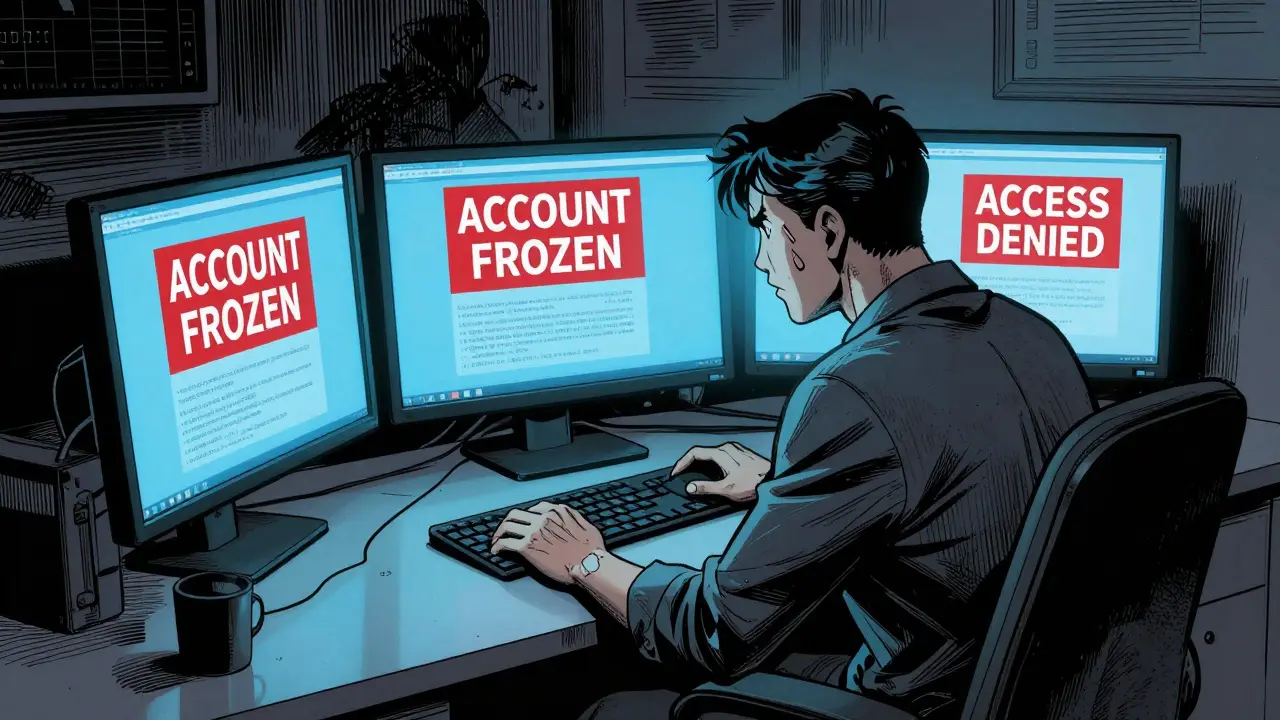
Have you ever hit a wall while trying to move your funds or access a specific token, only to find your account frozen or a feature disabled? It's a common frustration. Whether it's a sudden geographic block, a strict daily trading limit, or a grueling identity verification process, restrictions can make the borderless promise of blockchain feel very limited. This often leads traders to a tempting solution: spreading their assets across crypto exchange restrictions and multiple platforms to bypass these hurdles.
While using a few different apps for arbitrage or liquidity is a standard move, there is a dark side to this strategy. Moving money through a chain of platforms to dodge legal requirements isn't just a "hack"-it's often a red flag for regulators. In the current climate, the line between a smart trading setup and an illegal evasion tactic is thinner than ever.
The "Bridge" Strategy: Understanding Nested Exchanges
One of the most common ways people try to bypass restrictions is by using Nested Exchanges is a type of service that operates as an intermediary, providing trading services through accounts it maintains on larger, external exchanges. Think of them as a middleman. Instead of you dealing directly with a giant platform that has strict rules, you use a smaller, nested service that handles the trade for you on the big platform's backend.
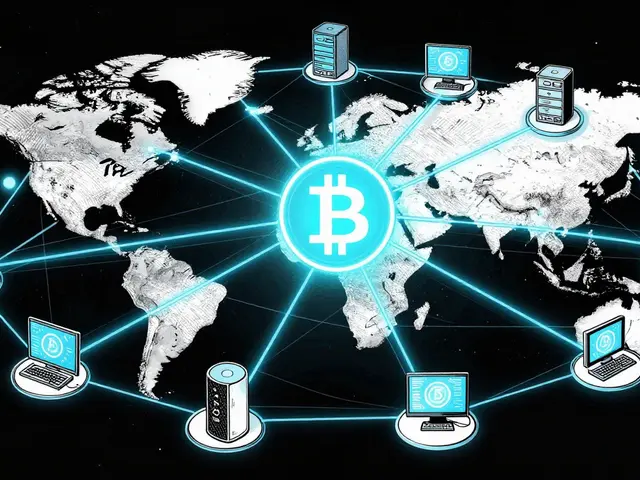
Why do people use them? Usually, it's because nested exchanges often have much looser KYC (Know Your Customer) processes. If you're in a region where a major exchange is blocked, or if you've hit a trading ceiling, a nested exchange can act as a bridge to get you back into the market. However, this convenience comes with a massive catch: you are handing your assets to a third party that often lacks the security guarantees or regulatory oversight of the primary platform.
The Danger Zone: Sanctions Evasion and Legal Risks
There is a massive difference between avoiding a trading limit and dodging international sanctions. Regulators, particularly the OFAC (Office of Foreign Assets Control), are now using advanced blockchain forensics to track funds that "hop" between exchanges. They aren't just looking for a single transaction; they are looking for patterns of evasion.
Criminals often use a technique called "hopping," where they move funds through multiple compromised wallets or non-compliant exchanges to scrub the trail. A prime example of this occurred in early 2025. When law enforcement cracked down on an exchange called Garantex, the operators quickly launched a successor called Grinex to keep the money flowing. OFAC quickly designated Grinex as a sanctions-evading entity, proving that simply switching platforms doesn't hide you from the authorities.
| Exchange Type | KYC Requirements | Regulatory Oversight | User Risk Level |
|---|---|---|---|
| Centralized (Compliant) | Strict / Mandatory | High | Low (Legal/Secure) |
| Nested Exchange | Low / Optional | Minimal | High (Custody Risk) |
| Decentralized (DEX) | None (Non-custodial) | Low (Code-based) | Moderate (Smart Contract Risk) |
| Non-Compliant/Rogue | None / Fake | None | Critical (Legal/Fraud) |

Decentralized Exchanges: The Peer-to-Peer Alternative
For those looking to avoid the centralized control of a company, Decentralized Exchanges (DEXs) are the go-to. Unlike a traditional platform, a DEX doesn't have a CEO or a compliance department. It runs on smart contracts, allowing users to trade directly from their own wallets.
Because there is no central authority to subpoena or pressure, DEXs are inherently more resistant to restrictions. However, this doesn't make them invisible. While the DEX itself can't "block" you, the funds you move into it can still be flagged. If you are moving assets from a sanctioned wallet into a DEX, the destination address may still be blacklisted by other compliant services, effectively trapping your funds in a digital limbo.
Red Flags: How to Spot a Dangerous Exchange
Not all platforms that offer "no restrictions" are created equal. Some are simply trying to attract users, while others are designed to steal funds or facilitate money laundering. If you are exploring new platforms to increase your flexibility, watch out for these warning signs:
- Instant Trading: If a platform allows you to trade massive volumes instantly without any KYC or limits, be careful. Legitimate exchanges usually have a ramp-up period for new accounts.
- Opaque Fee Structures: Be wary of "coin swap" services that operate via instant messaging apps. These are often unregulated and high-risk vectors for fraud.
- No Public Audit: If an exchange refuses to provide proof of reserves or has no transparent history, your assets are essentially a loan to the owner.
A better approach is to use a combination of a reputable centralized exchange for your primary on-ramps and a well-known DEX for your token swaps. This gives you a balance of regulatory safety and trading flexibility without crossing into the territory of sanctions evasion.

The Regulatory Arms Race
We are currently seeing a high-stakes game of cat and mouse. As regulators get better at identifying "hop" patterns, evasion tactics are getting more complex. We've seen the rise of specific digital assets, like ruble-backed tokens issued by firms in Kyrgyzstan, designed specifically to move money around sanctions. This level of sophistication shows that simply using two or three different exchanges isn't the "shield" it used to be.
The SEC (Securities and Exchange Commission) is also tightening the net. They are focusing on platforms that act like exchanges but aren't registered as such. If you're using an unregistered intermediary to avoid restrictions, you might find yourself using a platform that is suddenly shut down by a court order, leaving your funds in limbo.
Smart Habits for the Multi-Exchange Trader
If your goal is simply to manage risk and access more liquidity, you can do so without attracting the wrong kind of attention. Here is a practical rule of thumb: keep your "clean" funds (money used for long-term investing and tax reporting) on fully compliant, high-tier exchanges. Use a separate, hardware-wallet-connected setup for exploring new tokens on DEXs.
Avoid "chain-hopping" just to hide the origin of funds. Instead, focus on diversifying your platforms based on their strengths-using one for deep liquidity in BTC, another for niche altcoins, and a DEX for privacy and speed. This is a legitimate risk management strategy, whereas attempting to bypass AML (Anti-Money Laundering) controls is a legal gamble that rarely pays off in the long run.
Is it illegal to use multiple exchanges?
No, using multiple exchanges for arbitrage, better pricing, or accessing different tokens is perfectly legal and common. It only becomes an issue when the primary purpose is to evade legal sanctions, bypass AML laws, or hide the source of illicit funds.
What are the risks of using nested exchanges?
The biggest risk is custody. In a nested exchange, you are trusting a third party with your assets. If the nested exchange disappears or the larger exchange they are using freezes their account, you have very little legal recourse to get your money back.
Can I truly stay anonymous using a DEX?
While a DEX doesn't require a name or ID to trade, the blockchain is a public ledger. Every transaction is recorded. Forensic tools can often link multiple wallets to a single user, meaning anonymity is much lower than most people think.
How do regulators track "hopping" between exchanges?
Regulators use blockchain analysis software that identifies clusters of wallets. By tracking the movement of tokens across different platforms and looking for timing patterns, they can recreate the path of the funds even if they pass through several different services.
What should I do if my account is restricted?
The safest route is to contact the exchange's support and provide the requested documentation. Attempting to bypass the restriction by immediately moving funds to a non-compliant platform can sometimes trigger further security alerts or permanent account bans.



21 Comments
Amanda Faust
April 13 2026Everyone knows that using a DEX doesnt actually hide your footprints because the ledger is public and any basic chain analysis tool can link your wallets in seconds
Lela Singh
April 14 2026Absolute goldmine of info! Diversifying your platforms is a brilliant way to keep your assets zesty and safe. Total game changer!
Tyler Webb
April 15 2026It's really stressful when accounts get locked for no reason :( Just be careful out there everyone! 💖
Will Dixon
April 17 2026i just use a few different ones and never had a probem. its not that deep
Prasanna Shembekar
April 18 2026omg i almost used a nested exchange once and i literally couldnt sleep for a week thinking about my money vanishing
Artavius Edmond
April 18 2026I'm all for the freedom of DEXs man. Just let people trade their coins in peace and everyone wins
Jessie Tayaban
April 20 2026Omg i totaly agree!! Its so scarry how fast a platform can just... vanish into thin air!! Like where does the money go???
Rebecca Violette
April 21 2026This whole thing is just a nightmare honestly... i can't even handle the thought of my funds being frozen by some random agency
Scott Fenton
April 22 2026It is imperative that individuals maintain a rigorous standard of due diligence when selecting an exchange. The utilization of a hardware wallet in conjunction with a reputable decentralized platform remains the most prudent strategy for mitigating custodial risk. One must prioritize security over convenience to ensure the long-term viability of one's digital assets.
Adam Auksel
April 22 2026Totally agree with the hardware wallet tip! 🚀 Keep those keys safe and stay winning! 💎🙌
Aaliyah BROTHERS
April 23 2026THEY ARE WATCHING US!!! These "regulators" are just puppets for the globalist shadow government trying to erase our financial sovereignty!!! Wake up people!!! The SEC is a weaponized arm of the deep state designed to strip every last cent from hard-working patriots!!! They want us in a digital panopticon where every single satoshi is tracked and taxed by their parasitic regime!!! Its an absolute travesty of justice and a direct assault on our birthright!!! We need to move everything to cold storage and burn the bridges before the Great Reset hits us all!!!
logan bates
April 24 2026If you aren't using US-based platforms, you're basically funding foreign adversaries. Period.
Stanly Hayes
April 24 2026Seriously, just follow the rules or don't complain when the feds knock on your door! It's not that hard to be legal!
Lane Montgomery
April 26 2026What's your total balance?
EDOZIEM MICHAEL
April 27 2026money is just a ghost in the machine and we are all just chasing shadows in the blockchain
jennelle williams
April 28 2026just be kind to yourself if you make a mistake
Carroll Foster
April 29 2026Oh sure, because the SEC is just famously known for its lightning-fast and totally unbiased regulatory framework. Absolute peak comedy.
ssjuul z
April 29 2026Let's get this bread and stay safe! Use the DEXs for the wild stuff and keep the main stack in a vault! :D
Terrance Hausmann
May 1 2026I think it's really helpful to look at this as a learning process for everyone involved. Most of us just want to protect our savings and avoid unnecessary legal headaches, so taking the time to read through the risks is a great first step toward financial literacy in the crypto space. If we all help each other out and share our experiences with different platforms, we can avoid the traps that others have already fallen into, which makes the whole community stronger and more resilient against the volatility of the market.
Mikayla Murphy
May 2 2026It is quite eye-opening to see how different countries handle these restrictions. It really highlights the need for a global standard that protects the user without stifling innovation.
Lauren Abrams
May 3 2026Interesting read.